A Day in Sherborne: Life in a Cotswold Village, 1608
The Sherborne Time Machine sets off again
A remarkable survey from over 400 years ago reveals the intimate details of daily life in this Gloucestershire community
In the autumn of 1608, an official with quill and parchment walked the lanes of Sherborne, methodically recording every able-bodied man in the village. What emerged was far more than a military muster roll—it was an extraordinary snapshot of English rural life at the dawn of the 17th century, capturing not just names but occupations, ages, physical stature, and the intricate web of employment relationships that bound this community together. he did this in very village in Gloucestershire, allowing us to make comparisons. We can take this “census” - a simple list of names, with the description of their employment, their stature, their age and their military experience and build a great picture of our predecessors here in Sherborne. I’ve used the Sherborne time machine (wink) to go back in time and photograph a few of them in the hope I can make them real people in your imagination.
The Lord of the Manor's Empire
At the heart of Sherborne's economy stood William Dutton, whose influence permeated nearly every household. Of the 89 men recorded, an astonishing 26 worked directly for Dutton—from yeomen like Henry Greene and Richard Hollaway to husbandmen such as George Bruckins and John Haynes. His estate was a small kingdom unto itself, employing shepherds like Thomas Sansome, servants including his own kinsman Henry Dutton (described as a "gentleman"), and labourers across every trade.
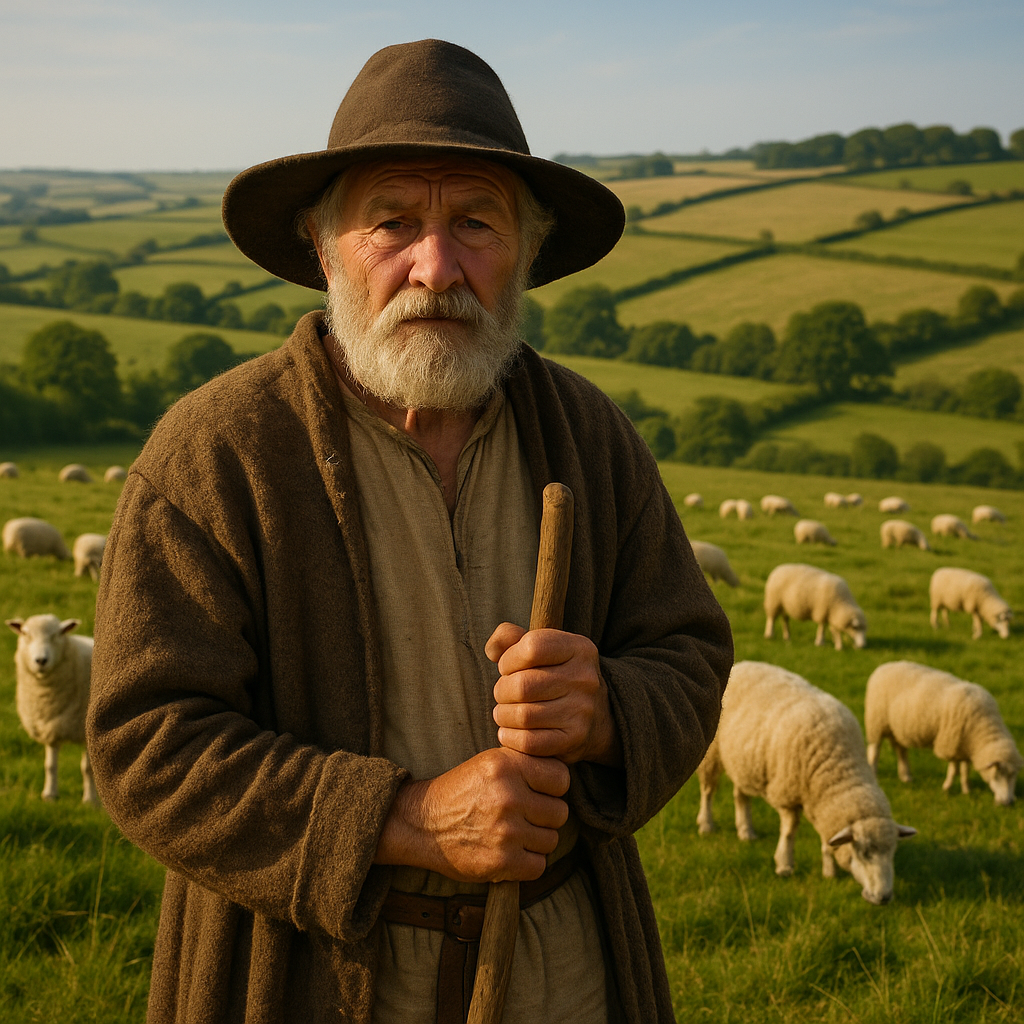
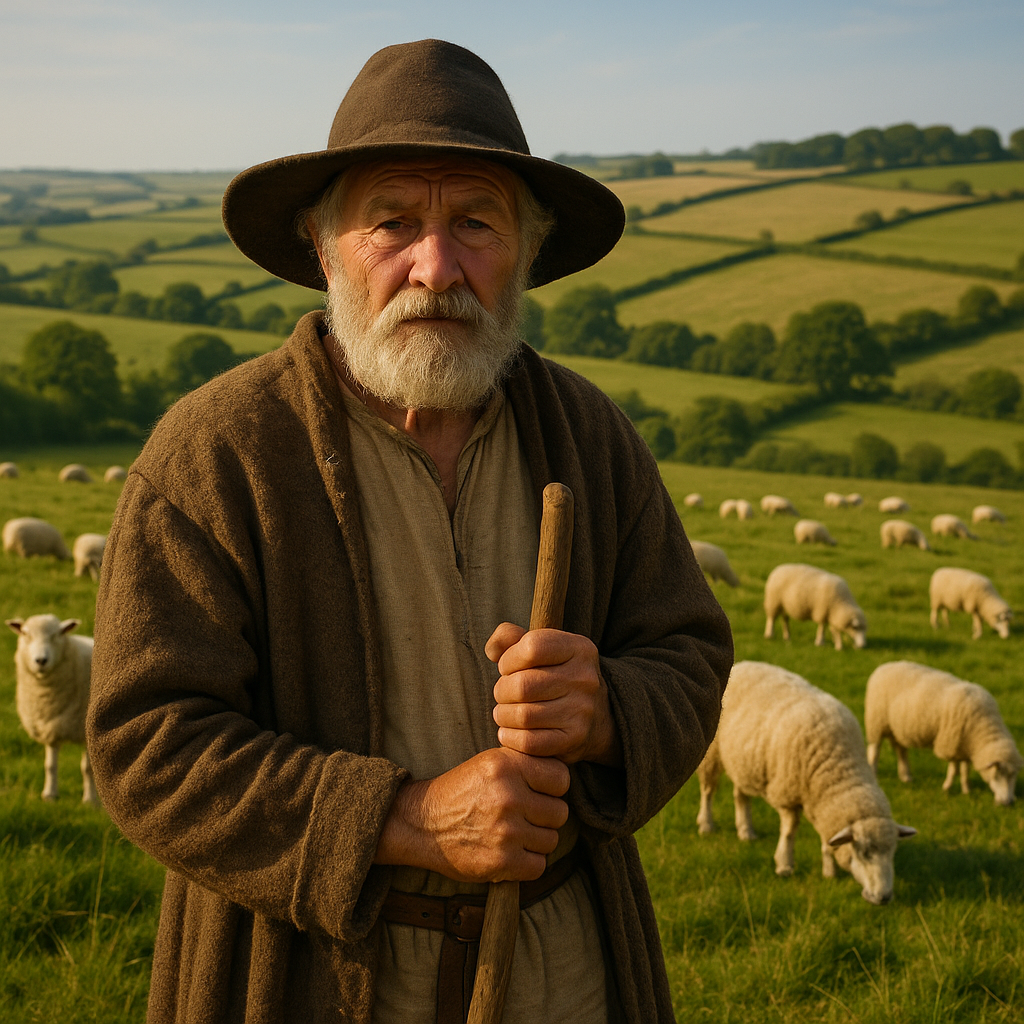
Here’s a Time Machine photo of the shepherd Thomas Sansome in the fields above Sherborne:
Even the Dutton family dynamics emerge from the records: young William and Ralph Dutton, both aged 20 with "lower stature," are listed as sons of "Elizabeth Dutton widow," suggesting the family was managing succession while the matriarch maintained control.
The Rhythm of Agricultural Life
Agriculture dominated Sherborne's economy, with over 30 “husbandmen” forming the backbone of rural production. These weren't merely farm laborers but skilled agricultural managers, including men like William Haule, who not only farmed his own land but employed servants Robert Ange and Samuell Cooper. Haule's status as a "subsidy man" (taxpayer) and his military training marked him as one of the village's more prosperous residents.
The Bakers (Richard, Thomas, and Thomas junior) represent the generational nature of farming families. Richard, aged 40 with "tallest stature," had clearly prospered enough to see his 20-year-old son following in the family trade, both bearing the name Thomas in a confusing but common practice of the era.
Masters of Specialized Trades
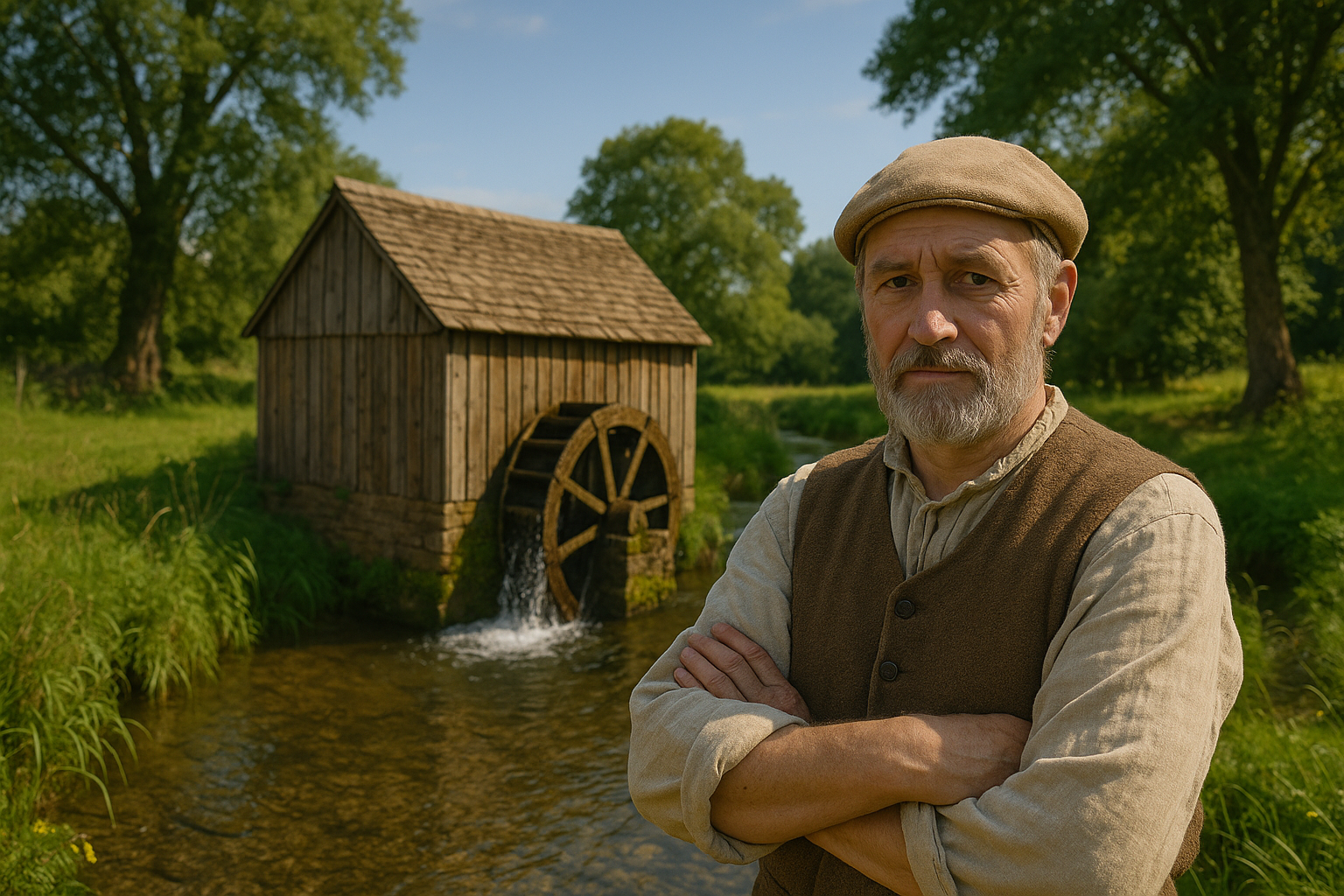
Three millers served Sherborne's grain-grinding needs, but the survey reveals a clear hierarchy amongst them. Gyles Blockley emerges as the most substantial miller, operating what was evidently the largest mill in the village (significant enough to require Henry Cockhood as his dedicated "loader," a 20-year-old assistant responsible for moving grain sacks and managing the mill's heavy operations). Blockley himself, described as having "middle stature" and military training, clearly ran a thriving enterprise. Edward Mydwinter, the tallest of the millers, and young Raynold Bayliffe with his "lower stature" completed this essential trade group, but neither required additional labour, suggesting smaller operations.
Here’s Edward Mydwinter on the Sherborne Brook beside his mill:
The village's nine shepherds tell the story of Sherborne's exceptional pastoral economy. Nine shepherds is number that exceeds any other recorded Gloucestershire village of the period, highlighting the particular importance of sheep and wool production to Sherborne’s economy. This concentration of shepherds suggests Sherborne was a significant centre in the regional wool trade that enriched so much of the Cotswolds. Men like Ralph Cooke, aged 40 with "meanest stature," tended flocks for Henry Browne, while Richard Smith managed his own sheep. The shepherd Thomas Hankins worked for Mathewe Marchant, creating employment chains that connected landowners to the lucrative livestock trade that was transforming English agriculture.
The Social Ladder
The survey reveals Sherborne's rigid social hierarchy with remarkable clarity. At the top sat the yeomen who were independent or tenant farmers and minor landowners like Anthony Guyes, who employed William Bayliffe as his servant. Below them came the husbandmen, then the laborers like John Atwell, a 40-year-old of "lower stature" who had nevertheless earned military training.
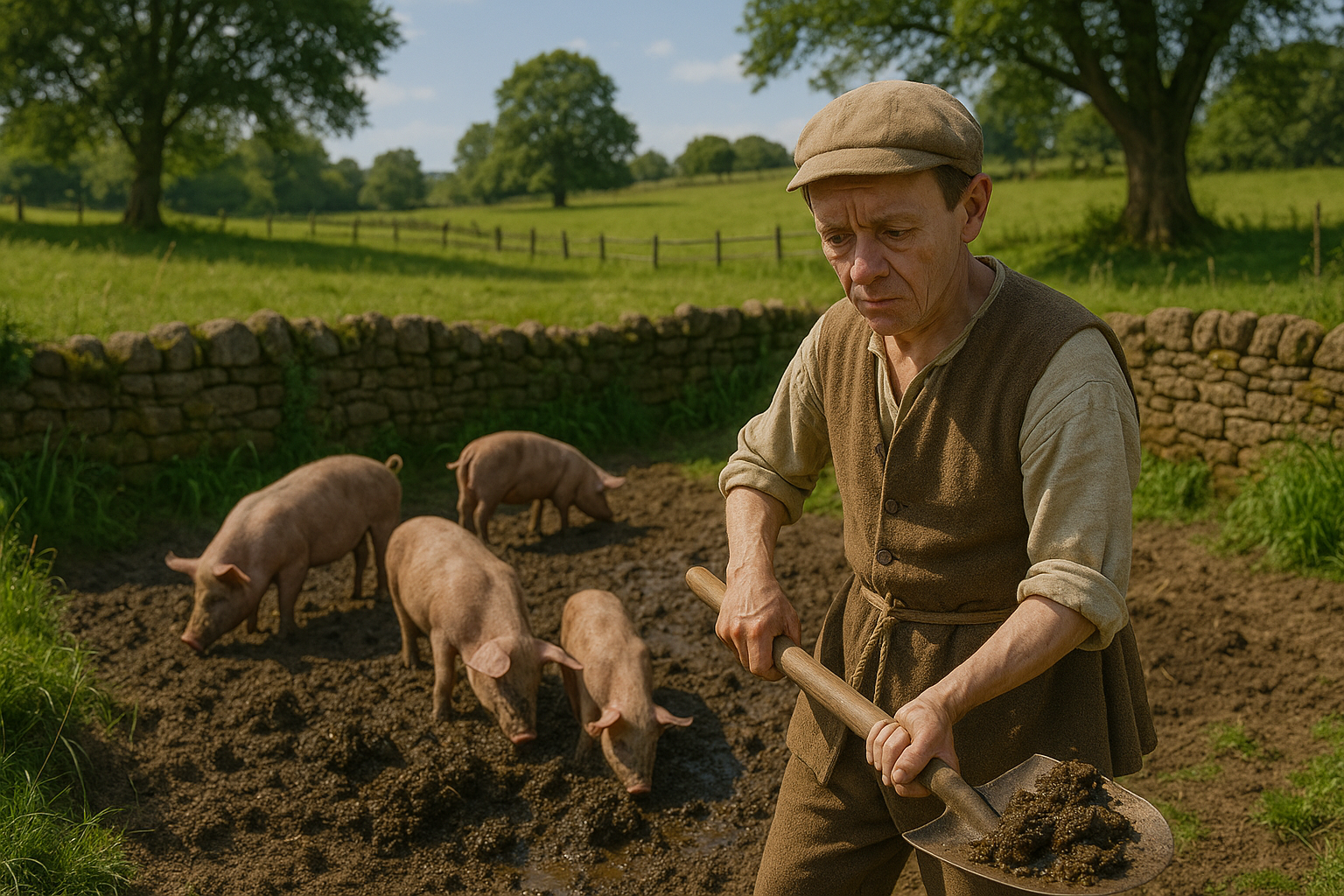
At the bottom of the social ladder worked men like Symon Hunter and Robert Snowsell, both described simply as labourers with "meanest stature". This is a telling indication that physical presence often corresponded to social and economic status in this period.
Here’s poor Symon Hunter, working hard in the pig pen near the village:
Military Preparedness in Peacetime
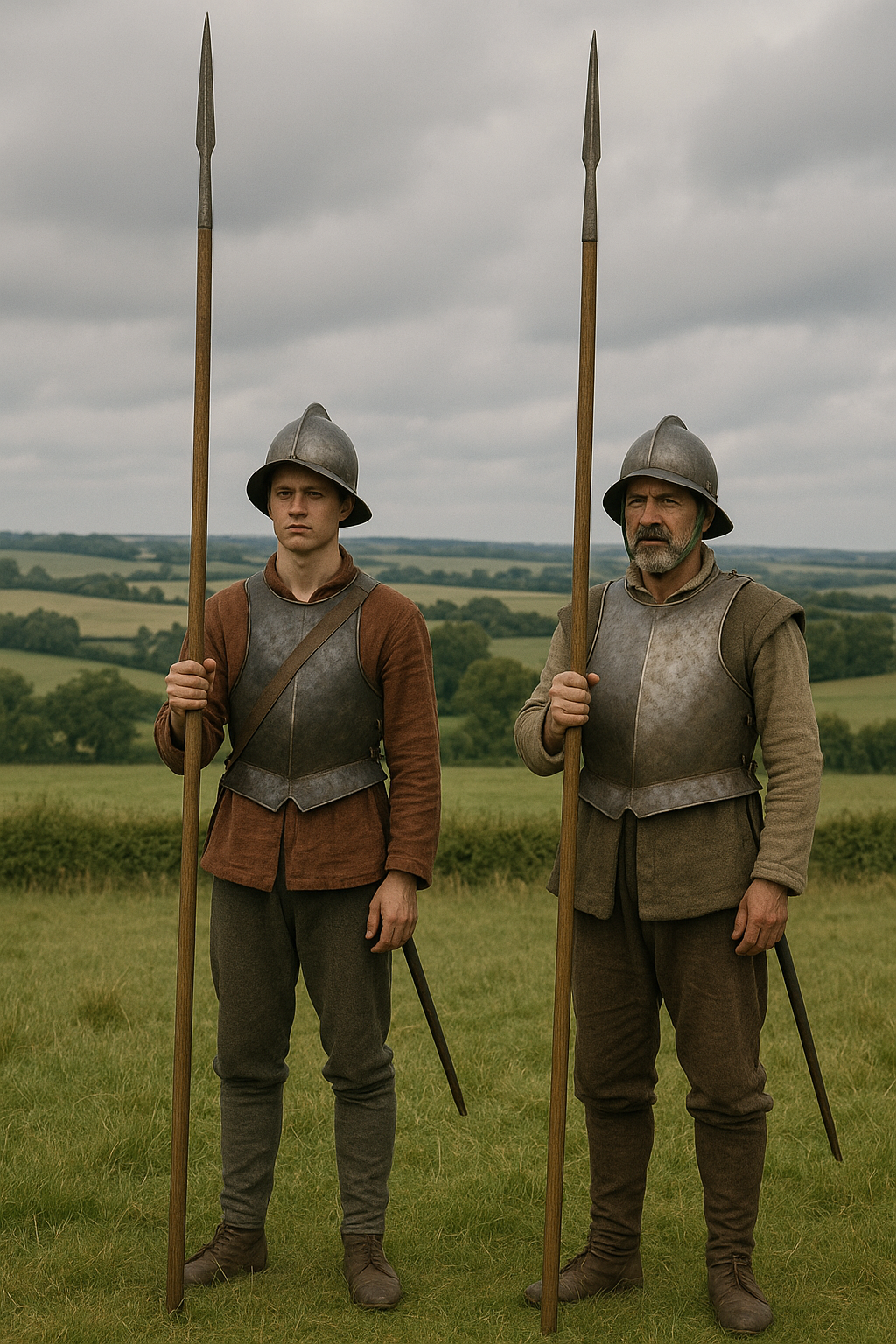
Seventeen men bore the notation "trained," revealing how James I's England maintained military readiness even in peacetime. The trained men crossed all social boundaries: wealthy taxpayers like John Taylor junior and Mathewe Marchant served alongside younger men like Henry Browne junior and John Smith. This citizen militia system meant that blacksmith's apprentice and gentleman farmer alike might drill together with pike and musket.
Here’s two Sherborne Pikemen on one of the rare militia training days:
The Invisible Women and Children
What the survey doesn't record speaks volumes about early 17th-century society. No women appear except as reference points; Elizabeth Dutton the widow, or the unnamed wives and daughters who performed essential but unrecorded labor. The village children remain similarly invisible unless they were adult sons following their fathers' trades. This was, after all, a survey focused on men-at-arms.
A Community in Profile
The physical descriptions paint a vivid picture of the men who worked Sherborne's fields and tended its flocks. Most were of "lower stature," suggesting either the nutritional limitations of the era or simply the surveyor's relative standards. Those described as having "tallest stature"; men like Richard Baker, Edward Mydwinter, and Robert Poope would have cut impressive figures in their community.
Economic Interconnectedness
Perhaps most striking is how completely interconnected this community was. Nearly everyone worked for someone else in the village or employed others in turn. Thomas Symes employed both Richard Eaton and Robert Turner while maintaining his own status as a trained husbandman and subsidy man. This web of employment relationships created both security and dependence, binding the community together through economic necessity and mutual obligation. We have to assess that this is a tightly-knit community. Most people literally knew everyone’s business.
The mills that ground their grain have long since fallen silent, and the fields they worked have been transformed by machinery. But in this single document, the voices of Sherborne's men echo across time, reminding us that behind every historical statistic lived real people with their own hopes, struggles, and stories to tell.
If you’d like to examine the survey itself then it is online at this link.
I hope you don’t mind my use of the time machine (really AI) to produce the images- I think it makes the past seem real and that helps as we seek to understand our heritage. Tell me what you think.
