Careful solstice measurements will blow your socks off.
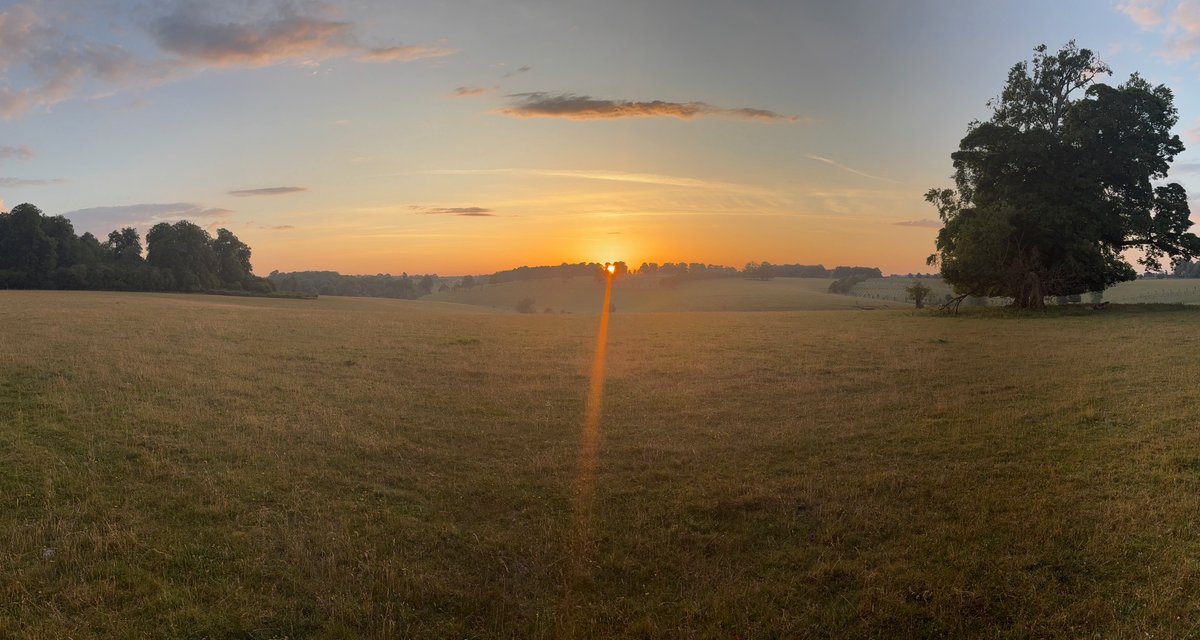
This morning it was the summer solstice sunrise, and as I did last year, I obtained permission to enter Lodge Park and to view the solstice as it rose over the long barrow, framed between the two ancient 500-year-old oak trees. I took some careful measurements using a theodolite app hooked into GPS. I have since been pressing the geometry buttons on my computer GIS system back at home. There's a couple of significant findings and I'd like to report the first, here now. I apologise, there's some mathematical concepts in this observation, tough for a Sunday morning.
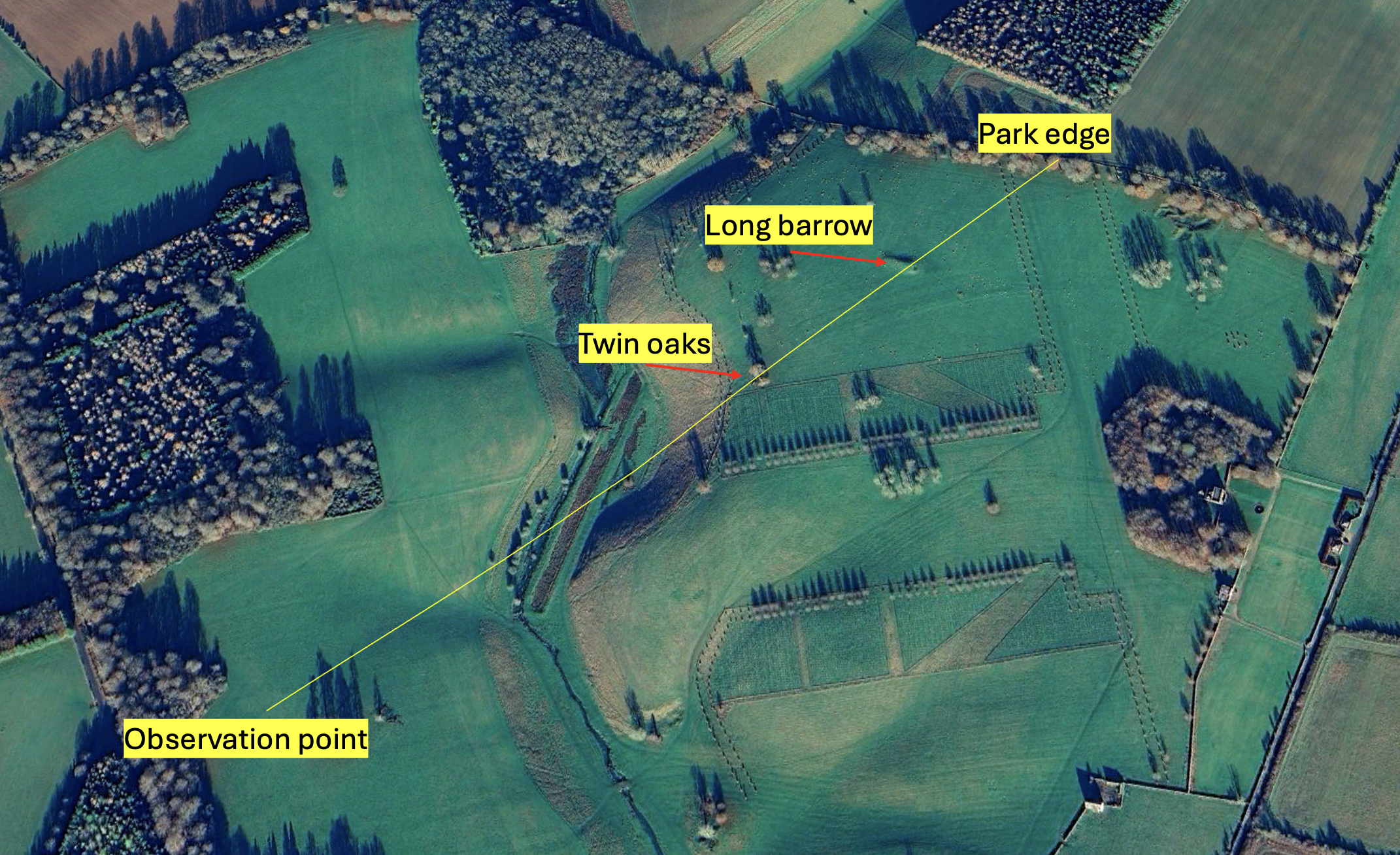
Here's an image of Lodge Park showing my observation point: the two 500-year-old-plus oak trees and the long barrow. The yellow line is the observed line of the sunrise that I looked along.
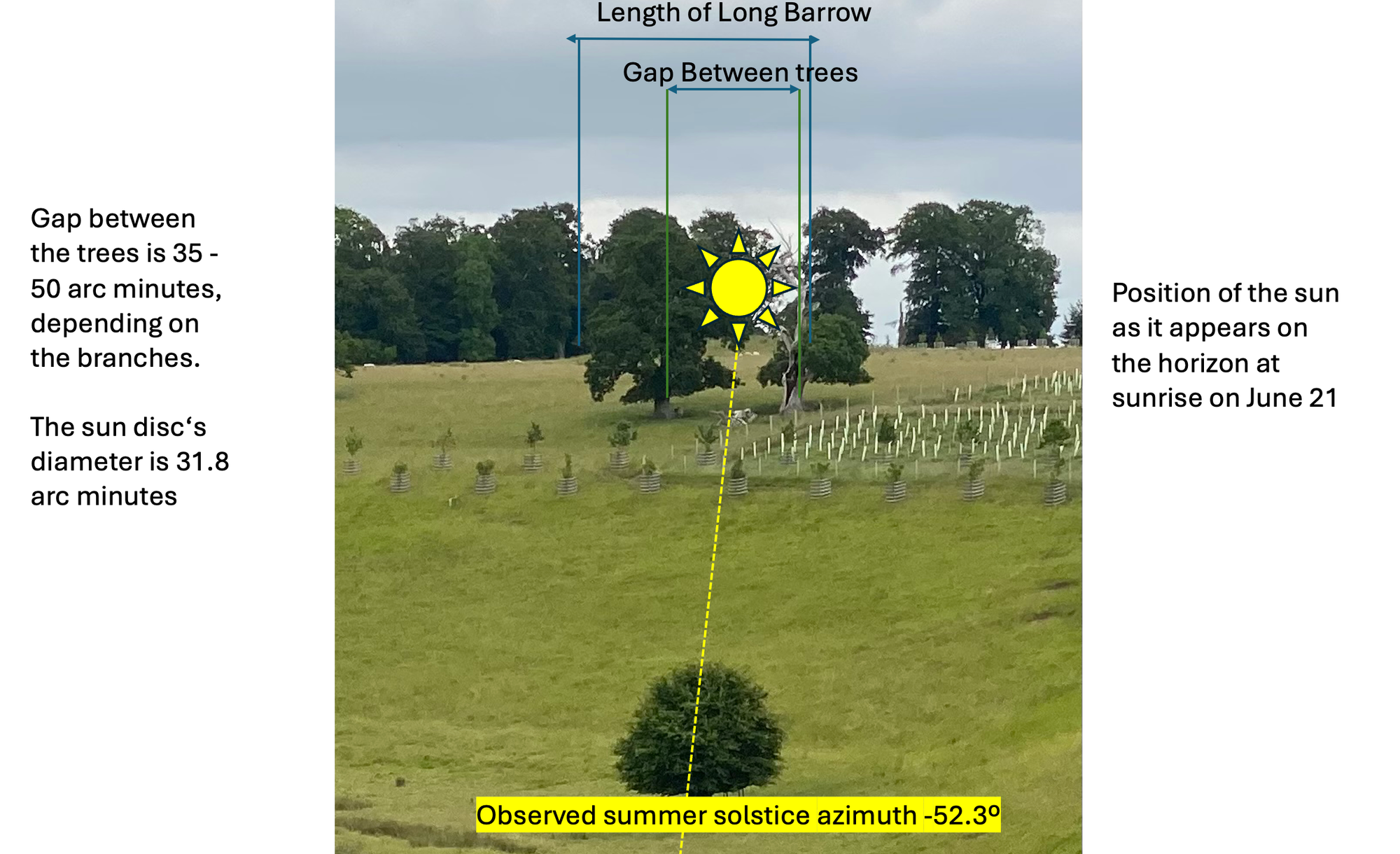
According to all my references, the sunrise, the point at which the full sun disc sits just above the horizon in this part of the world, is at a bearing, an azimuth, of 49.8 degrees. But that, of course, assumes flat ground. The observation point looking at the long barrow through the tree portal is somewhat lower by just a few metres than the height of the long barrow. This, in effect, delays the sunrise slightly and moves the azimuth slightly to the right, for the Observer. The Sun has to climb a little further in the sky and move a little bit to the right before it's visible. I hope that makes sense to you. This morning I measured the Sun as it appeared in clear air above the long barrow and between the trees at 52.3°. That works out mathematically and confirms the observation. Here's a diagram.
But during that process of observation and measurement, something else became apparent, and I think it's quite significant potentially. The first glimmer of the sun's disc appeared exactly, or apparently exactly, at the left-hand end of the long barrow. As the Sun rose, it also moves to the right in a sort of gradient. So the appearance of the Sun, the first glimmer, starts exactly at the western left-hand edge of the long barrow, and then the full Sun stands clear just above the long barrow when it reaches the highest point of the long barrow, which is the supposed entrance that sits exactly between the trees. So it's like the sun is moving up out of the long barrow as it progresses until it appears fully just above the entrance. That could be chance. But it also could be design, and it's worth mentioning in case it's deliberate. Here is a diagram where I attempt to explain it.
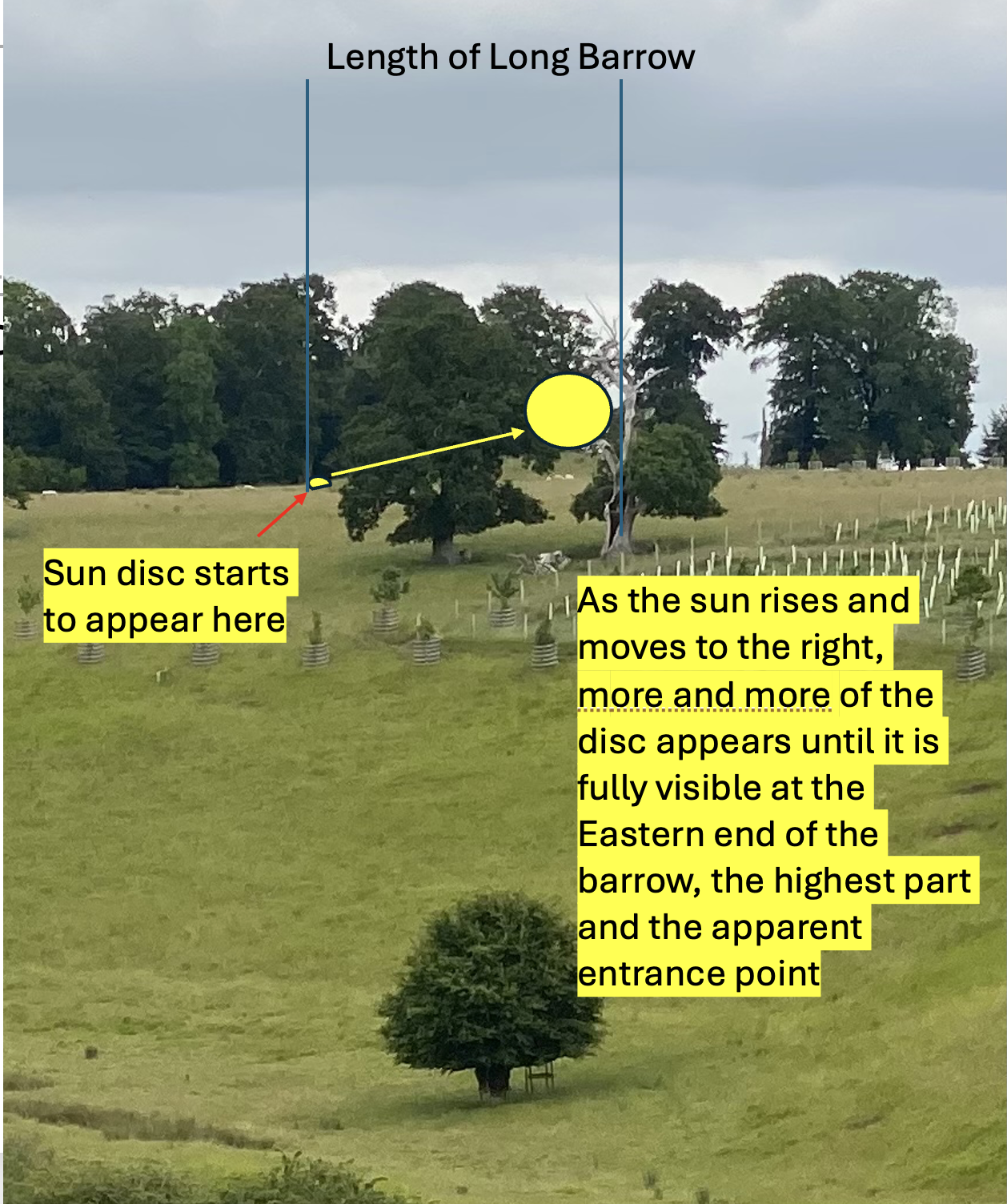
Here's an image of the above diagram as it happened, and below that, a time-lapse video showing the sun emerging over time. Obviously, the trees on the distant park boundary get in the way a little bit. Use your imagination.
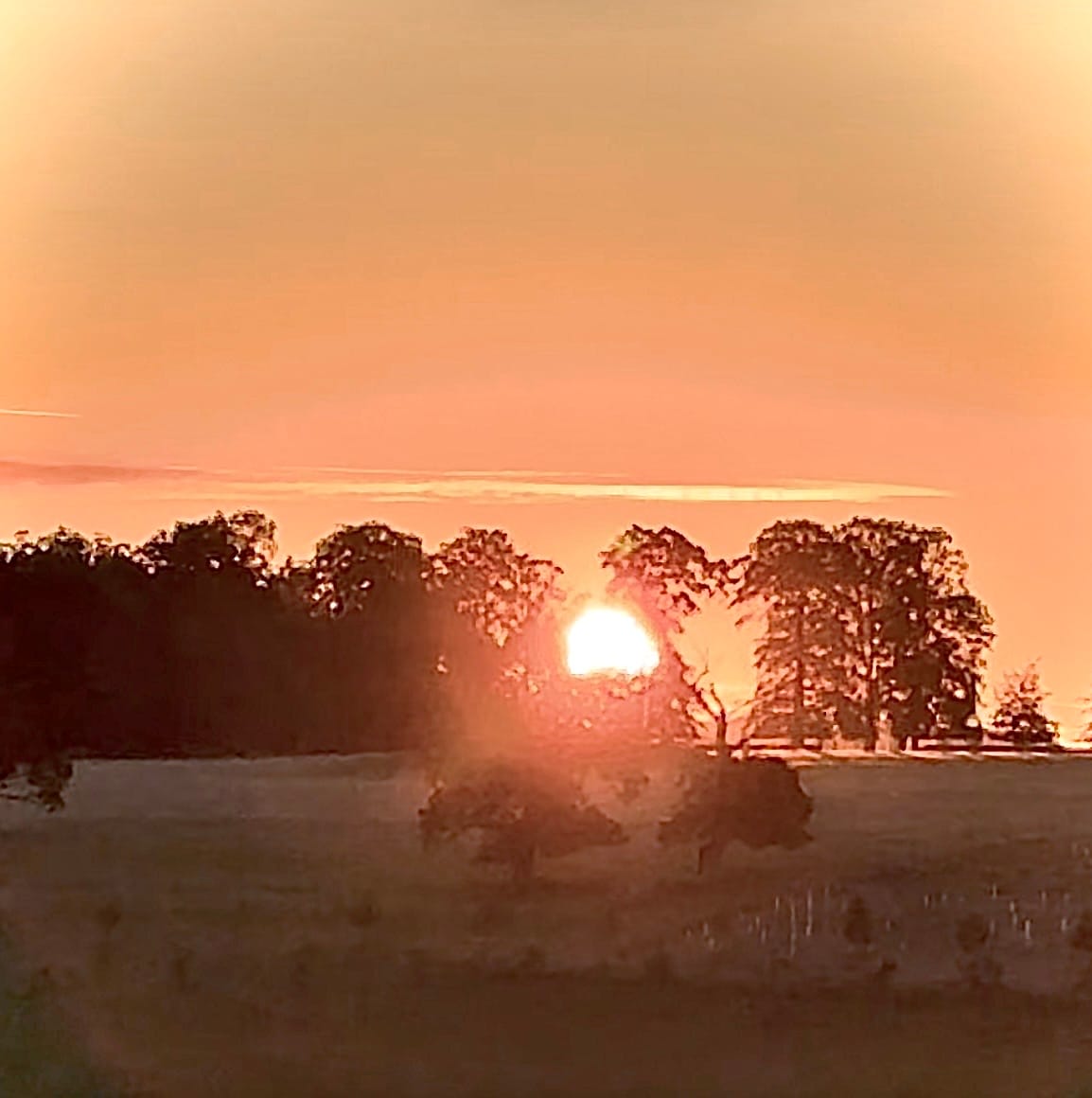
Here's the video of this happening in time-lapse
So, whether that visual effect was a deliberate "artefact' manufactured by Neolithic man 5,500 years ago, like a bit of stone age stage management or whether it's just chance, that's for you to decide. Just the chance that Neolithic man, our predecessor here, was clever enough to establish this long barrow in such a way as to show the sun emerging from it, just that thought alone, I find incredibly exciting. I viewed it this morning with one other person, 5,500 years later, and my jaw dropped.
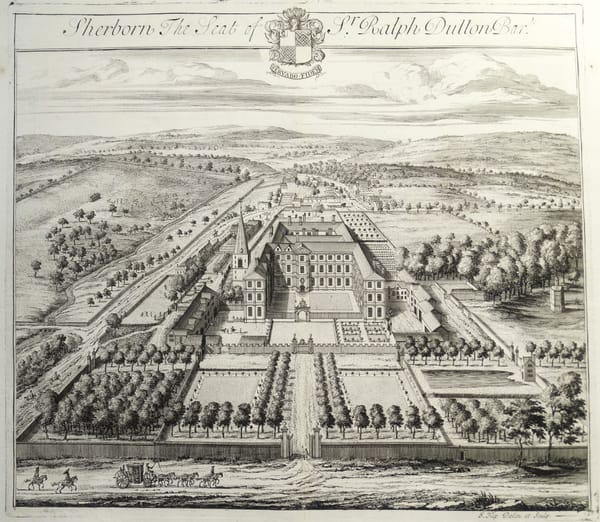
For a future post, this observation has also brought a very clear suggestion that Charles Bridgeman in 1729 designed his T-shaped avenues knowing full well about this empirical solstice line. Clearly there's a suggestion, a possibility, that a hundred and fifty years prior to Charles Bridgeman, in about 1490, someone carefully planted some trees either side of the Solstice Line! I'll explain the Bridgeman thing in my next post. So all I'm doing is rediscovering what Neolithic man designed, what Elizabethan man knew when he planted a couple of oak trees, what Crump Dutton knew about in the 1620s when he enclosed the park and built the grandstand, what Charles Bridgeman and Sir John Dutton knew about in 1730. There's a clue in one of the images above. Someone's socks are going to be blown off.