Crossing the Threshold: A Summer Encounter with Sherborne's Underworld
I have a tale to tell. Listen.
You may have worked out by now that I’m a rational engineer, not given to flights of fancy. I deal with dates, distances and angles and suchlike. But, for once, I’ve let my imagination off the leash. I hope you don’t mind.
I have a tale to tell. Listen.
It was one of those perfect summer afternoons when the landscape seems to drowse in golden light. I had walked to the place without any particular sense of purpose—just following a familiar path through the countryside, enjoying the warmth on my back and the lazy hum of insects in the hedgerows. The burial mound sat quietly, as it has for thousands of years, and beside it the spring bubbled peacefully where it always has, marking the ancient hundred boundary that runs alongside it.
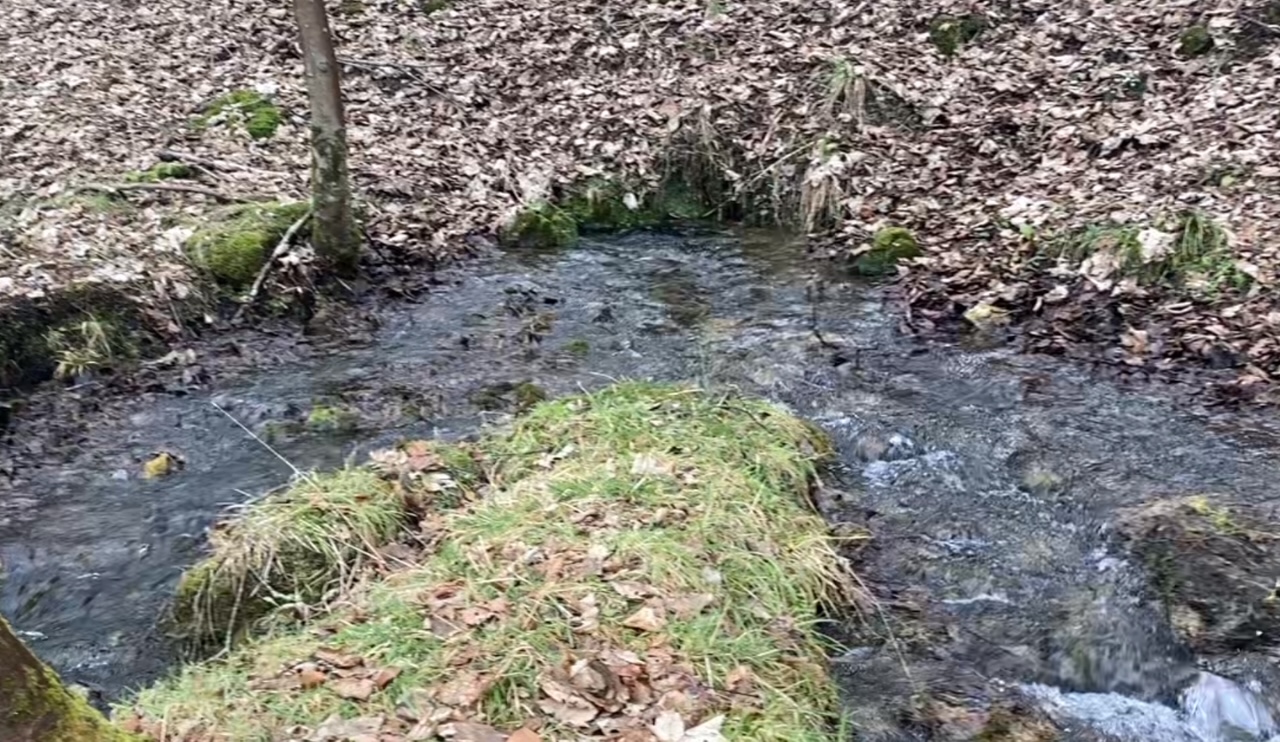
The spring, at the top, instantly dividing right and left
I had visited this place a few times before, knew its history, understood its significance in the ancient landscape. But today, something made me approach the spring differently. Perhaps it was simple curiosity, or maybe the summer heat made the cool water seem more inviting. Whatever the reason, I found myself kneeling beside the water-filled opening and, almost without thinking, reaching my hand down through the stone aperture, into its depths. To an observer I may have appeared as if I was genuflecting and offering something.
The moment my fingers crossed the surface, everything changed.
The water was shockingly cold—not the gentle coolness of a summer stream, but something deeper, more absolute. As my hand descended, I realized I could feel nothing—no sides, no bottom, no containment of any kind. Just an endless, water-filled void that seemed to extend infinitely away. The familiar afternoon landscape suddenly felt distant, as if I had crossed some invisible threshold simply by breaking the surface tension.
What happened next took me completely by surprise. A wave of primitive fear washed over me—an instinctive terror that seemed to come from somewhere deeper than rational thought. My hand, groping blindly in that cold darkness, suddenly felt terrifyingly vulnerable. What if something down there grasped it? Memories from reading Beowulf, and Grendel’s monstrous sub-aquatic mother leapt into my head. What if her unseen fingers closed around mine and pulled me across that watery boundary into whatever realm lay beneath?
The fear was so immediate, so visceral, that I snatched my hand back, heart racing. But even as I sat there, trying to rationalize what had just happened, I couldn't shake the feeling that I had glimpsed something profound about this place—something our ancestors would have understood instinctively. More than that, I realized the boundary between past and present had momentarily dissolved. The hand I had just pulled from that water had experienced exactly the same terror, the same awe, that countless others had felt at this exact spot across the millennia.
This wasn't just a spring. It was a portal—not only between worlds, but between times.
The positioning makes perfect sense now. Here, beside the burial mound where the dead cross their ultimate threshold, the spring offers another kind of crossing—a living connection to the underworld realm. The flowing water marks a place where boundaries between worlds become permeable.
Animals seem to sense these liminal qualities in ways we've largely forgotten. At another burial mound not far from here, again on the edge of Sherborne, dogs consistently refuse to approach. Their owners report the same puzzling behaviour; normally obedient pets simply will not cross some invisible line around the site. Even more tellingly, the usual soundtrack of birdsong falls silent there, as if the threshold between life and death creates an acoustic shadow that wildlife instinctively avoids.
These responses suggest that the ancient understanding of such places as powerful boundary zones wasn't mere superstition. There's something about certain locations—springs emerging from unknowable depths, burial mounds marking the crossing between life and death, standing stones marking some unknown territory, the alignment to the rising or setting sun at certain times, that creates a convergence of thresholds. Multiple boundaries intersect, creating what we might call “super-liminal sites” where the normal rules don't quite apply.
But this spring isn't unique. Once you begin to notice them, liminal features appear everywhere across the Sherborne landscape. The burial mounds positioned on the parish boundary, the holed stones that frame particular views, the ancient tracks that penetrate and leave the parish, they're all part of a network of threshold places that have quietly shaped human experience here in Sherborne for thousands of years.
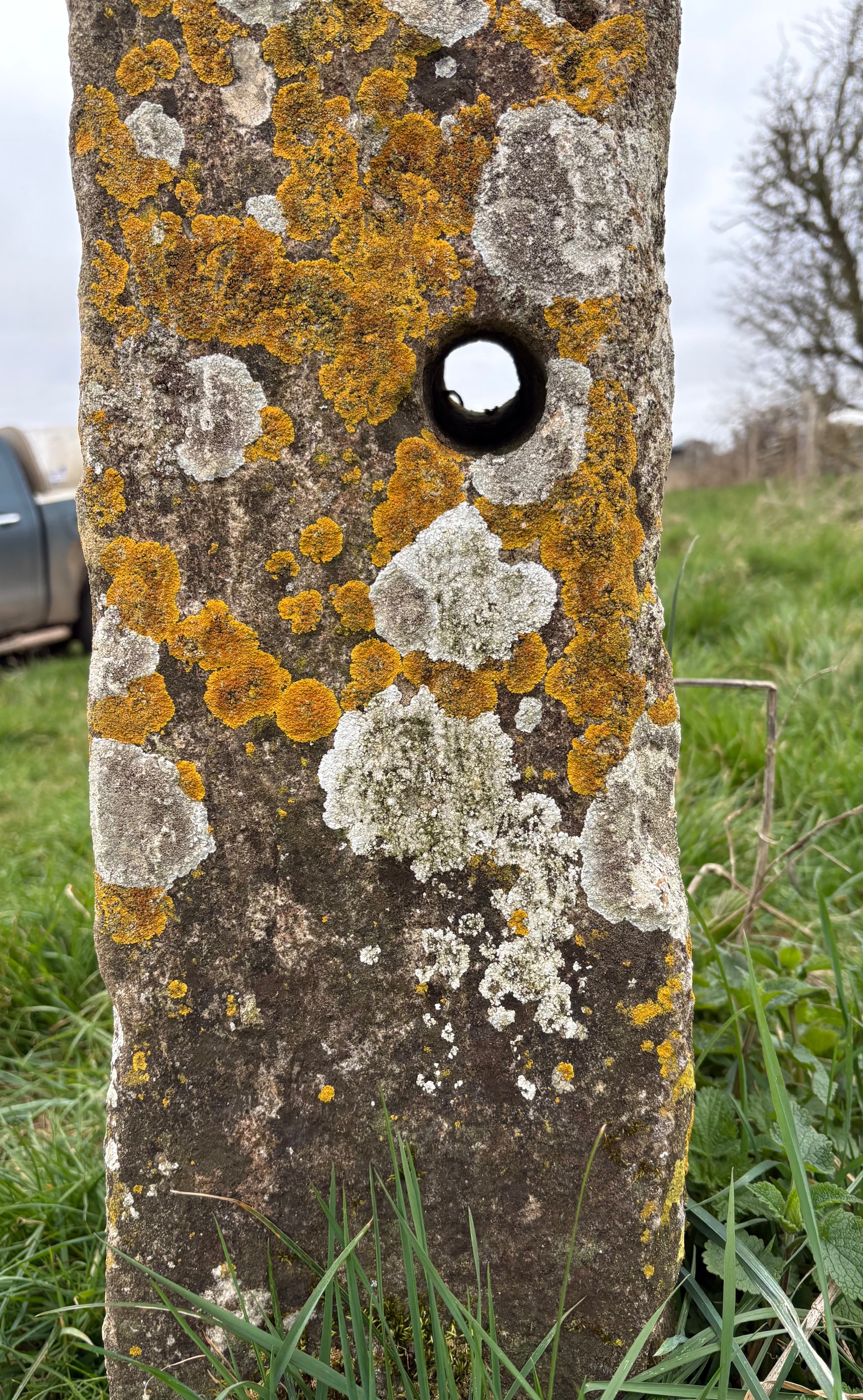
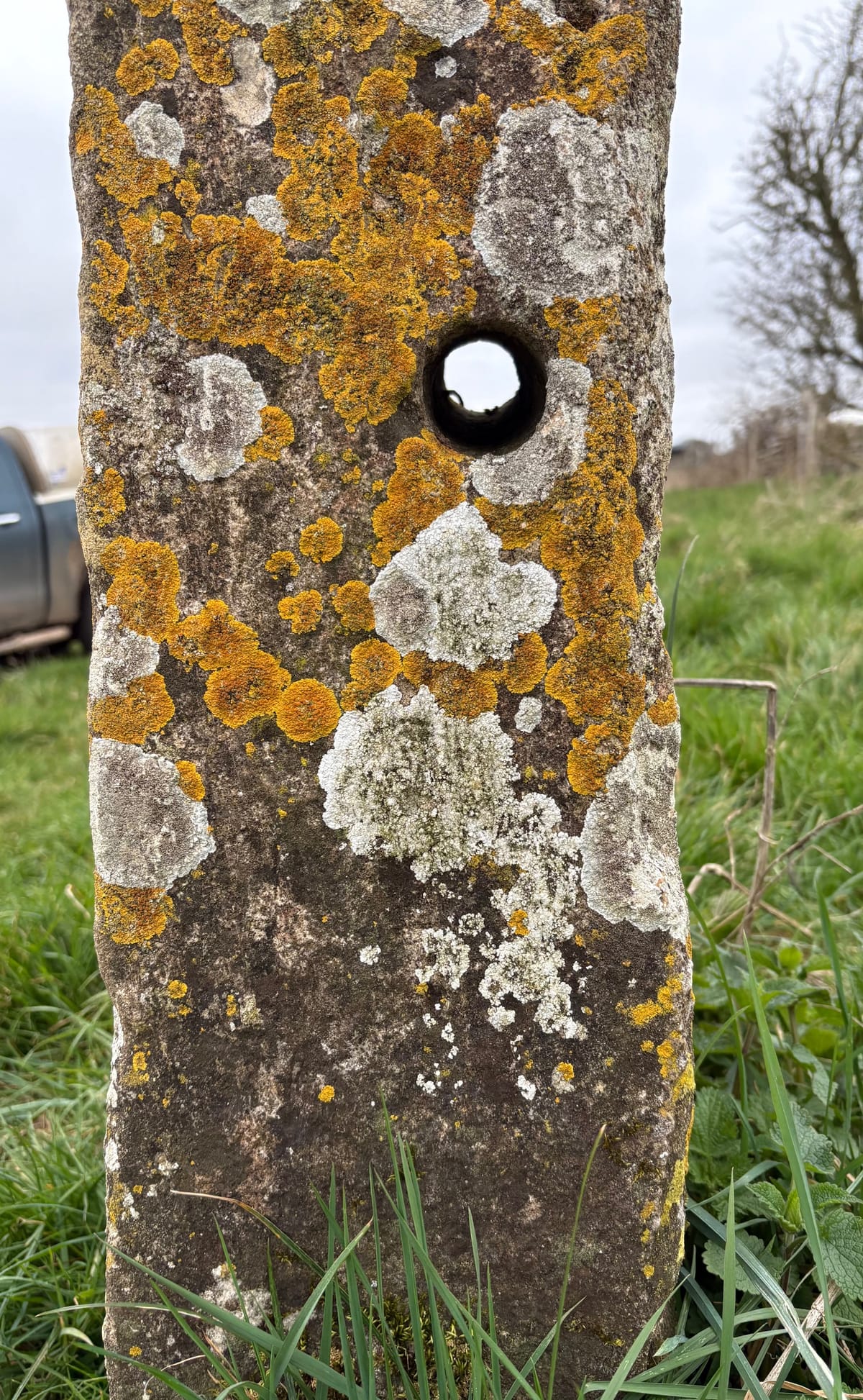
A holed standing stone, in a field not far from here. Peering through the hole from the other side, the view frames Sherborne.
I wrote a few weeks back imagining a Celtic chieftain buried beneath the yew tree at the top end of Sherborne House pleasure ground. Another boundary point aligned to the winter solstice.
Many of you will remember my recent sunrise observations at Lodge Park on the summer solstice, and how unexpectedly moved I was by the spiritual power of that experience. Standing there in the pre-dawn darkness, I witnessed something far more profound than simply watching light transform the landscape.
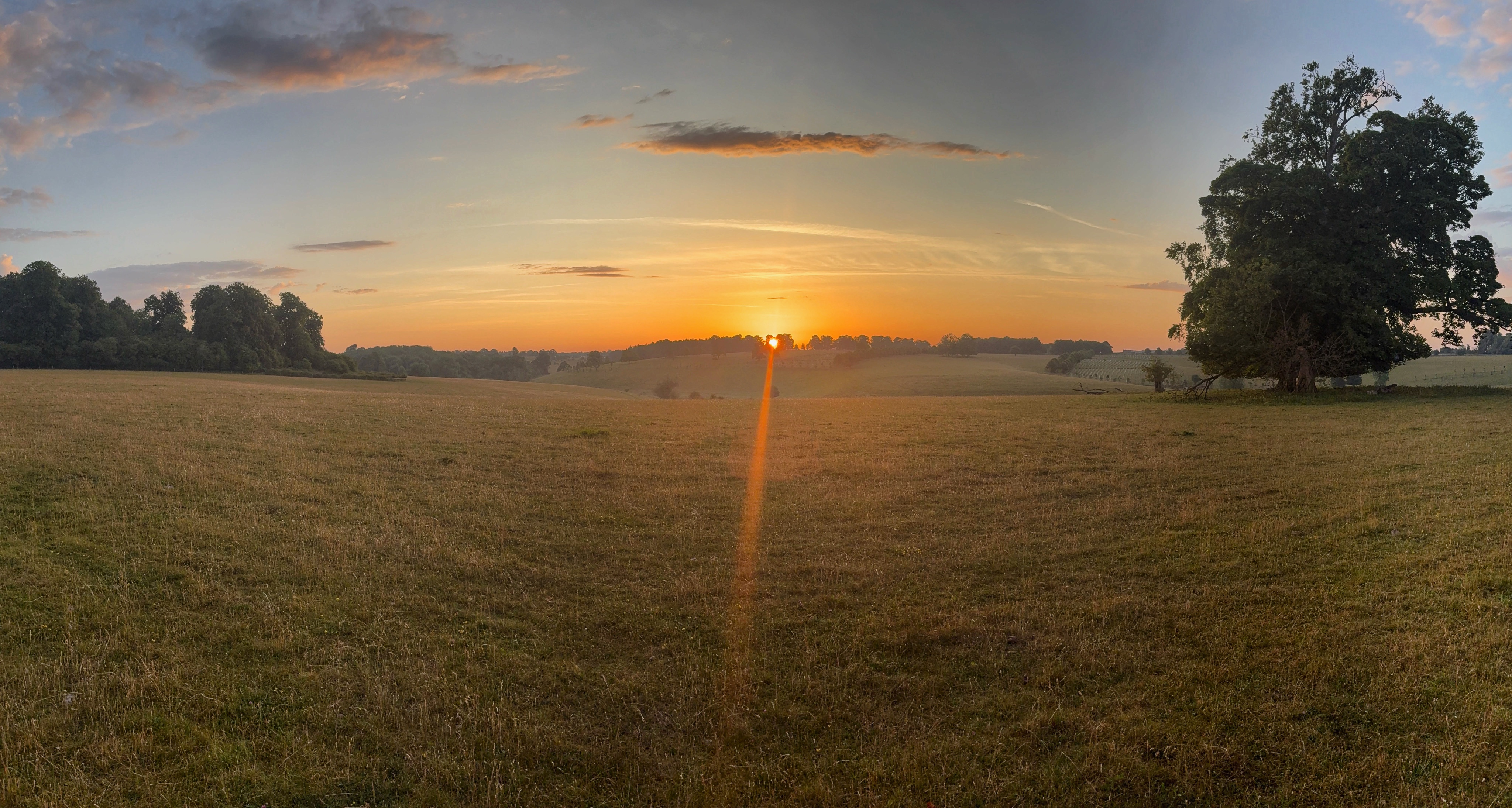
Lodge Park solstice sunrise over the Long Barrow, framed by twin ancient oaks
The sun itself became a participant in threshold-crossing, moving through its own cosmic boundary between night and day, between darkness and light. Between the season of the oak and the holly. And remarkably, this annual miracle was framed by two ancient oak trees—500 years old—that created a perfect portal through which the sun emerged.
The Celtic word for oak, "dwr," gives us our word "door," and watching that solstice sunrise, the etymology felt absolutely literal. The oaks weren't just landscape features but active participants in creating a doorway through which the sun passed from one realm to another. It didn’t feel mystical, unreal and weird. It felt entirely real, natural but no less impressive. I felt the same dissolution of temporal boundaries as at the cold water spring—the same sense that I was participating in something timeless, concrete and profound that connected me directly to all who had witnessed that same moment across the centuries, all who had stood in awe before this fundamental transformation.
This is what these liminal places offer us: not barriers to cross, but doorways to understanding. They invite us to read the landscape differently, to see boundaries not as obstacles but as invitations, as opportunities for transformation and connection.
Once you start recognising these patterns, the familiar Sherborne countryside reveals itself as something far richer—a web of human meaning and space that stretches back to the very beginnings of our presence here. By “our”, I’m not differentiating between 21st century Sherborne villagers and our neolithic predecessors. We have everything in common if we live here. The spring continues to flow, as it has for millennia, maintaining its connection between the world of the living and whatever lies beneath or whatever lies in our imagination. The burial mound keeps its ancient vigil, marking the death of an ancient Sherborne resident. And somewhere in the interplay between water and stone, between the flowing and the still, between the known and the unknowable, the landscape continues to offer those brave enough to reach across its thresholds a glimpse into deeper mysteries.
Understanding these places as doorways rather than barriers transforms our entire relationship with the landscape around us. What might appear to be empty fields and forgotten corners of our village reveal themselves as a living network of significance.
I'm keeping the exact location of this particular spring secret—not out of any desire to be mysterious, but because some places seem to reveal their secrets only to those who discover them on their own terms. The landscape in Sherborne is full of such thresholds, waiting for the moment when an afternoon walk becomes something more profound, when a simple gesture like reaching into water opens a door to understanding that the thoughts of our ancestors. Put your hand to the bark of an oak or on an old stone. Stop and look through a gap in the trees to a field beyond. Listen.
Next time you encounter an ancient site, consider approaching it with the respect these liminal places deserve. Look for the patterns—the convergence of boundaries, the positioning relative to burial mounds or ancient tracks, the way the landscape itself seems to focus meaning at particular points. Look for transformations between wood and stone, between earth and water, between light and shadow. You might find yourself crossing more than just a boundary between one field and another . You might discover that the past and present are not separated by the chasm of time we imagine, but connected by doorways that remain open to those willing to step across their thresholds. We should treasure this land for what it gives us, just as our predecessors treasured it in the past.
Now, ten hours later, sat at my desk, I can feel the cold spring water running down my wet arm and dripping from my shaking fingers. I am still on the threshold.
