GeoPhys in Sherborne
Some technical analysis done for the NT
I’m grateful to the NT for giving us sight of a geophysical survey of the area to the North of Old Park done just a couple of weeks ago. Given our interest in the landscape history, this study adds to knowledge and I’m very appreciative that they have shared it. I’m going to highlight two interesting spots.
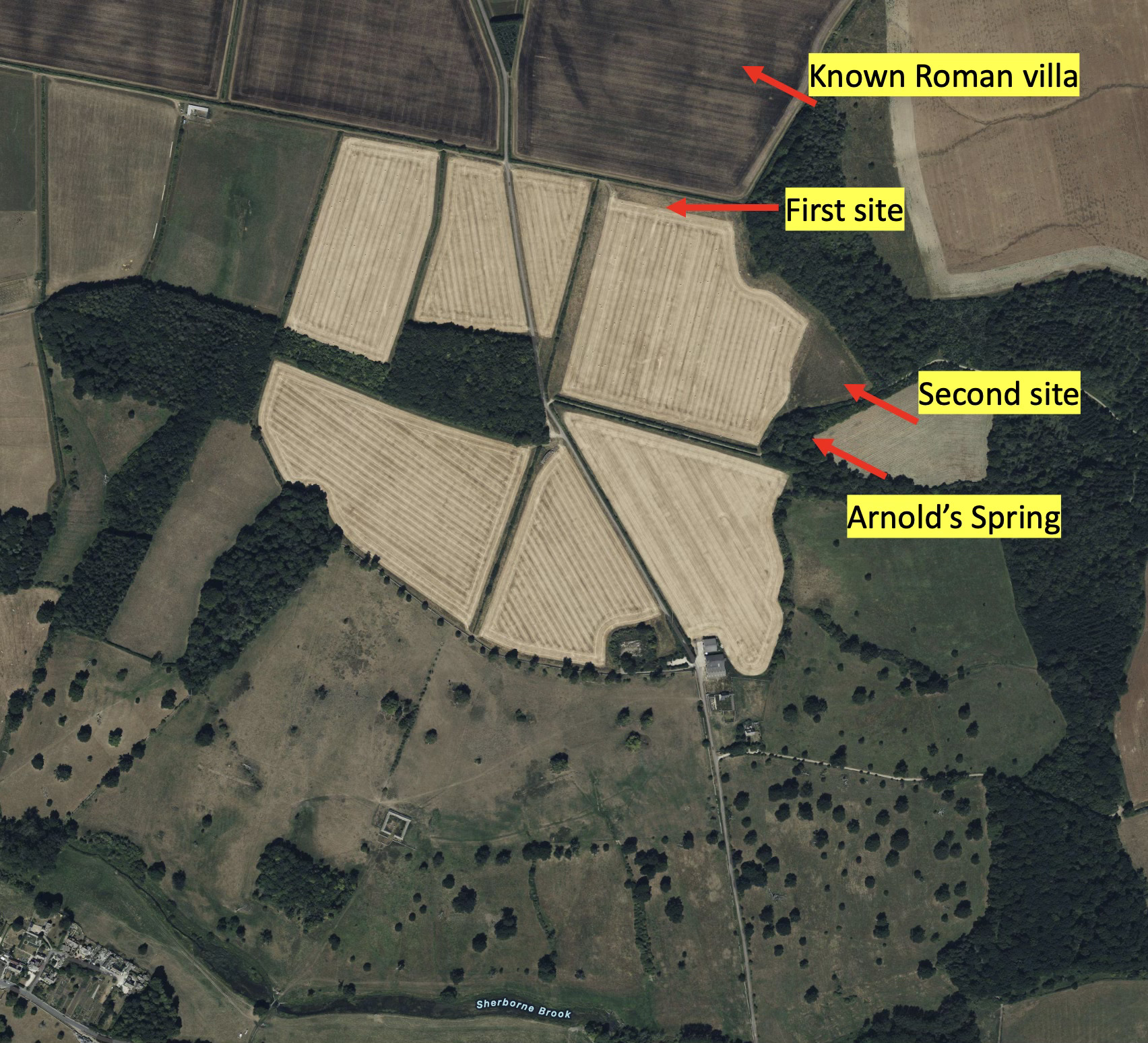
The first is related to the already known about Roman Villa in a field called “Cot Mead”. The geophysical survey shows that:
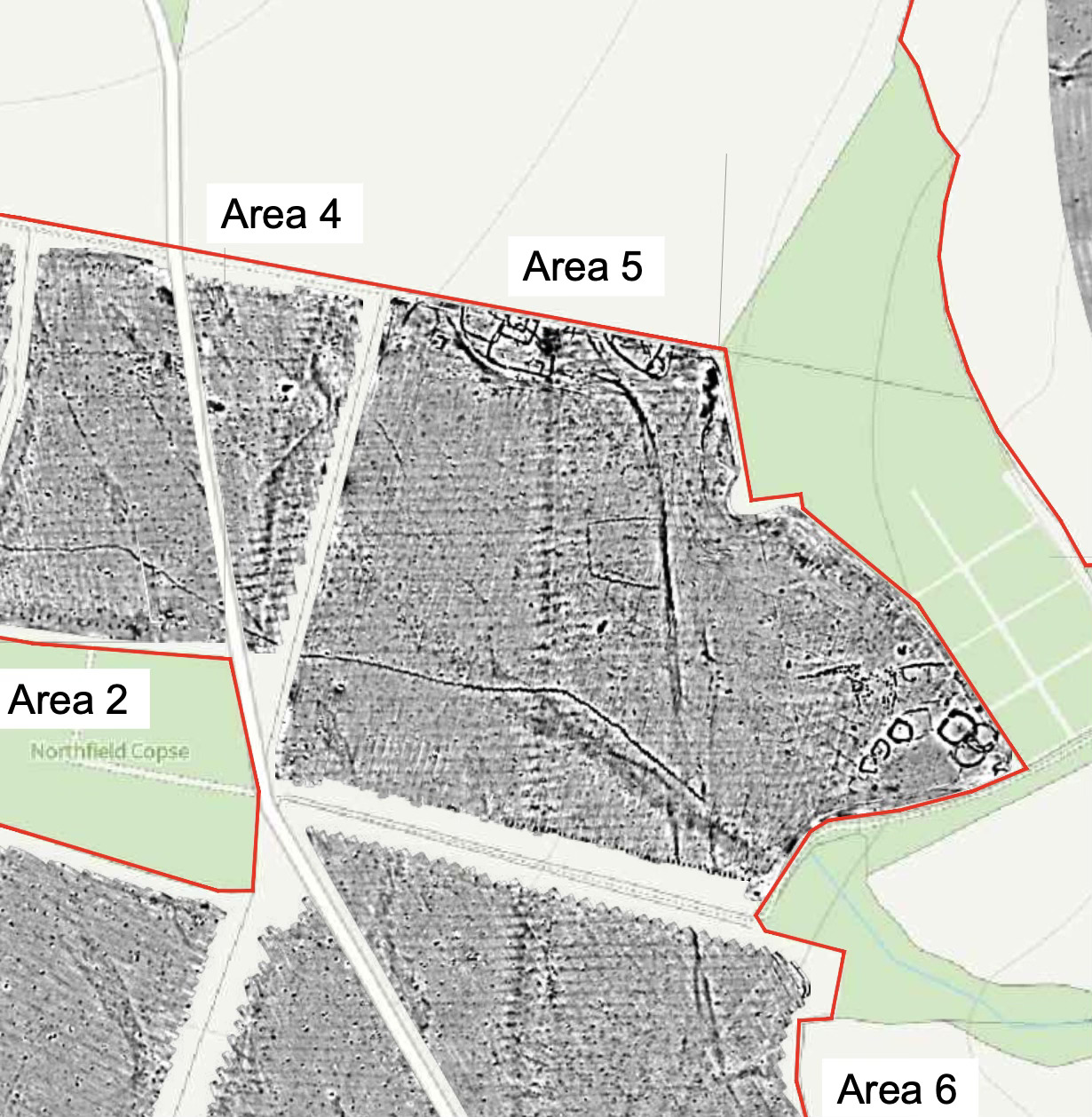
- This Roman settlement seems to overflow into the field to the south of it, “Arnold’s Spring Ground” where this magnetometry survey picks up some complex features.
- There are seemingly strong suggestions it is on the site of an older prehistoric settlement.
The geophysical report suggests that there were field enclosures and other man -made features here.
The second is at an eastern corner of Arnold’s Spring ground. Again this is a known about site but the geophysical analysis gives a much clearer picture. The geophysical report suggests that there are a number of “ring ditches” here. Such features have two possible sources - the first they could be the remains of a round burial site, or second the remains of a ditch around a wooden dwelling. Either is exciting, but given the density I suspect they are prehistoric dwelling sites. Imagine a timber building surrounded by a ditch.
Here’s the sites on a modern aerial image, which I have annotated:
And here’s the geophys magnetometer results for the same area:
You may recall a couple of years ago I highlighted some interesting LIDAR images showing ploughed-out raised field boundaries in this vicinity. Note the large “square” in the middle with lines leading off , one of which matches the magnetometry report and the shaded line leading down from where it says “Area 5” above.
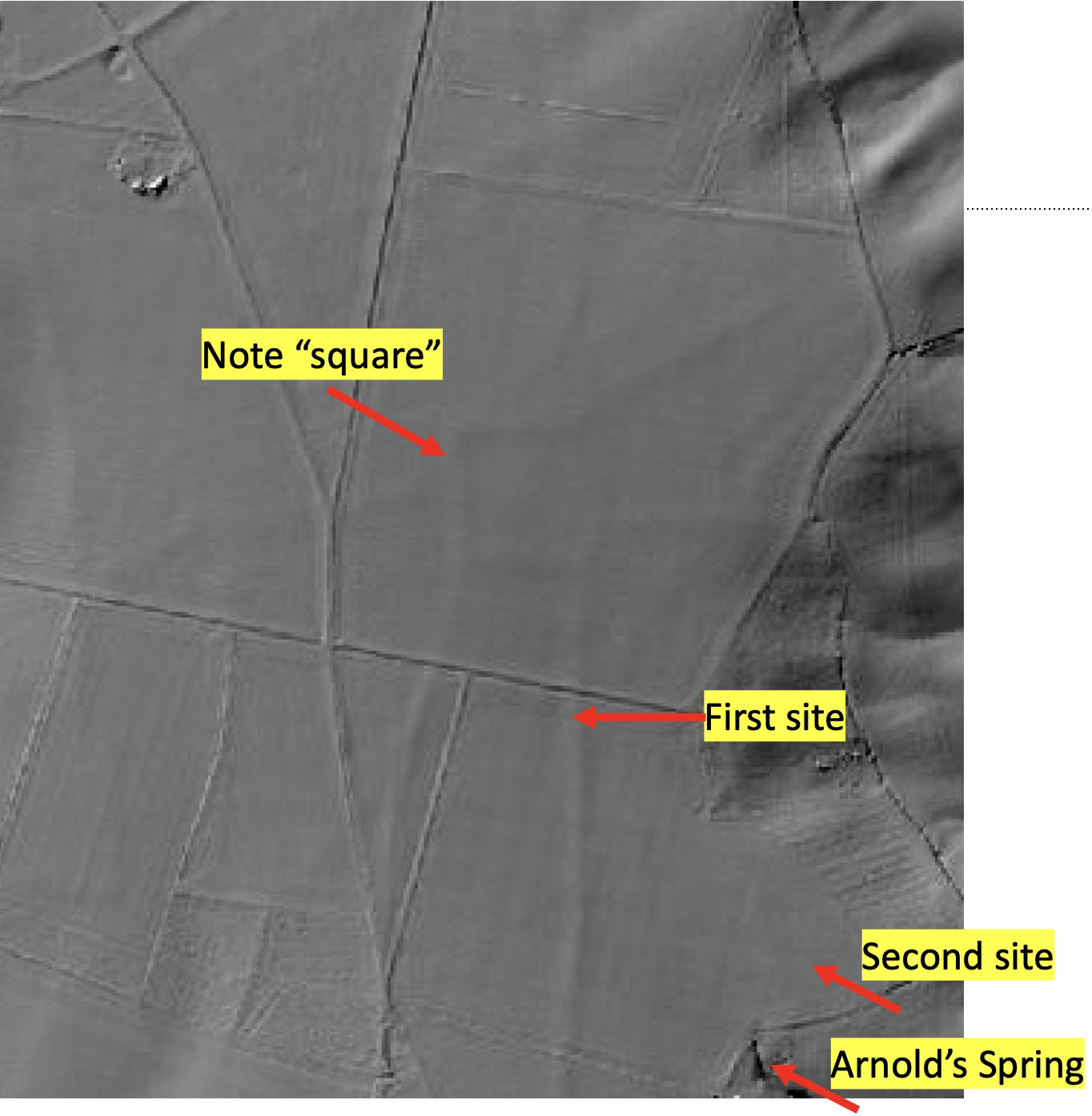
So, what does all this mean? It means once again there is clear evidence that there were people living in the local area in prehistoric times. I think it’s useful to consider the geographic characteristics of where people once lived and what jumps out to me is that the second area is immediately adjacent to a spring. “Arnold’s Spring”. Springs provide guaranteed clean water all year, the only “utility” prehistoric people had access to. Rivers are fine but riverbanks flood and springs can be managed to provide water a little easier, without getting your feet wet every time (no wellies in the Bronze Age) . The sites also provide “views” or technically “viewscapes” which, the more I look in to the landscape history, seem to be underestimated as an important feature. It was important, I think, to be able to see the land you farm. Modern farmers tell me that the first and last thing they do every day is take in their land with their eyes. A first check and a last check, perhaps for grazing animals or the state of the crops or whatever.
Note too, that just East of the Roman villa in the first image above there are two streams running away towards the the Windrush. I suggest that the source of these streams are springs which fed the villa - maybe worthy of a little more investigation in the tree line immediately East of the villa site, the northern end of the wood called Leasow (or Leassow) Furlong. I’ll ask the NT if I can go there in due course and take some photos perhaps and report back to you.
Of course the other place where springs occur, with views over the valley is under our very feet here in the modern village of Sherborne. I’m certain that a good proportion of us live on sites that would have been very attractive to ancient man. That makes this history deeply personal, a link to the past. A link to our predecessors here in Sherborne. Next time you are digging up your carrots keep your eyes peeled - who knows what glimpse of pre-history you might uncover.
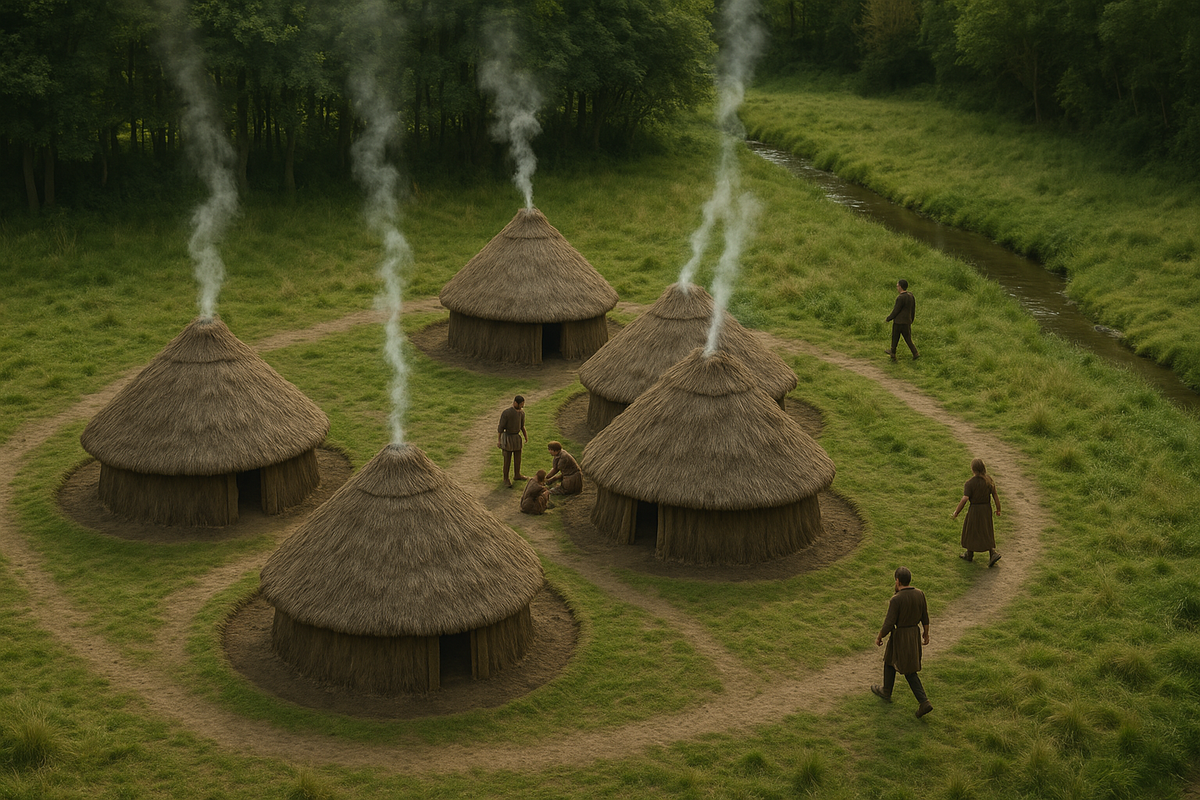
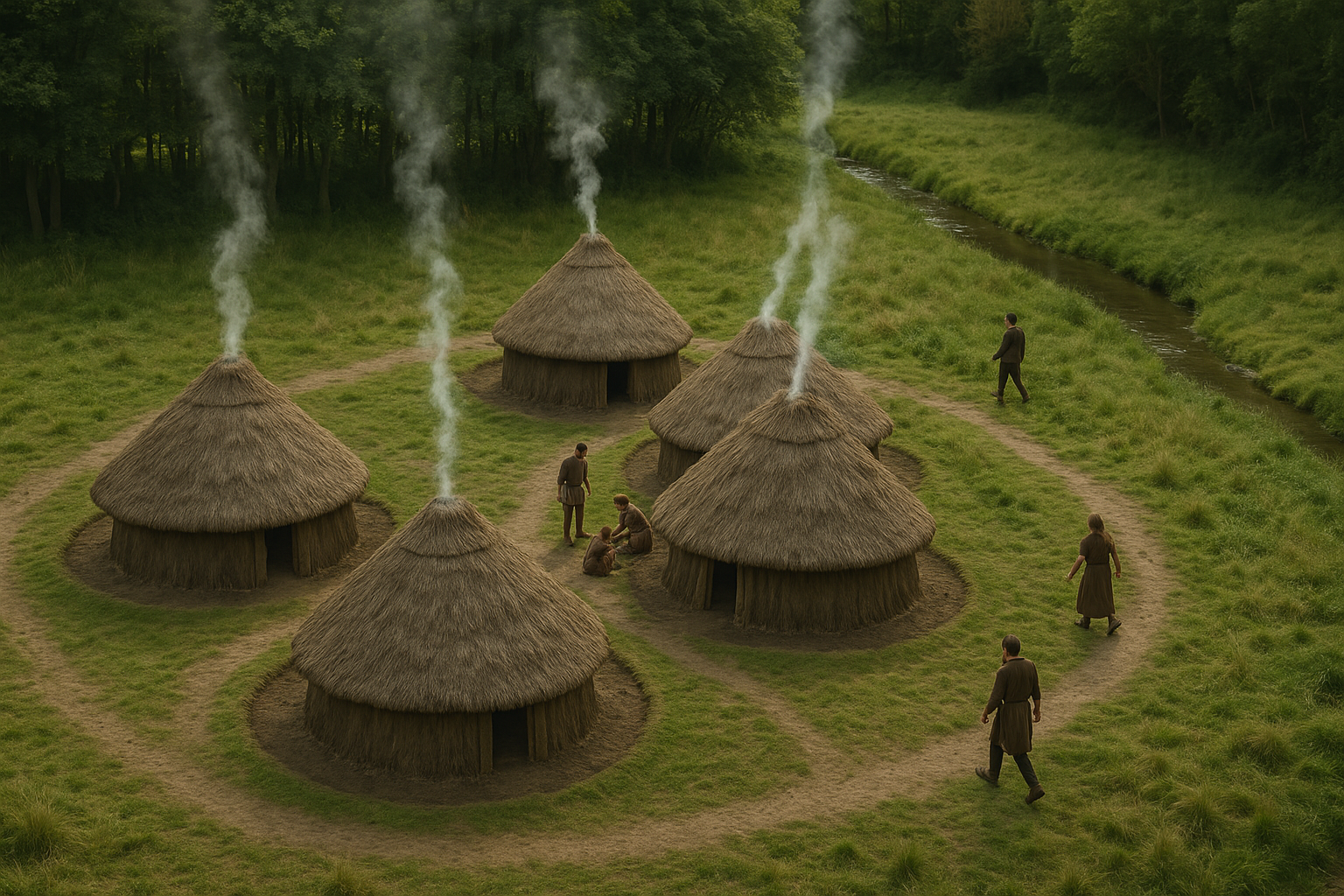
Finally to make it seem real, with a bit of unreality, here’s an AI impression of what I imagine the Arnold’s Srping settlement may have looked a bit like in 2500 BC. (That’s old Arnold himself , bottom right….). Don’t take this as gospel - it’s just to give you an idea. There were probably pens for animals around and about too.
Once again , thanks to the NT for sharing the detailed report that frankly I’m just skimming over parts of here. Sharing this sort of information is a very positive step, and welcomed.
