Lodge Park Attribution: Reinforcing the Case for Inigo Jones
It's beginning to add up.
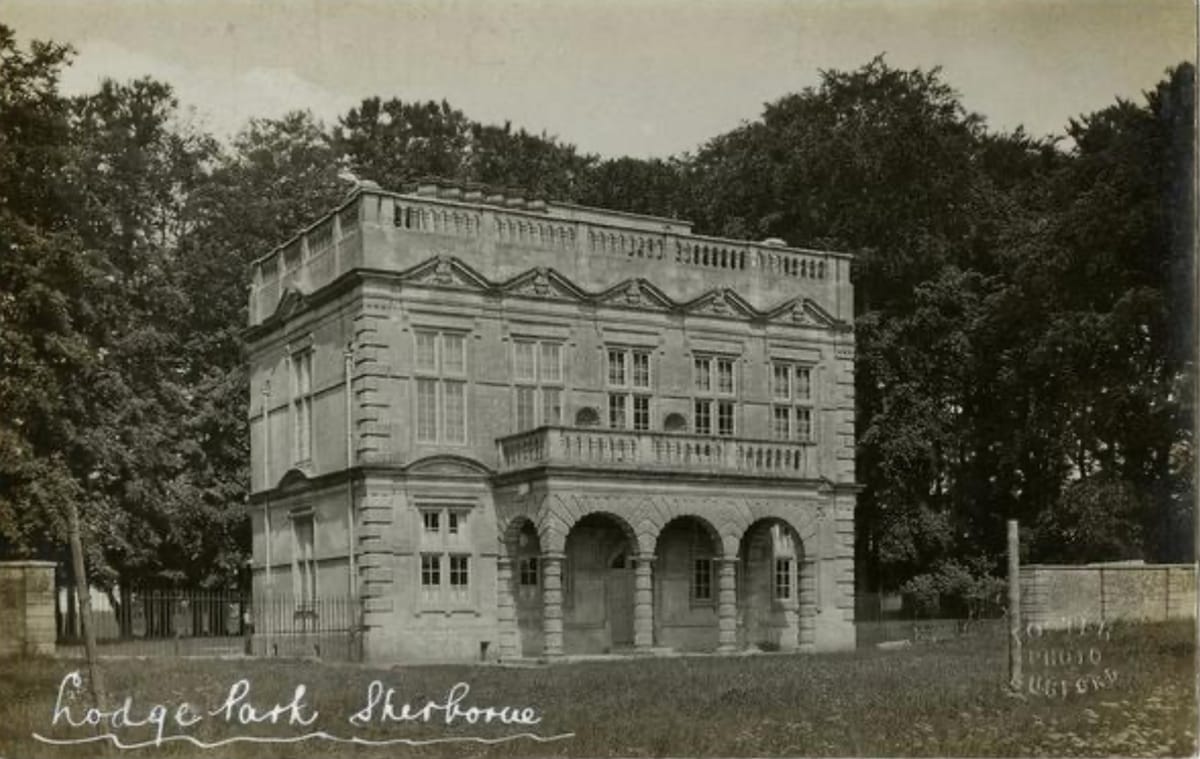
A couple of weeks ago I posted an analysis of the attribution of Lodge Park, the remarkable 17th-century grandstand in the landscape near Sherborne in Gloucestershire. In that analysis I challenged some of the more recent alternative attributions, suggesting that the most likely candidate is indeed Inigo Jones.
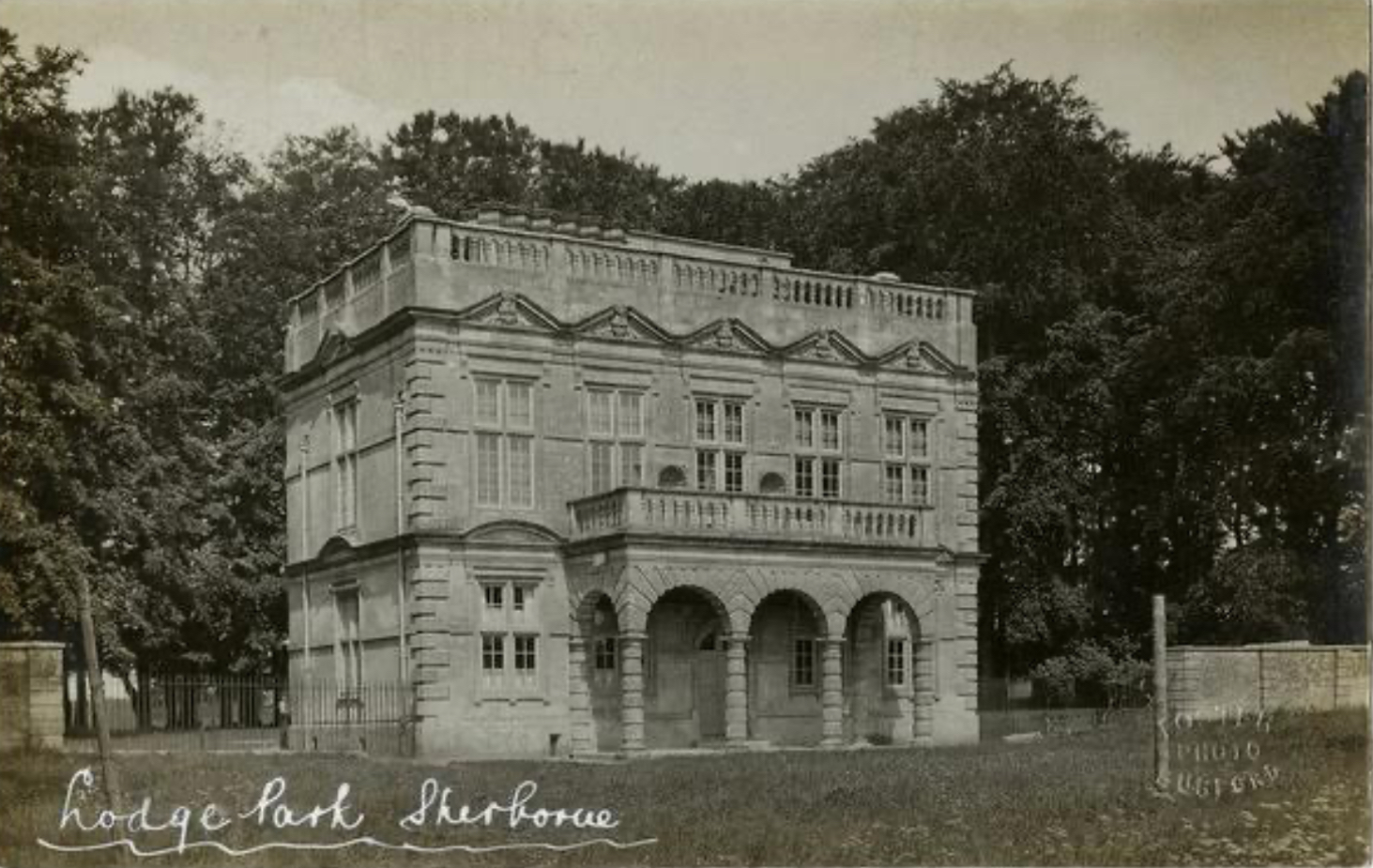
Further research has strengthened this conjecture considerably. As established previously, the Lodge Park Grandstand was built sometime before 1634—and this timing proves crucial to understanding its true authorship.
The John Webb Attribution: A Chronological Impossibility
Several historians have cited John Webb as the likely designer of Lodge Park. This attribution collapses under chronological scrutiny.
Webb was Inigo Jones's apprentice, born in 1611. He began work for Jones in 1628 as a 17-year-old apprentice, with duties limited to making fair copies of drawings and assisting with documentation under supervision.
The timing presents insurmountable problems. Lodge Park was certainly built before 1634, and possibly sometime after 1624 when "Crump" Dutton started creating the parkland. This provides only a narrow window during Webb's earliest apprentice years.
More significantly, Webb was serving a formal apprenticeship as defined by the Statute of Artificers—the legal framework governing English crafts. Seven-year apprenticeships were mandatory, meaning Webb's wouldn't have ended until 1635, well after Lodge Park's completion. Generally, apprentices couldn't qualify until age 24.
Webb's first known architectural drawing was for an unbuilt project at Hale in 1638. He didn't emerge as an independent architect until after Jones's death in 1652. His first major independent design wasn't until 1654 (the Vyne portico)—at least twenty years after Lodge Park's design.
The case against Webb's involvement rests on four fundamental points:
- His age: too young for such responsibility
- His qualifications: apprenticeship incomplete until 1635
- His experience: no documented building designs until much later
- The client's status: "Crump" Dutton, described as the richest man in England, would have commissioned the most distinguished architect available—not an apprentice
Valentine Strong: Similarly Problematic
The same chronological issues plague any attribution to Valentine Strong of Taynton. Born around 1609, Strong would have been only 20 during Lodge Park's construction. While he may have participated in building work, a junior provincial stonemason designing such an innovative structure seems highly unlikely.
Even Strong's father, Timothy Strong, has his first recorded construction work in 1633—building porticos and fireplaces elsewhere. Strict chronological analysis makes both Webb and the Strongs implausible candidates for designing Lodge Park.
Lt Hammond's 1634 Description: Revolutionary Technical Specifications
Contemporary witness Lt Hammond's 1634 account provides crucial evidence. His precise technical terminology reveals Lodge Park's extraordinary sophistication:
"one stately, rich, compacted Building all of Free-stone, flat and covered with Lead, with strong Battlements about not much unlike to that goodly, and magnificent Building the Banqueting House at Whitehall..."
Hammond's description documents revolutionary Continental engineering combined with traditional English elements—an unprecedented achievement in 1620s-1630s building practice.
Five Distinctive Design Elements Point to Jones
1. The Double Cube
The great room on the first floor employs double-cube proportions—a signature of Jones's classical precision and Vitruvian principles. Only two other 17th-century double cube rooms existed in England: the Banqueting House at Whitehall (1620s) and Wilton House near Salisbury (after 1647). Both are directly associated with Inigo Jones. No other contemporary architect is documented creating double cube rooms.
2. Freestone Construction
Hammond's emphasis on "Free-stone" is significant. Most contemporary buildings (aside churches) used timber or Tudor brick. The Banqueting House (1622) was revolutionary in its use of cut ashlar stone throughout. Hammond notes Lodge Park similarly employed freestone—expensive material indicating premium construction and serious architectural ambition, typically reserved for the most prestigious commissions.
3. Flat Roof
Flat roofs were highly innovative and unusual in 1630s England, primarily associated with classical Mediterranean architecture. They required advanced waterproofing techniques and sophisticated understanding of classical principles. The only other contemporary building with such a flat roof was Jones's Banqueting House. This engineering challenge demanded innovative trussed roof construction imported from Italian practice—a fundamental departure from contemporary English methods.
4. Lead Covering
Lead roofing represented the pinnacle of 17th-century technology, requiring highly skilled craftsmen and enormous expense. Traditionally reserved for royal palaces and major ecclesiastical buildings, its use on secular architecture was noteworthy and consistent with Jones's royal commission specifications. The combination of flat roof with lead covering was particularly challenging, requiring perfect waterproofing without natural drainage advantages.
5. Battlements
Hammond's reference to "strong Battlements" describes the parapet edging the flat roof—a feature shared with the Banqueting House. This classical adaptation to English architectural traditions represents the sophisticated fusion of Continental and vernacular elements characteristic of Jones's mature style. Of course, I’m not suggesting that a parapet is a unique Jones feature, but a parapet surrounding a flat lead covered roof on a building of Palladian proportions is definitely a Jones signature and no other contemporary architect was doing this.
Geometric Landscape Design: The Broader Jones Signature
Beyond the building itself, the surrounding parkland reveals sophisticated geometric planning that further supports Jones's involvement. I’ve discussed this here, and here. The landscape exhibits Vitruvian design principles and golden ratio relationships (880 yards × 1.618 = 1432 yards) between key features—mathematical precision characteristic of Jones's classical approach.
Remarkably, these same dimensional relationships appear at Greenwich Park, where Jones was definitively working on the Queen's House during this period. The 880-yard and 1432-yard measurements occur at both sites, suggesting coordinated geometric planning across multiple royal and aristocratic properties. While Jones's landscape work remains less documented than his architecture, the mathematical sophistication and astronomical alignments discovered across these parklands indicate systematic application of classical geometric principles to English landscape design.
This geometric evidence extends the Jones attribution beyond the grandstand itself to encompass the entire designed landscape—a level of integrated planning that would have required the most sophisticated architectural mind of the era.
Conclusion
The convergence of evidence—chronological impossibilities ruling out alternative candidates, contemporary testimony comparing Lodge Park to Jones's masterwork, five distinctive technical elements found only in Jones's documented projects, and sophisticated geometric landscape planning—builds an overwhelming case for Inigo Jones's authorship of both Lodge Park's grandstand and its surrounding designed landscape.
This attribution resolves the puzzle of how such architectural sophistication appeared in the English countryside during the 1620s-1630s. Only Jones possessed the Continental training, technical expertise, and established reputation necessary to create such an innovative synthesis of classical engineering and English architectural traditions for England's wealthiest patron.
