More very old Sherborne charters
The Landboc, translated from latin
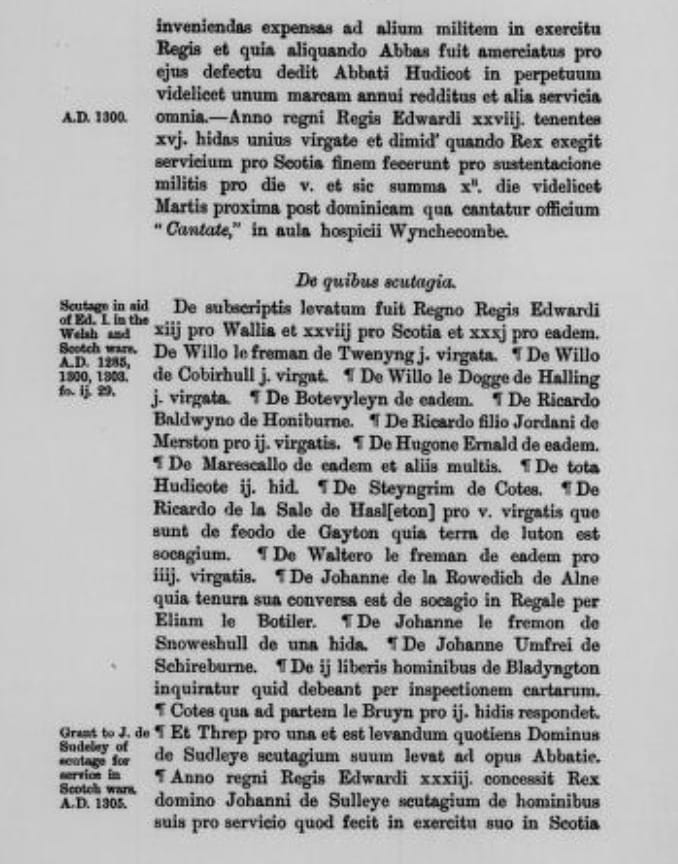
In a recent post I described that we were using AI to help interpret a 1711/1712 book of accounts written in manuscript by John Dutton. That is progressing slowly. AI isn’t quite as good at transcribing the cursive text as I had hoped.
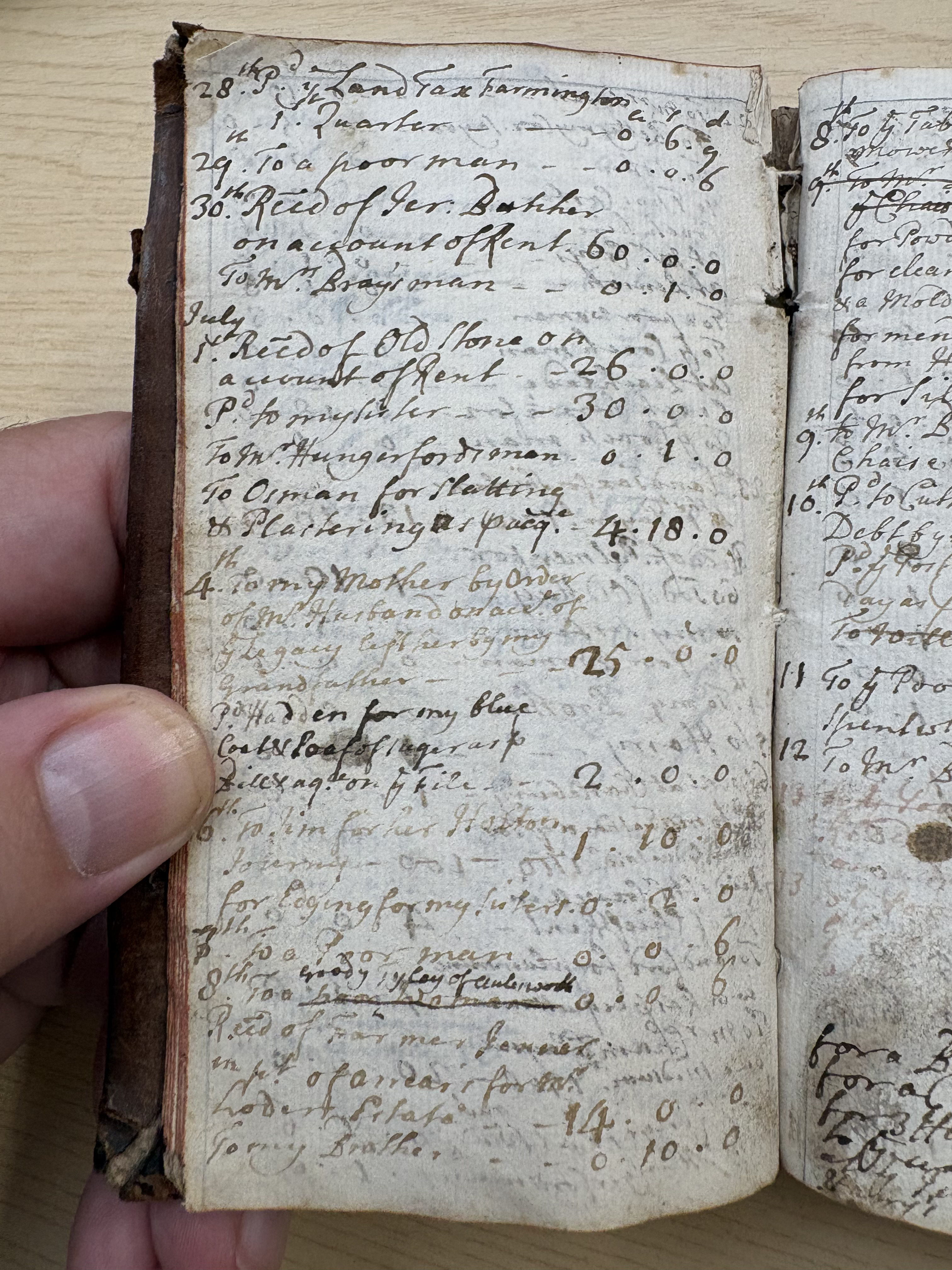
A page from the 1711 Accounts.
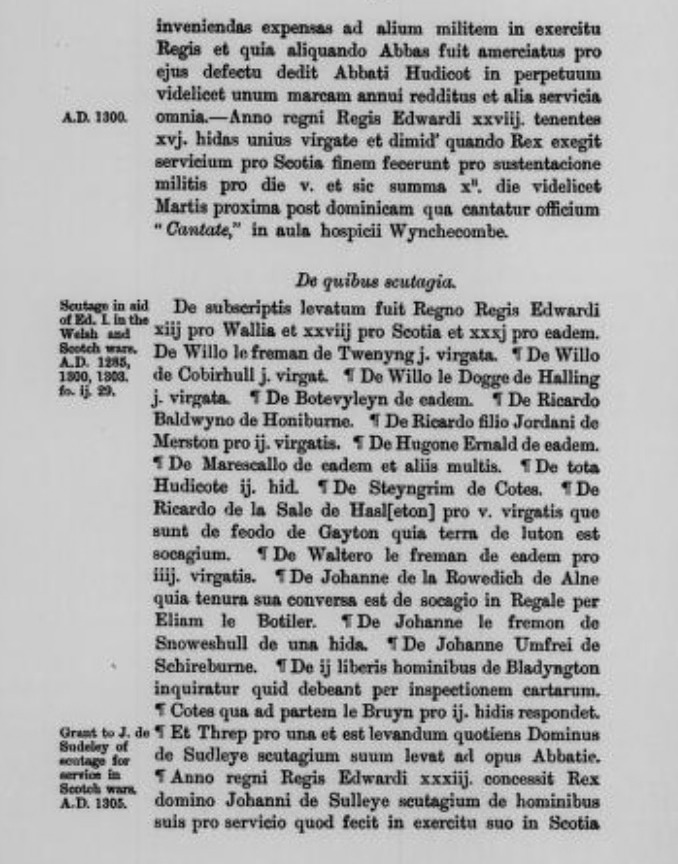
However I’m having much more success using AI to translate much older documents from latin. The Winchcombe Abbey “Landboc” was written by the monks from the Abbey that owned Sherborne from about AD 800 to the late 1500s. It’s a huge document, in Latin, largely, detailing a huge amount of “charters” which are transfers of land over the centuries. Quite a few mention land in Sherborne.
We are fortunate that a 19th C cleric, David Royce, sat down and transcribed the hand-written text into print, and that document is freely available in hard copy or online. It’s a huge document, 640 pages.
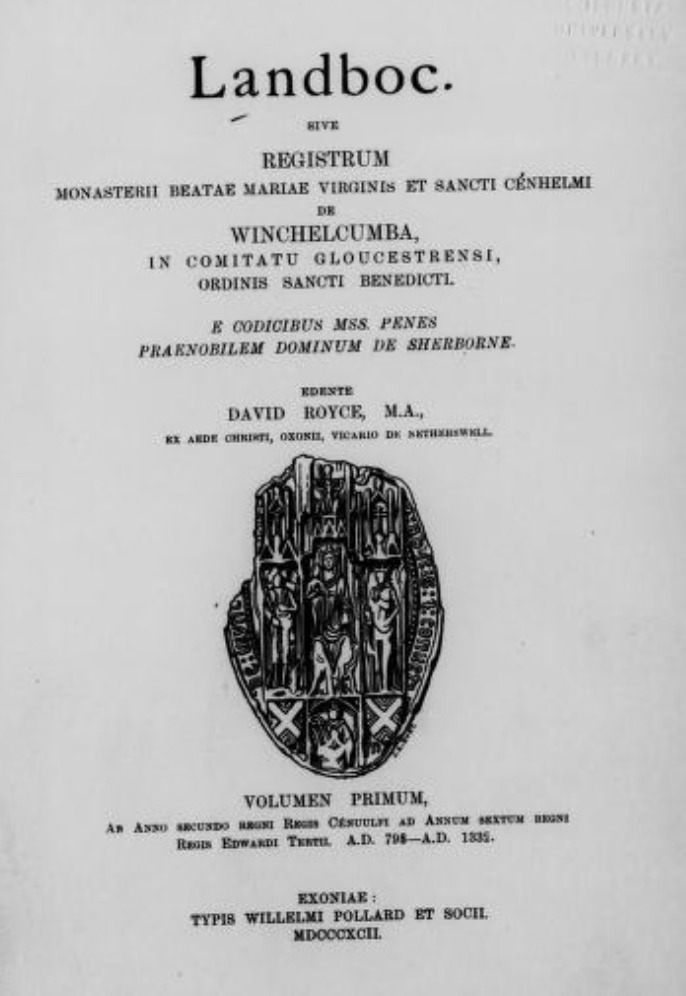
Here’s a an example page from the Victorian pulblication
Now we have this in a text version and what I assume its a pretty good translation I have used AI much more successfully to translate those pages referring to Sherborne. It takes a little “acrobatics” because of the wide variations of the spelling of Sherborne. Here’s an example of a Sireburna page from the 13th Century :
The LATIN
Noverint omnes, ad quos praesens scriptum pervenerit, quod ego, Johannes, filius Johannis de Sireburna, dedi et concessi, et hac praesenti carta mea confirmavi Deo et Ecclesiae Beatae Mariae et Sancti Kenelmi Wincecumbe et Monachis ibidem Deo servientibus unam placiam in villa de Sireburna, juxta domum Willelmi Cote, habentem in longitudine quadraginta pedes, et in latitudine triginta et sex; et in utroque campo de Sireburna sex acras terrae; videlicet unam acram in Campo Australi, unam acram apud Graveling, quae est capitalis acra; et unam acram apud Twomburnes; et tertiam acram in Widene Longa; et quartam et quintam acram juxta Quarrariam; et sextam acram apud Blakemuldenelonde, scilicet mediam acram de meis acris, et in Campo Boreali unam acram apud Galonge, quae se extendit in Gifford; et aliam acram apud Wadelinghulle, juxta Johannem, praepositum; et tertiam acram apud Petelonde, propinquiorem villae; et quartam acram supra Huscombe, quae se extendit super campum de Wyeforde, et quintam acram, infra viam versus Huscombe versus Orientem; et sextam supra Holecumbe in valle.
Tenendam et habendam dictam placiam cum omnibus acris praedictis, cum omnibus pertinentiis et omnibus aisiamentis in pratis et pascuis, viis, semitis, et omnibus locis, quantum ad tantum tenementum pertinet, dictis Monachis et eorum successoribus vel eorum assignatis, libere et quiete, bene et in pace, in perpetuum, absque omni servicio, secta curiae et omni saeculari exactione vel demanda.
Et ego et heredes mei dictam placiam, cum omnibus acris praedictis et omnibus pertinentiis et aisiamentis praedictis dictis Monachis et eorum successoribus et assignatis contra omnes homines et feminas in perpetuum warantizabimus et defendemus et acquietabimus.
Et propter hanc meam donationem et concessionem et praesenti carta confirmationem dederunt mihi dicti Monachi, ad urgens negotium meum, sex marcas argenti et unum quarterium frumenti.
Et quia volo quod haec mea donatio, concessio et confirmatio omni tempore firma sint et stabiles, praesenti scripto sigillum meum apposui.
Hiis testibus:
Domino Ricardo de Wenrich, milite;
Roberto de Marisco;
Roberto Iuvene;
Galfrido, Vicario de Sireburn;
Humfrido de Sireburn;
Willelmo, filio Andree; et aliis.
THE TRANSLATION (in two seconds!) to
Charter of John, son of John of Sherborne
Let all men know, to whom the present writing shall come, that I, John, son of John of Sherborne, have given and granted, and by this present charter confirmed, to God and to the Church of Blessed Mary and Saint Kenelm of Winchcombe, and to the monks there serving God, one plot of ground in the village of Sherborne, next to the house of William Cote, having in length forty feet and in breadth thirty-six feet; and six acres of land in each of the two fields of Sherborne, that is to say:
- one acre in the South Field (Campo Australi),
- one acre at Graveling, which is the chief acre,
- one acre at Twomburnes,
- a third acre in Widene Longa,
- a fourth and fifth acre beside the Quarry,
- a sixth acre at Blakemuldenelonde, being half an acre of my own acres there;
and in the North Field (Campo Boreali):
- one acre at Galonge, which extends into Gifford,
- another acre at Wadelinghulle, beside John the reeve,
- a third acre at Petelonde, nearer the village,
- a fourth acre above Huscombe, stretching over the field of Wyeforde,
- a fifth acre below the road toward Huscombe, toward the east,
- and a sixth acre above Holecumbe, in the valley.
To have and to hold the said plot, with all the said acres, together with all their appurtenances and all easements in meadows and pastures, roads, footpaths, and all places pertaining to the said tenement, to the said monks and their successors or assigns, freely, quietly, well, and in peace, forever, without any service, suit of court, or any secular exaction or demand.
And I and my heirs will warrant, defend, and acquit the said plot with all the aforesaid acres, appurtenances, and easements, to the said monks and their successors and assigns forever, against all men and women.
And for this my gift, grant, and confirmation by the present charter, the said monks have given me, for my pressing need, six marks of silver and one quarter of wheat.
And because I wish that this my gift, grant, and confirmation may remain firm and stable for all time, I have set my seal to this present writing.
Witnesses:
Sir Richard of Wenrich, (Windrush) knight;
Robert of the Marsh;
Robert the Younger;
Galfrid, Vicar of Sherborne;
Humphrey of Sherborne;
William, son of Andrew; and others.
So what can we gain from these translations?
I think several important things. At the moment I’m concentrating on the nomenclature of the fields. This document is from the 13th Century and clearly many of the names of the fields have changed over time. At this time many of the fields have distinctly Anglo-Saxon nomenclature. One or two of those names remain. Here’s an example from above:
Wadelinghulle, is now called Wadlands Hill. This is the field on the right , just over the bridge on the way to Clapton. The bridge is these days often called “Waddlestone Bridge” , derived from the slightly more correct “Wadlands Stone Bridge” but as we can see Wadlands may have been originally Wadeling. That word itself could refer to “wading” the brook to cross it, a thousand years before the bridge was built in the 18th C. so the hill beyond the brook was called maybe “The wading hill” because you had too wade the ford to get there.
Once complete and with a bit of analysis and cross-referring, I hope to be able to create an alternative map of Sherborne, to compare to the modern, and 1820 estate maps which gives more modern field names , showing where some of these ancient Anglo-Saxon locations are. I’m excited by locating the “Middleham” field in the centre of the village alongside the brook, and I’m working hard on locating the thrilling “Dragon Spring” and “Swan Spring” mentioned in other early charters. Many of the charters mention one field being next to another, so we may be able to carefully generate a clearer picture of the Anglo-Saxon landscape here in Sherborne from the 13th Century.
I will, of course, make available all the translations and I may need some help in piecing together some of these wonderful Anglo-Saxon names, which are often remarkably descriptive.
For example, where might Blakemuldenelonde. (Black ploughed-soil valley land) be, somewhere south of the village? A question for Mr Limbrick perhaps.
