Sherborne’s Peculiar Snow Well
Could Sherborne hide the oldest snow-well in Britain?
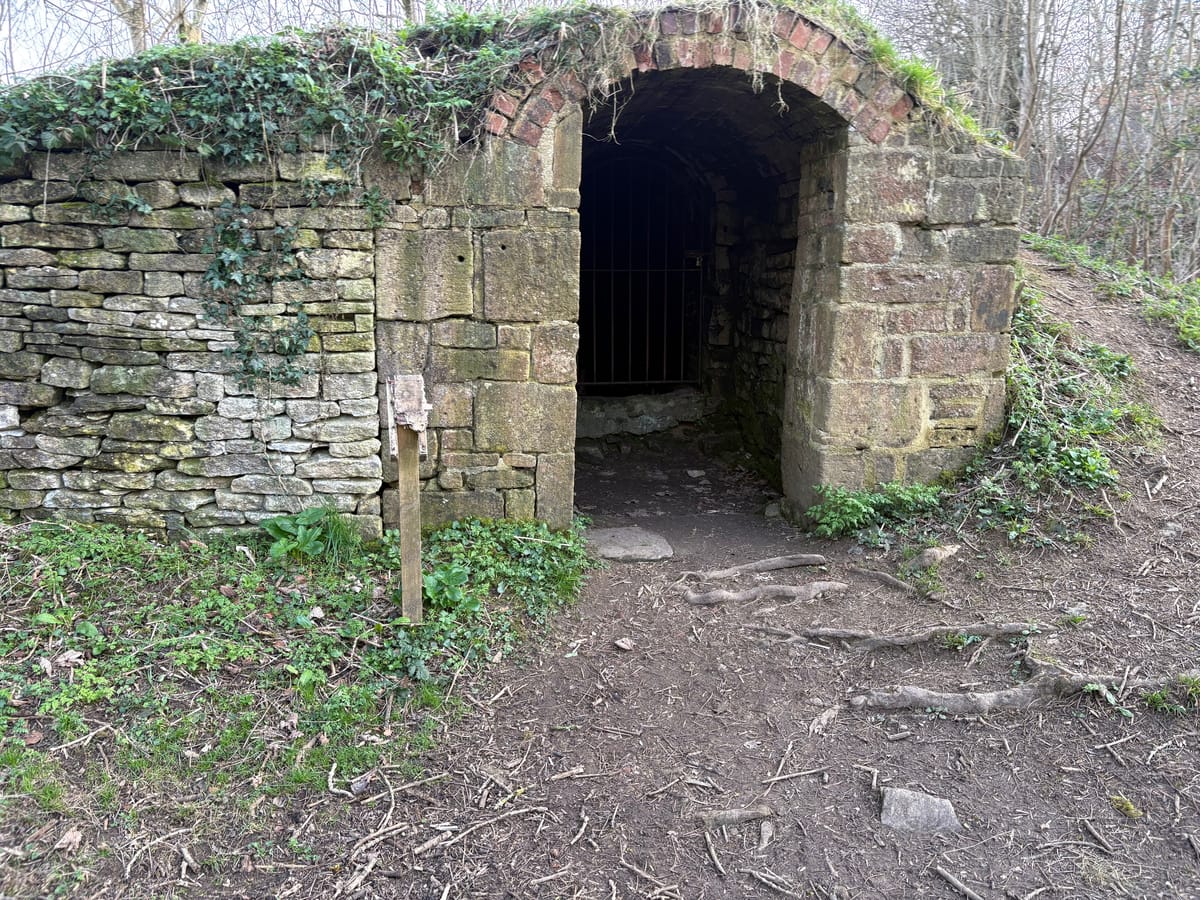
Readers will recall my earlier post about the rather unusual Ice House that sits a few hundred metres south and uphill of Sherborne House, just beyond the site of the former pleasure gardens. I’ve now uncovered some even more intriguing details.
Ice houses were often built by grand estates to store ice year-round for cooling food and drink. They were traditionally filled with ice from local ponds in winter, and in the 19th century many were filled up with ice imported from Canada or Arctic Russia — shipped, then moved by train and cart.
This Sherborne example has several oddities:
Dating mystery: Historic England suggest it is mid to late 19th-century, yet it appears on an estate plan of 1820. Clearly the Historic England dating is wrong.
Geometric alignment: It lies on a straight line with other curious estate features.
Solar alignment: It also sits on a summer-solstice line with two ancient burial mounds. Could easily be coincidence.
Site choice: Most ice houses are either:
close to the house they serve,
close to a water source for harvesting ice,
or close to a road for delivering imported ice.
This one ticks none of those boxes.
as you know in the last few months I also been exploring possible links between Sherborne and the architect Inigo Jones — notably through Lodge Park and the apparent presence (in Kip’s c.1709 drawing) of Jones-style gates at the front of Sherborne House (detailed in a pre-substack post). These gates pre-date the “Palladian revival” of the late 1720s led by William Kent, suggesting a Jones design present well before 1709.
The Royal Connection
In Greenwich Park, we know Jones designed the Queen’s House (from c.1616) while serving as Surveyor of the King’s Works (1615–1643). Around 1619, an “ice house” — perhaps two — was built in the park. Their exact sites are now lost, but a drawing from the 1700s survives. These are considered the first ice houses in the country, perhaps the concept brought back from Italy where the Medicis were building brick ice houses in the 15th C. At the very least these Greenwich ice houses would have been overseen by Jones in his official capacity and perhaps designed by him. This is an image of the Greenwich ice house at is existed in c1772
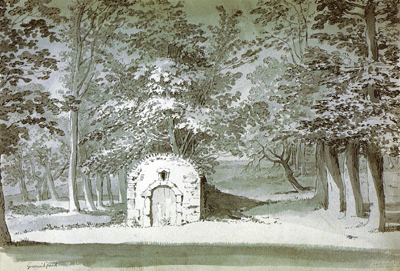
Descriptions mention a 16-foot-wide, brick-lined shaft. In the 1620s, King James commissioned another at Hampton Court, also with a 16-foot diameter, perhaps 30 feet deep. This too is likely to have at least been overseen by Jones. Both are sometimes called “snow wells.”
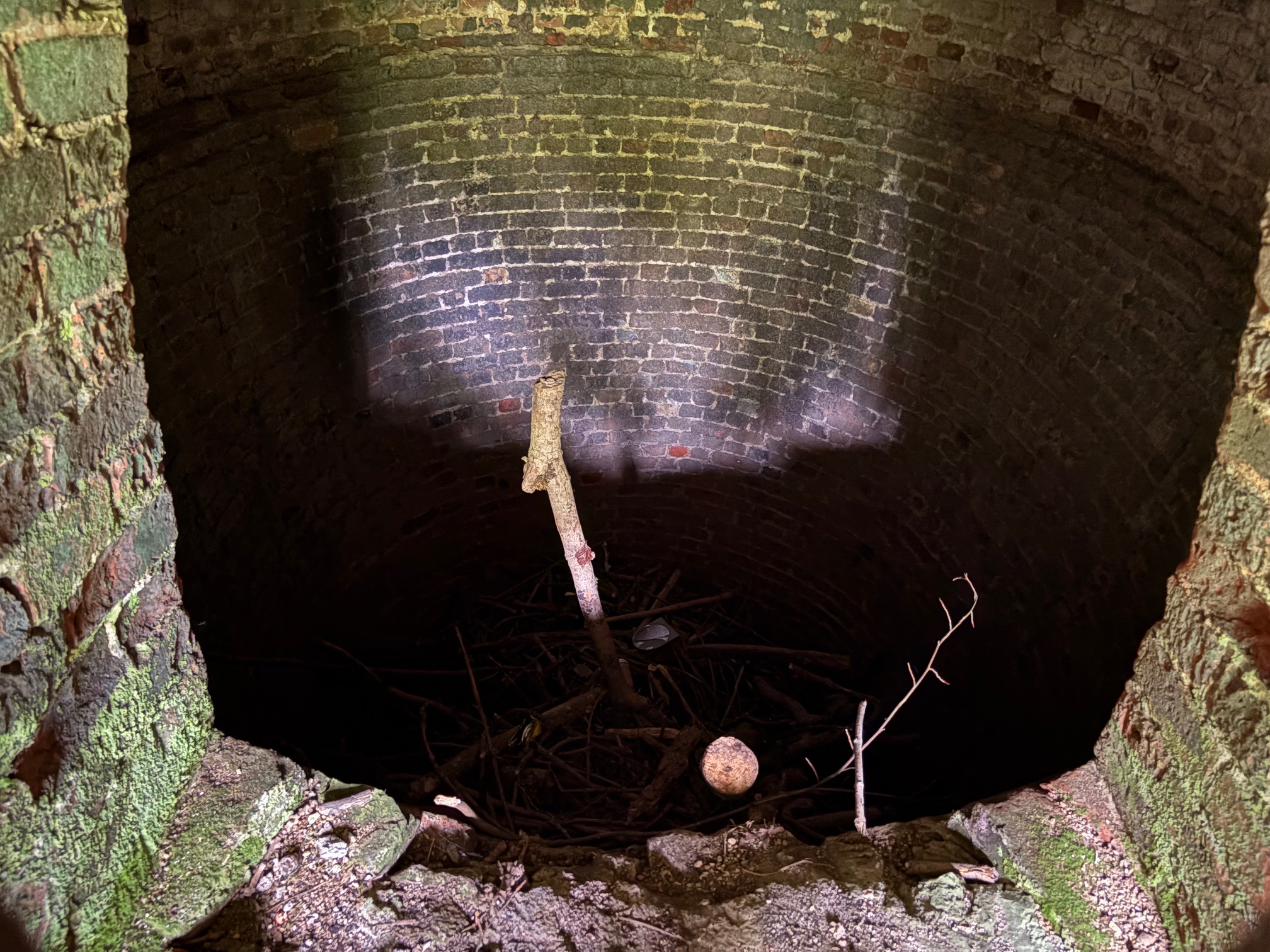
That’s interesting, because Sherborne’s shaft — also brick-lined — is about 15–16 feet across and roughly 30 feet deep (awaiting precise measurement). Exactly the same dimension… Early “snow wells” were often filled with compacted snow from surrounding land rather than pond ice, making it easier to transport by sled or cart. Might that explain Sherborne’s ice-house position? Is it as snow well?
Current Condition
Here’s what stands today:
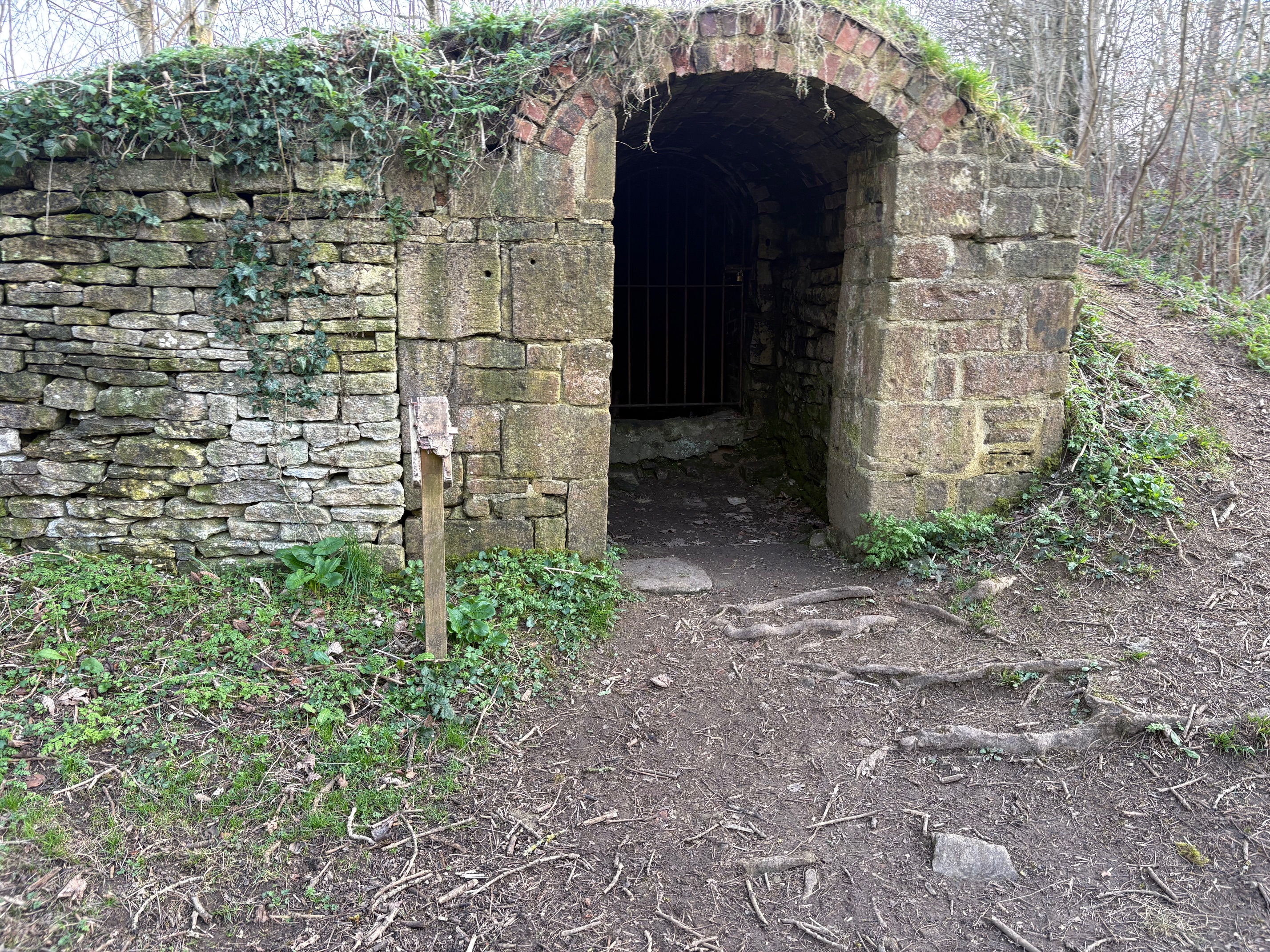
- The dry-stone wall to the left seems inconsistent with the main structure — probably a later addition. Imagine it without this wall and compare to the Greenwich image.
- The brick arch at the entrance looks like a relatively modern and frankly very poor repair, possibly using different brick from the interior. Look at the awful way it abutts the masonry, different on both sides. Shoddy. I’m not blaming the NT - I think it predates their possession.
- The masonry sides of the entrance don’t match the neat internal brickwork — likely another “bodge job” from before the arch. Look how both sides are different in terms of masonry bonding and mortar. Someone had just patched this up in an afternoon.
- The wooden National Trust signboard explains the feature has been awaiting renewal for years, adding to the air of neglect. 15 months ago I was told it was awaiting final approval by the curatorial team. Perhaps they too are still curious about what this site represents. While I can make conjectures as an individual it’s maybe different for a corporate entity like the NT to think out of the box. Better to just take down the rotting post I suggest. Or make a thing of its “mystery” and admit no-one knows. Given the popularity of the walk through the pleasure gardens, I think it deserves something rather than the impression of dereliction. As minimum this structure is 200+ years old and could be 400.Internal view showing neat brickwork. I am no expert and out of my depth here, but to me it perhaps looks like “English bond” brickwork, common until the later 17th C. Idiots have thrown branches and rubbish in. Sad.
Conjectures - inviting refutation
- This could be a snow well from the “Little Ice Age” period (16th–19th century), possibly built during Crump Dutton’s tenure after 1618.
- Its dimensions and construction closely match the royal snow wells at Greenwich and Hampton Court — both associated with Inigo Jones’s period as Surveyor of the King’s Works. With other potential Jones links in Sherborne (pre-1709 gates, Lodge Park), could Crump Dutton have commissioned Jones himself or copied a royal design?
- If it is a snow well (or an ice house), there should be a drain at the base of the shaft, leading downhill, perhaps even to the House — perhaps re-discoverable.
- If Greenwich’s examples are gone and Hampton Court’s rebuilt twice, this could be the oldest surviving structure of its kind in Britain.
- Or - it could be just of a standard brick design and dimension. But the odd alignment looks to me to date it to an early date.
- In any case, it deserves better care.
If I get a chance to wander by with a laser measuring tool I’ll measure the diameter of the shaft and let you know. Will it be 16ft and match the Greenwich and Hampton Court designs? Or will it be 15ft and match the other three features in alignment here in Sherborne? Let me know your thoughts, I’m very open to counters.
