Solstice sun rising over Sherborne
Midsummer magic and mystery to be solved
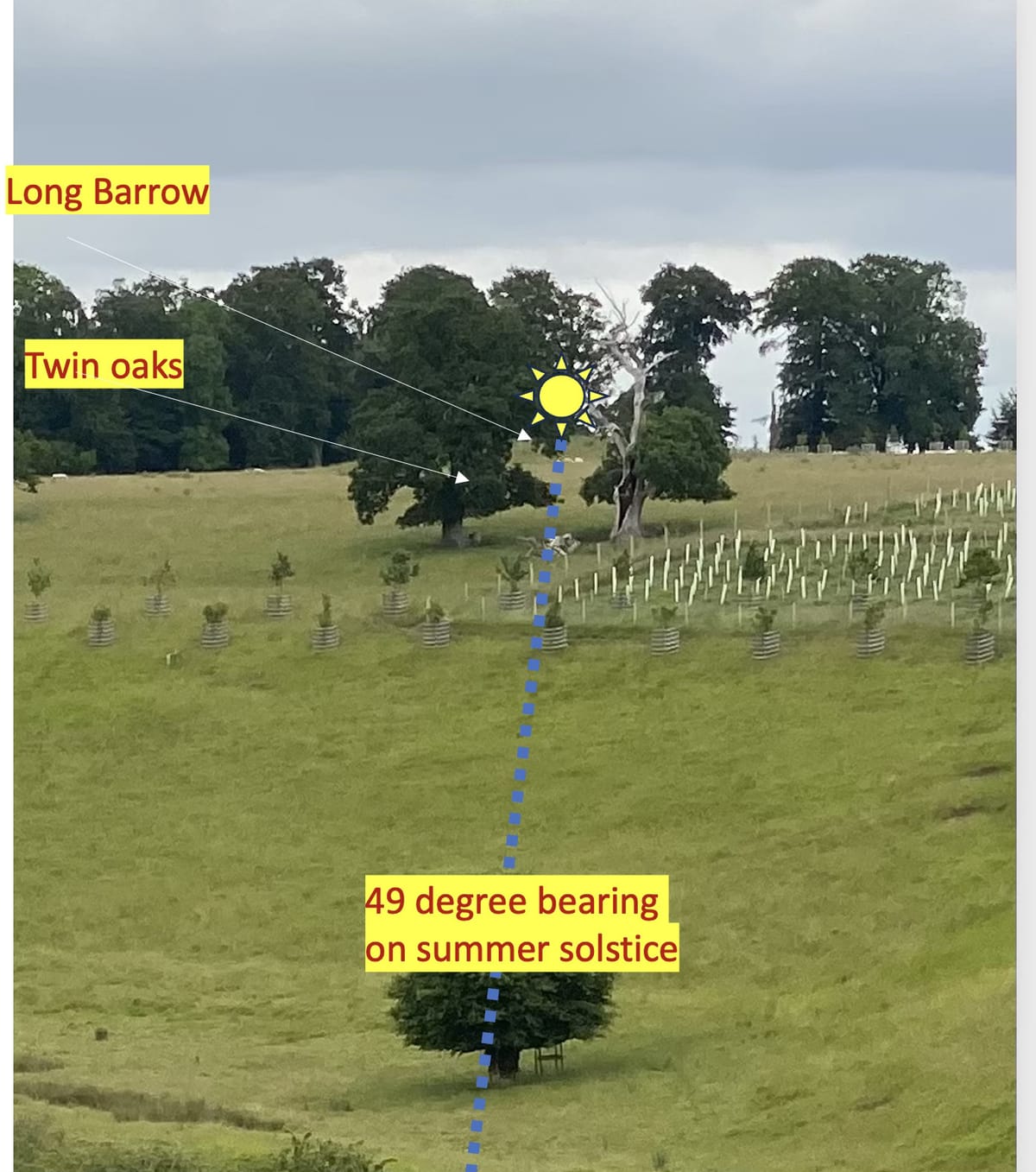
Today is Midsummer’s Day. Followers of this newsletter will know that we have evidence to suggest that the angle of the sun as it rises on Midsummer’s Day is a secret key to the local landscape around Sherborne . Traditionally the feast of St John the Baptist was plonked onto Midsummer’s Day which was 24th June in Old Calendar money. This was to appropriate the traditional midsummer pagan festival celebrating the longest day, the reign of the Oak King and included merriment and bonfires and such like. The church, and before them the Romans had a habit of taking pagan festivals and “culturally appropriating” them for their own purposes. You control the religion you control the people, and pagan practices can quickly become revolutionary, challenging order.
Now if one draws a line from the ancient church of St John the Baptist in Cirencester, to the equally ancient church of St John the Baptist in Great Rissington, a line between them lies at 49 degrees, the angle of the sun on Midsummer’s Day, the saint’s day of St John the Baptist. Not only that, but it crosses at least 4 and arguably quite a few more ancient burial sites - including two Neolithic long barrows and a round barrow or two. It’s extraordinary.
In a recent newsletter I posted a prediction of what I thought the sun rising over the Long Barrow in Lodge Park, near Sherborne might look like. The line below is on the line between the two churches and I predicted that if one stood on that line the sun would rise as if rising from the Long Barrow on the horizon, framed by two 500+ year old oak trees forming a portal.
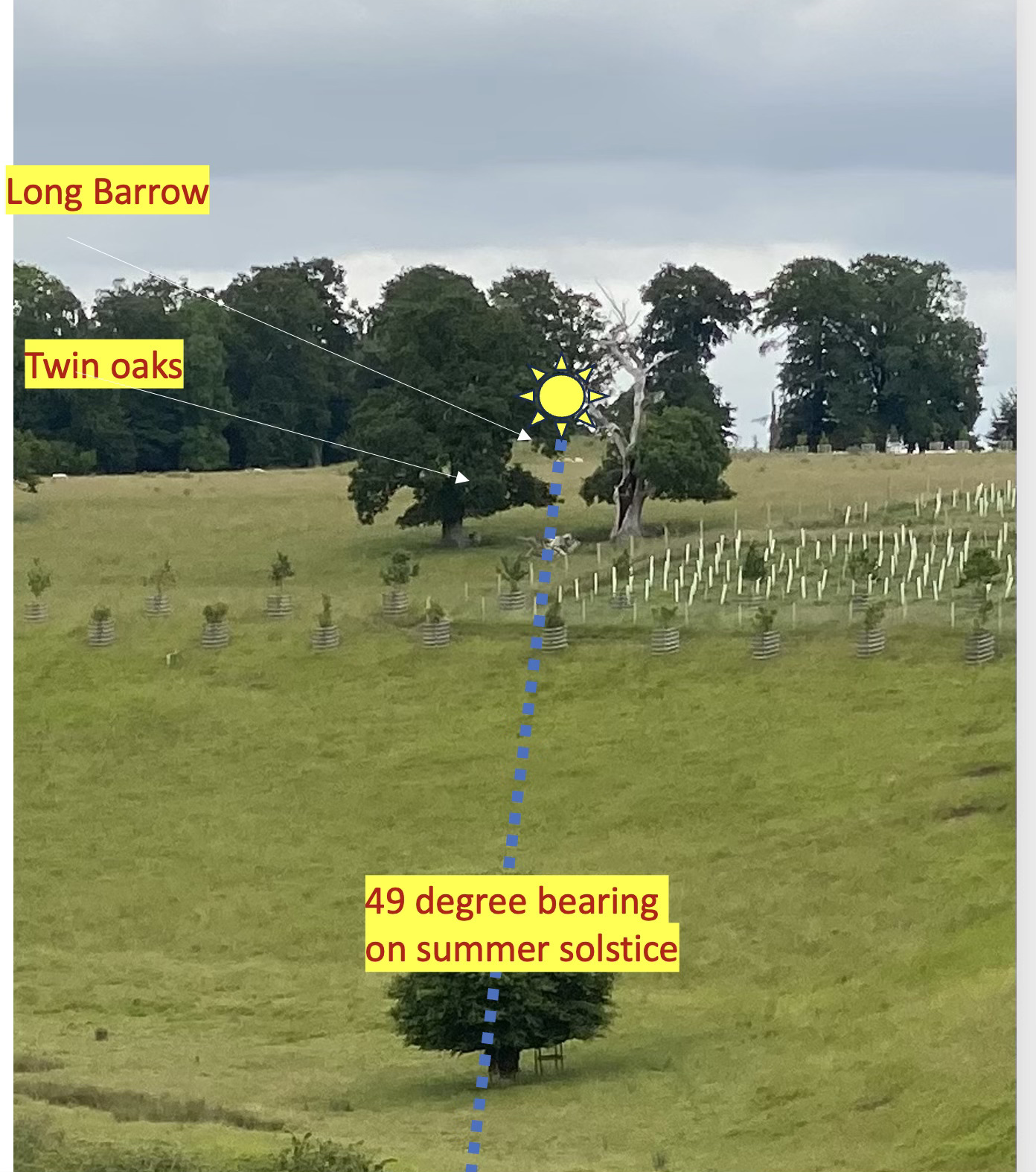
So, today is the summer solstice. Wanna guess where I was with a small number of pals at 4.49 this morning? To be clear I sought, and obtained appropriate permission to be there. No lambs were slaughtered, no virgins either and we committed, under oath, to not undertake Morris dancing. Rather spookily we were joined by three uninvited foxes.
I was nervous - would my calculations be correct? - they had been dismissed by some. At 4.49 the glinting sun appeared through the trees behind the Long Barrow - bang on!
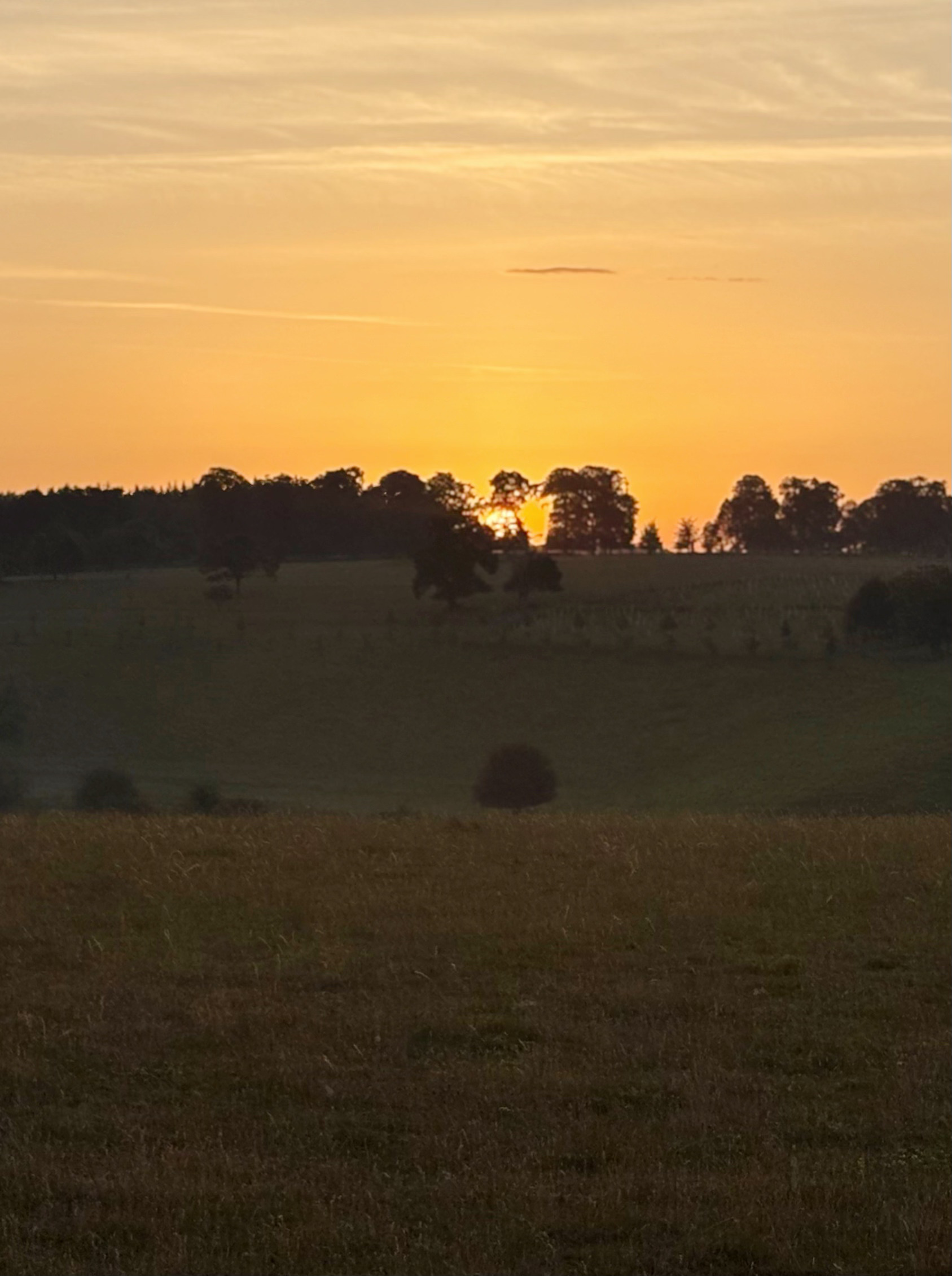
Whoop, what a thrill! It really felt like a special moment. I think this sight has been attended by locals for most of the last 5500 years, watching the sun rise as if from the Long Barrow, which is the mausoleum of their chief. There’s a clear feeling of “continuity” and “predictability”, of the sun, the changing seasons and the relationship with our predecessors in this landscape. The fact that this is “framed” through the portal of the two oldest oaks in the local area is curious.
A couple of minutes later I took this photo, with the lens flare kindly (and accidentally) aligning down the 49 degree angle. It makes the photo quite special in my amateur eyes. This is a special place too, a treasure glistening with jewels, some recognised , some not. The foxes which paused to share the excitement of the rising sun, their red coats shining in the golden sun seem to know this. One barked as we left sharing his appreciation of the occasion, and it did feel like an occasion..
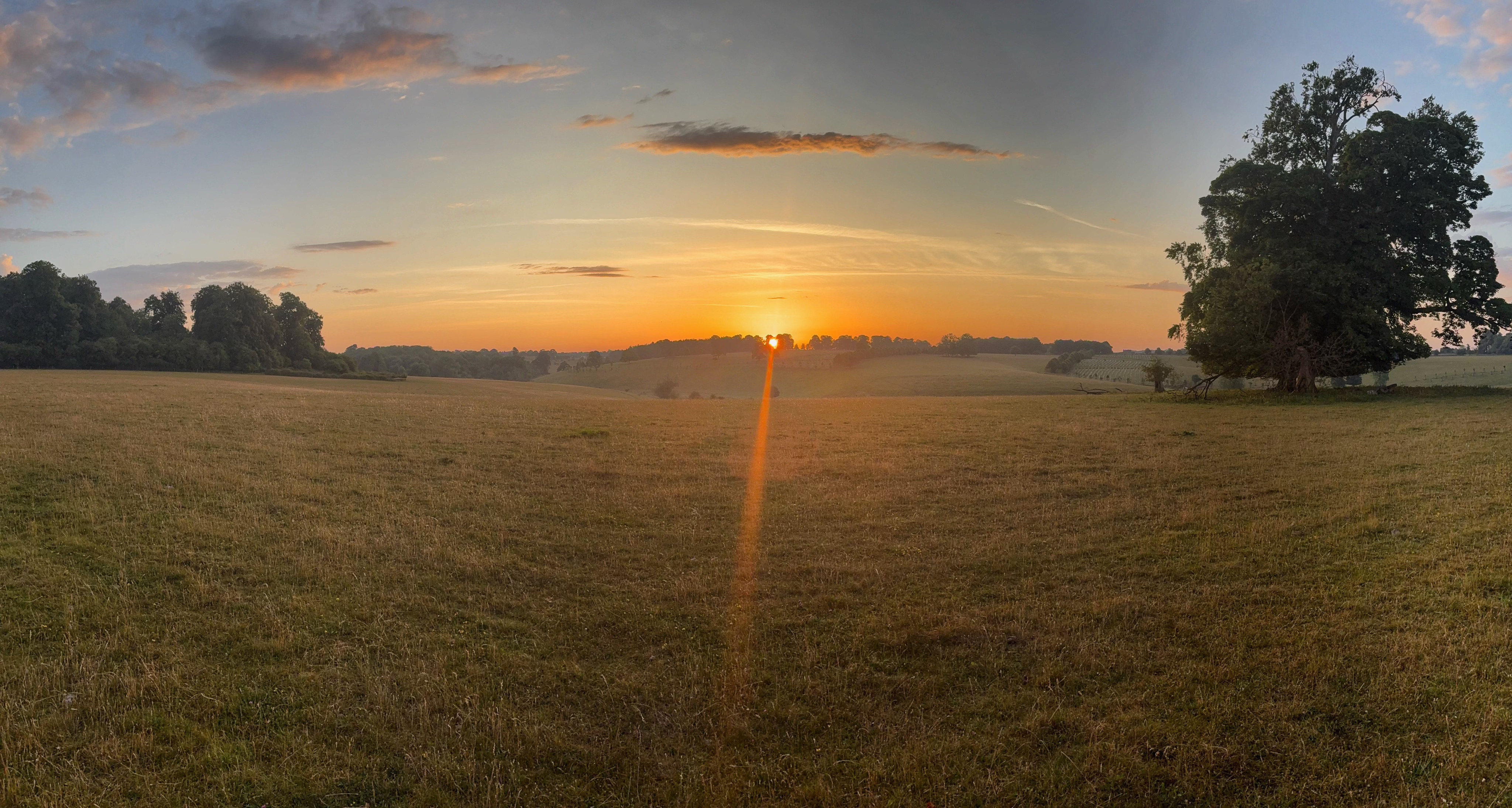
So that’s probably enough for today. One can only take so much excitement. But I want to flag something that’s coming. Some of you will know that there’s a strange “canal” or “pool” in the dip between the viewer and the oak trees in the image above. It’s strange because no-one knows its purpose, its age and why it was built here. Historic England describe it thus:
The 10m wide and 200m long marshy River Leach Pool, cut along the centre of this, probably represents relatively recent, perhaps C20, agricultural activity.
Here’s a pic, with the pool or “canal” running away from the viewer at the bottom of the valley.
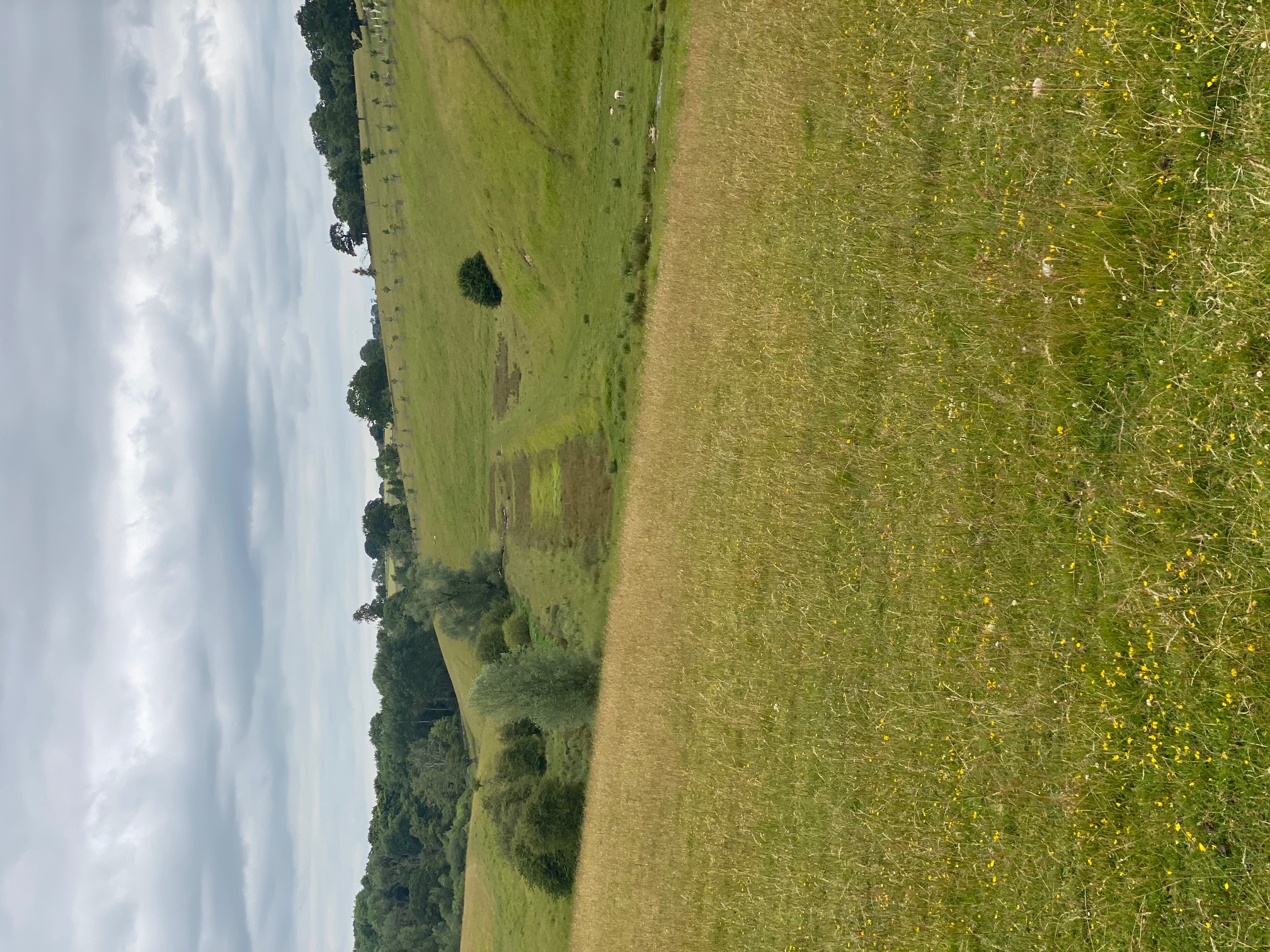
So my little hook to keep you interested is that I have uncovered some important unrecognised aspects of this feature - hiding in plain sight - I think it’s 300 years older than Historic England suggest and part of a clear geometric plan that was being used to construct the parkland. This has significant implications to our understanding of the history of Sherborne (where there is a similar grid we have uncovered in recent months) and Lodge Park. As an aside the pool is not 200m long as Historic England suggest, it is exactly 300 yards long. And it’s 22 yards wide not 10m.
Watch this space, and I’ll provide you details in due course.
