Something Special in Sherborne – Part 1
Mysterious alignments in Sherborne
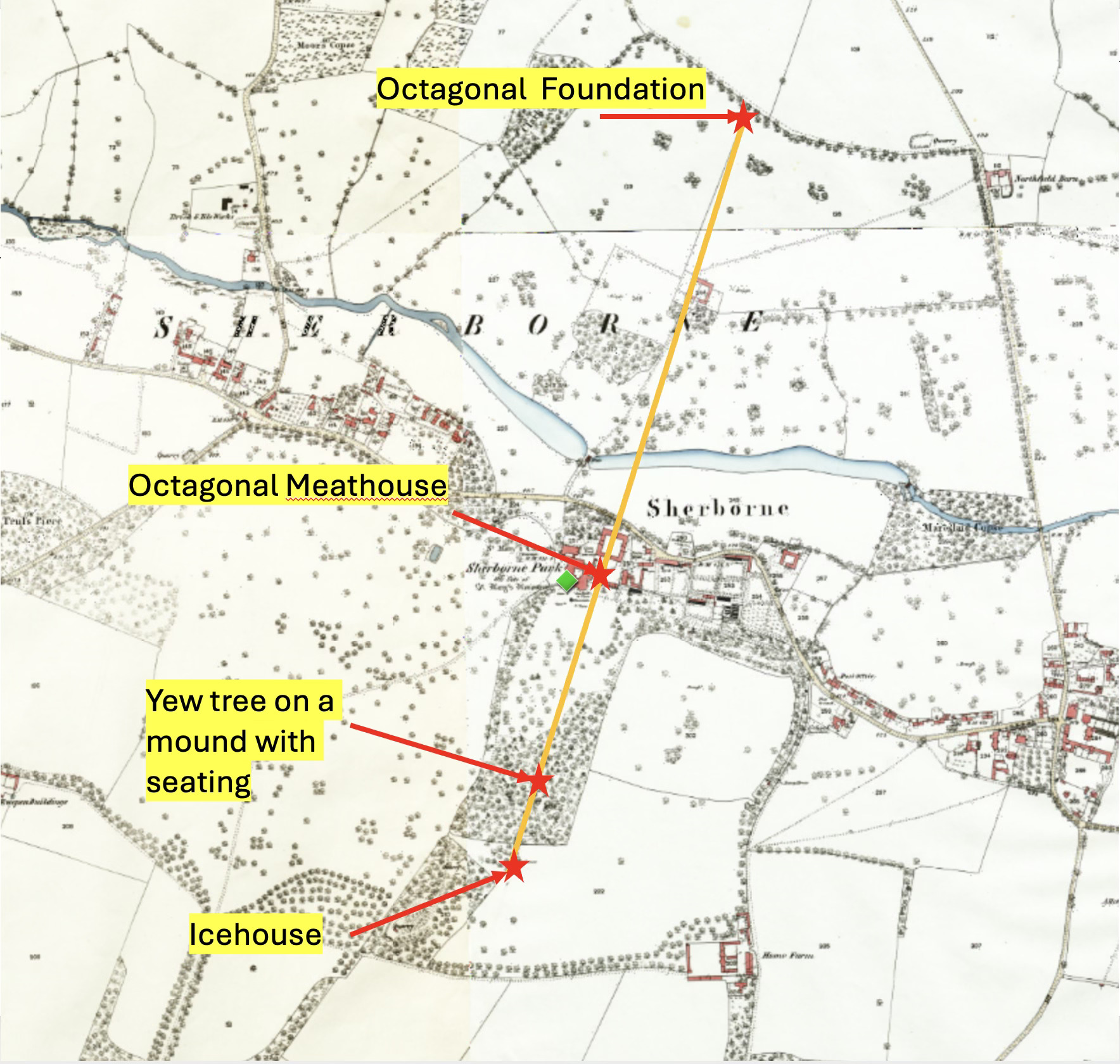
I've been warning of something important for the last few days and now I come to write it up, I realise it's too complex to get over in a single post. So this is Part 1 and Part 2 will follow in a couple of days' time. I'm returning to a mysterious Sherborne alignment. I've written about this before but have just found more pieces to the jigsaw, each one remarkable in their own right. There's some detective work going on here you might enjoy. So I’m discussing FOUR points in a line across the village - I’ve highlighted three of these before but now there’s an additional point and a curious thread running between them, metaphorically.
The Octagonal Foundation
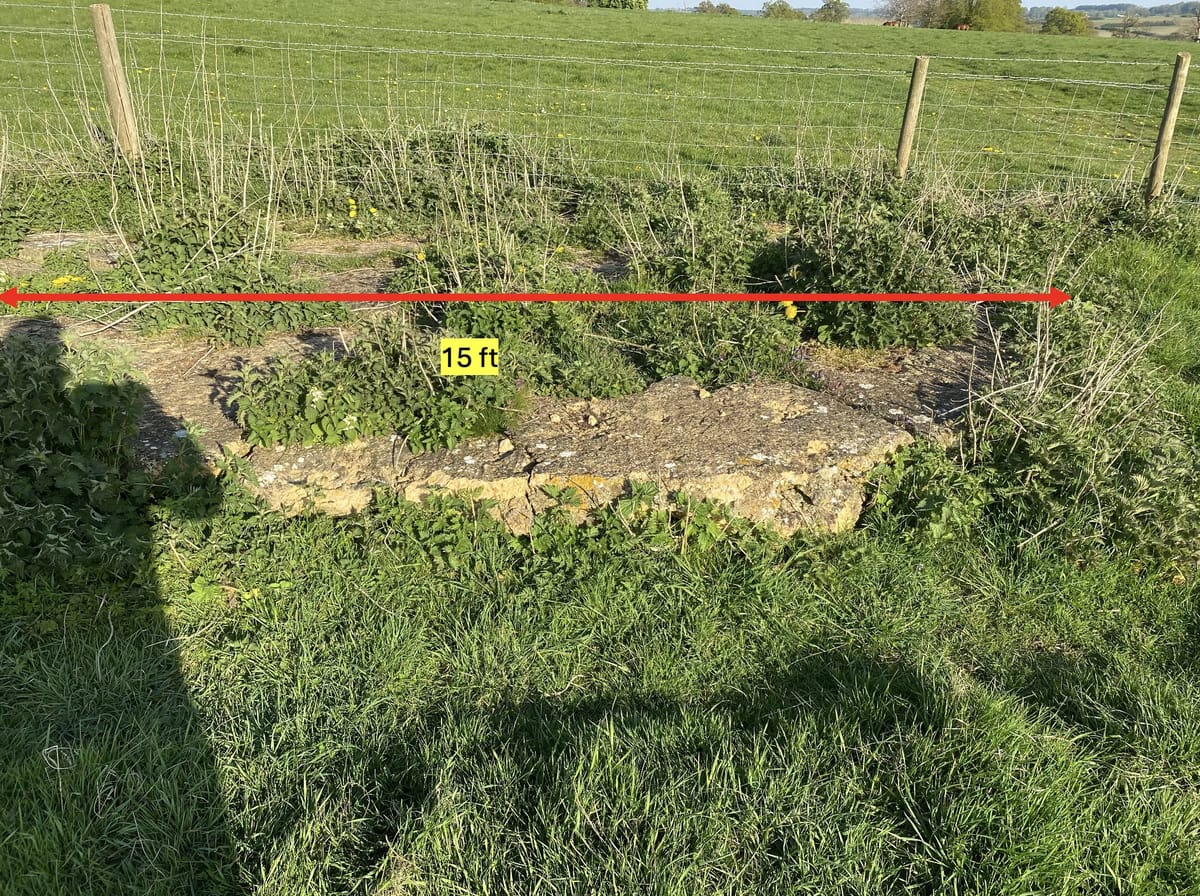
To remind you, towards the northern wall of Old Park is a strange octagonal "concrete" foundation, 15 feet across.
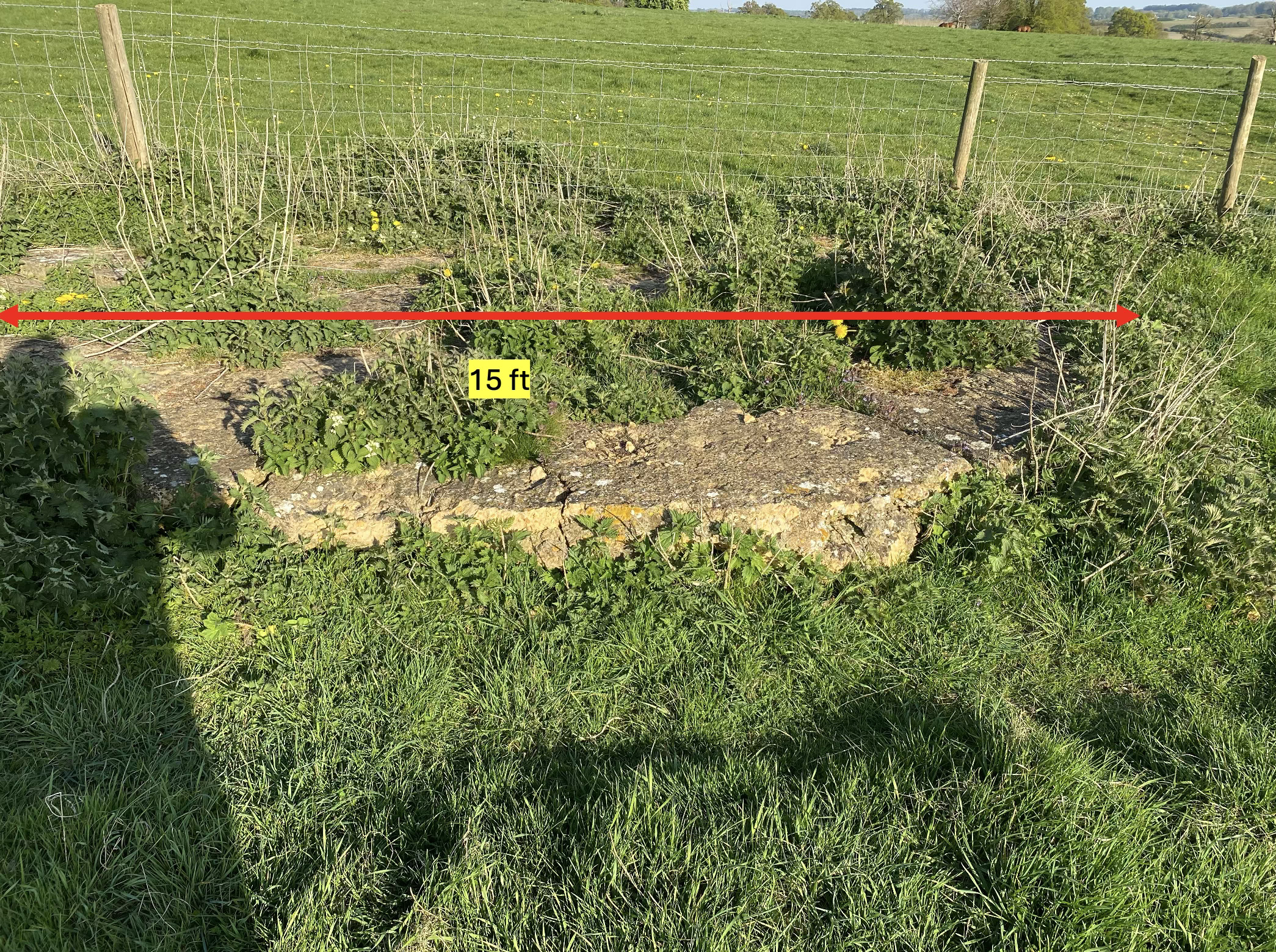
This feature has been dismissed by historians as maybe once a cow shed (an octagon, really?) and doesn't appear on the National Trust LIDAR survey. I think it's in an interesting position at the highest point of the Park. A few hundred years ago octagonal "belvedere" structures were all the rage and one here, with a little height, could have seen all four corners of Sherborne park. I'm imagining a wooden structure, like the image below. This image is the only flight of fancy in this report. But to be clear, until now, this structure has been ignored by the historians - but it clearly exists as an octagon foundation with a 15ft diameter.
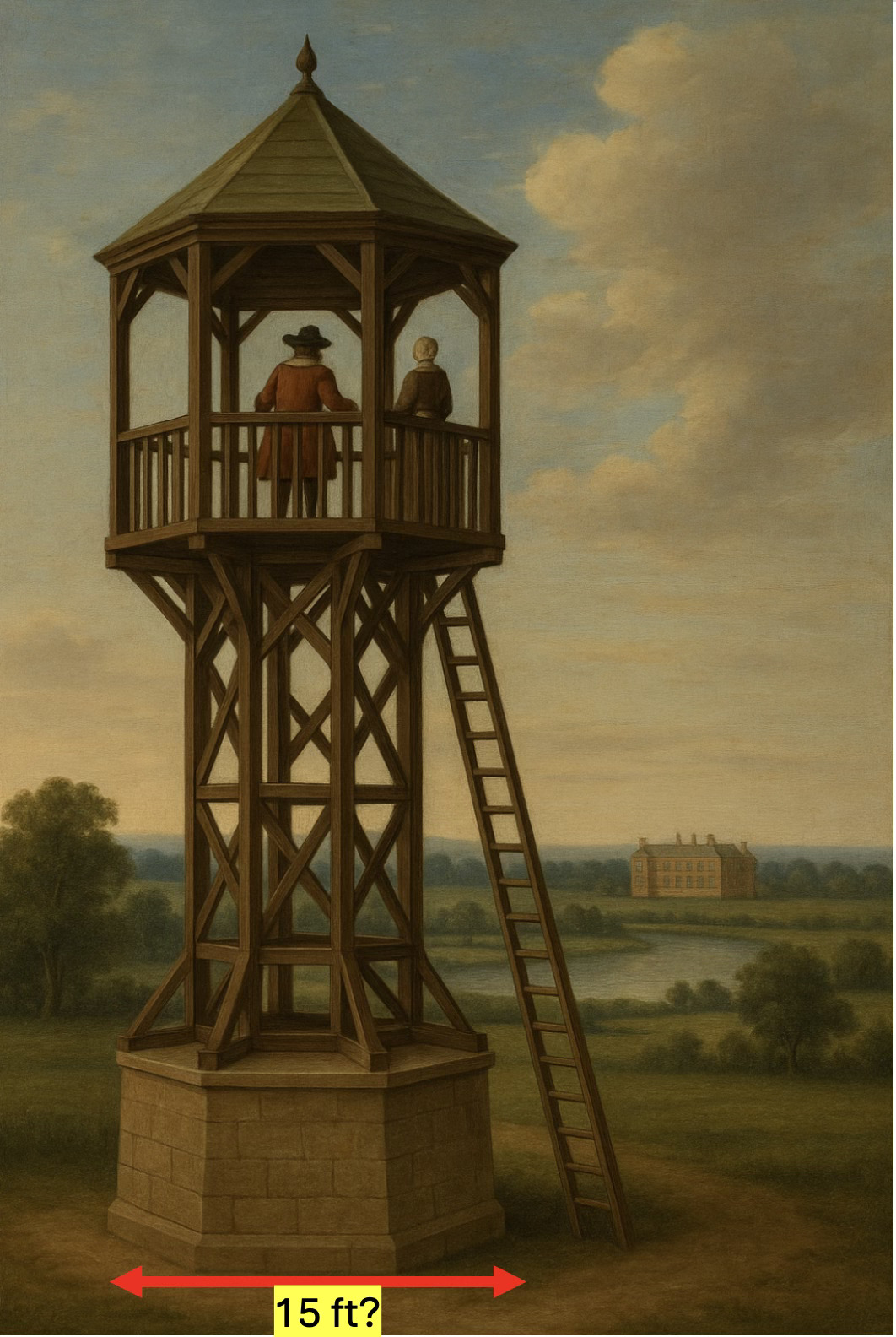
Artists impression with the help of AI
The Meat House Connection
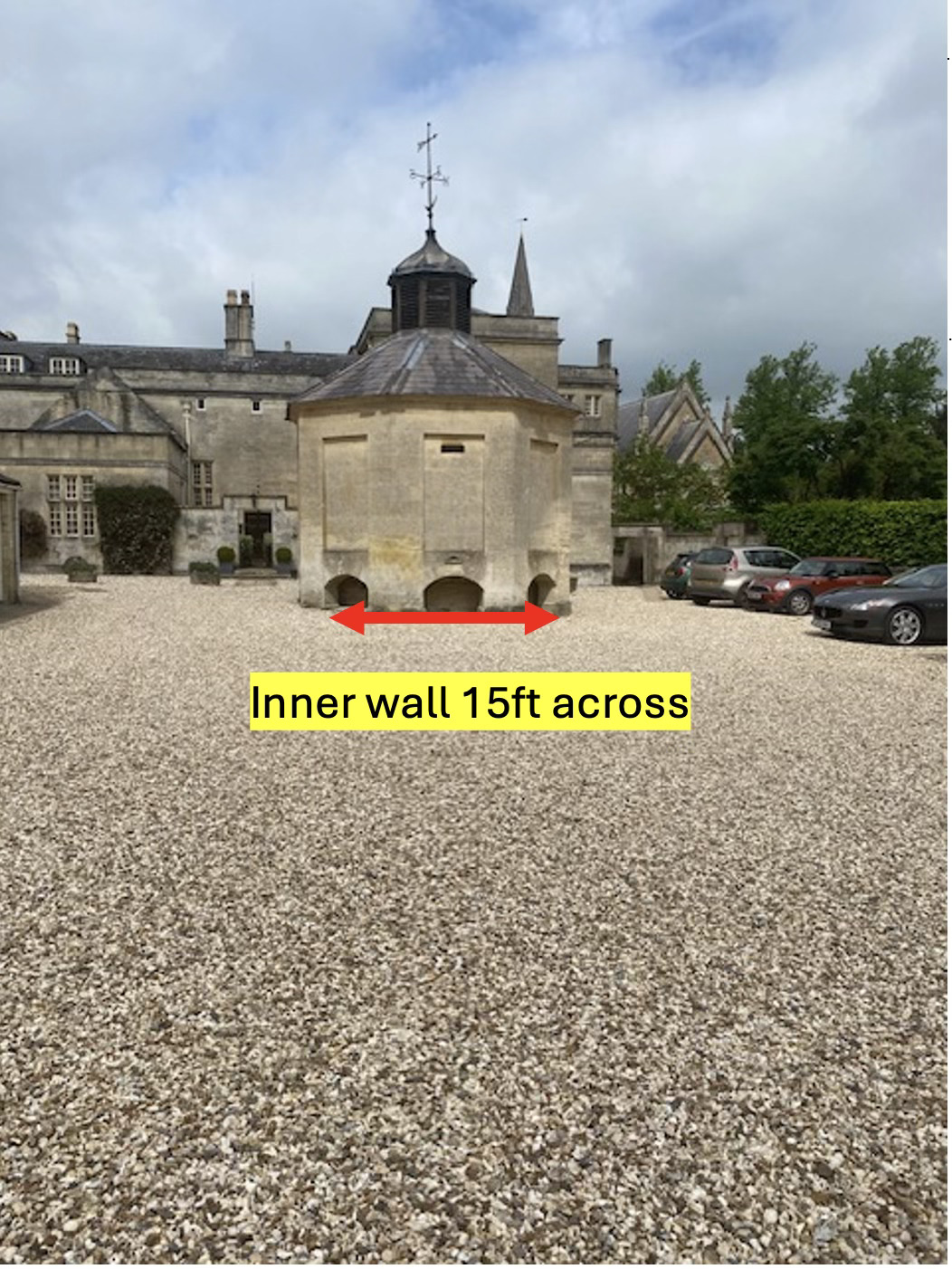
Now, in the courtyard behind Sherborne House is the "meat house." This double-walled structure was used to store meat – the double wall allowing the inside to remain cool. The external wall was built in the 19th century.
Here's Historic England's statement – listing it as Grade II:
However, one should note that the inspector did not gain entry to the inside (now an electrical substation). Here's a picture of the inside, courtesy of Sherborne House residents.
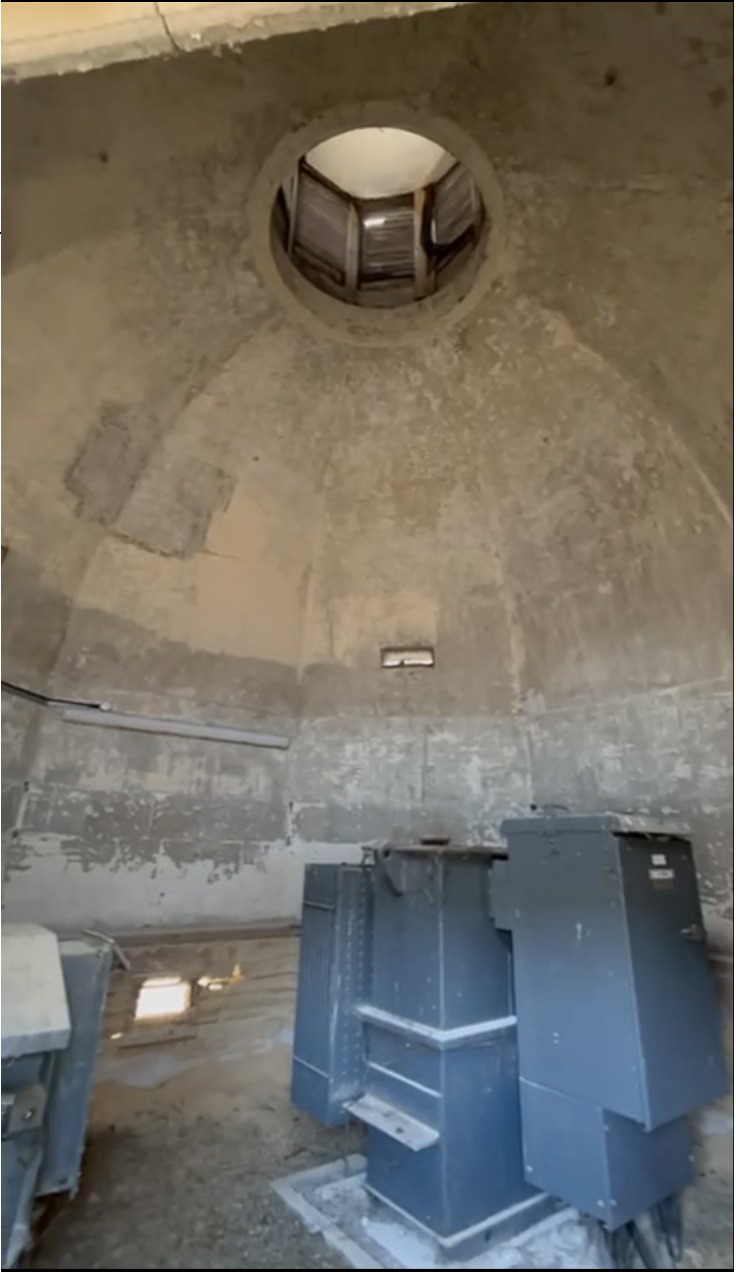
The separate inner wall is interesting. The gap between the two walls keeps the meat cool. Maybe the meathouse was built around an earlier structure. (The stone work is different). By my calculation this inner wall is OCTAGONAL again and EXACTLY the same dimensions as the foundation to the north, 15 feet across. More significantly, the distance between the two is exactly 880 yards, to the inch. Half a mile on the dot. Not 890 yards, not 860, but 880 yards. We have seen this dimension before in parkland I suspect of having been created in the early 1600s. Initially it might appear that the line runs down the centre of the stable block, built c.1770, but close examination shows it is off-centre to the stables, so I'm pretty certain the stables are later.
The Ice House Mystery
Now the next thing (which I reported before) is that the ice house to the south is also EXACTLY on this alignment. This ice house is really in a very strange position to meet the purpose of storing ice. Too far from the house, too far from roads. Contrary to some beliefs, in most cases around the country ice wasn't brought into ice houses from nearby ponds – it was brought into the country by ships from the Arctic and transported by train and cart, wrapped in straw, to the houses of the great and good. So ice houses were near roads and near the house, not dissociated from it, as we have here. There is reportedly another ice house on the village road, opposite the gates going down to the weir - a much more sensible position. Maybe there was a nearby pond from which ice was removed, but I'm a little sceptical.
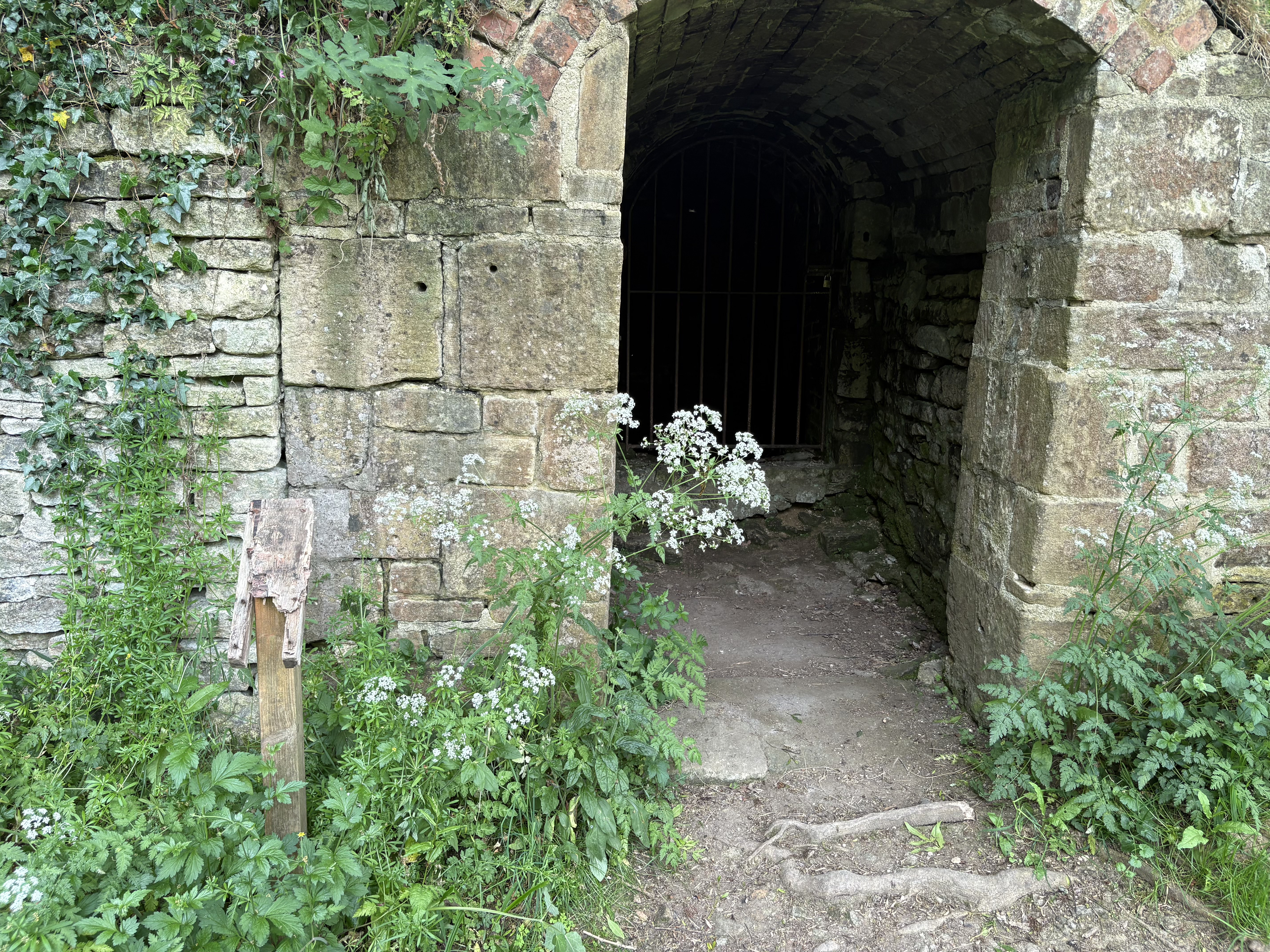
The doorway to the ice house with the rotten sign beside it.
Historic England lists the ice house as mid to late 19th century at this link.
This dating is clearly wrong as a structure of some sort existed on the c.1820 estate plan – so at the very latest this is an early 19th-century structure originally and maybe earlier. Was it something else before conversion to an ice house? There are ice houses in Cirencester that were converted from mud older structures. I’m learning to be a little sceptical of Historic England dating. I cannot easily measure the inner space but I wonder if it is 15 feet across? It seems to be about that. That would be interesting, would it not?
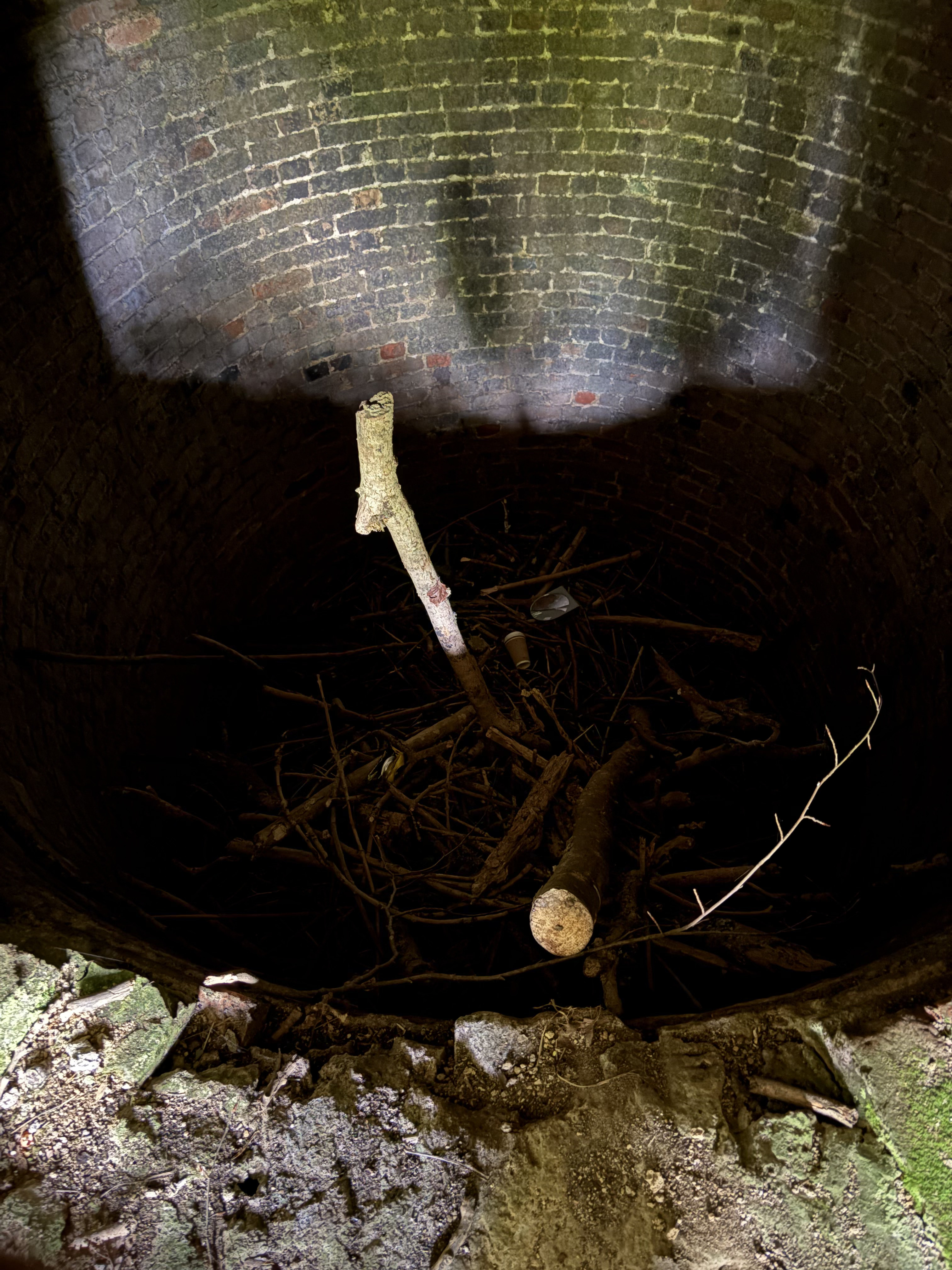
The inner ice house, sadly filled with tree debris and rubbish. Is it 15ft across?
A year ago when discussing this feature I politely and respectfully pointed out that the explanatory notice provided by the NT on the post beside the entrance had rotted away. The NT assured me that the signage was being replaced and "that updated interpretation for the ice house is on its way soon. It is just awaiting sign-off from the curatorial team." One year later, I'm afraid there is just still a rotting signpost, slightly more rotten than last year. The latest line is that the NT are "currently working through it internally." All I can do is blink in surprise that it takes so long to go through such an internal process to post a sign. But of course, I'm not familiar with the internal processes in the NT. Shrug.
The Golden Ratio Connection
What I think is important is that the distance from the first octagon, through the meat house at 880 yards, to the ice house is 1,432 yards. So that is 880 × the Golden Ratio of 1.618 (phi). Yes, of course that could be coincidence, but it suggests to me the hand of a geometrician laying out the parkland with the ratio, linked to the Fibonacci sequence. We have seen before and I’ll show again that the park gates are geometrically aligned, very cleverly. There is a strong suggestion that Greenwich Park in London has used a similar technique for defining certain dimensions there (880 × phi), and I suspect Inigo Jones of that design. Feel free to dismiss that suggestion and offer an alternative!
Here's a link to some Golden Ratio background for those who aren't familiar:
The Yew Tree Discovery
So, to the next, new, piece of the jigsaw. I'm kicking myself for not having noticed this before, but I was looking at an old map (you know how I spend my days!) and realised that the old yew tree on a mound in the Pleasure Gardens also sits exactly on the same alignment. The yew tree at the top of the mound is old – at least a couple of centuries old I would suggest, maybe a little older. In coming days I'll measure its girth and report on that.
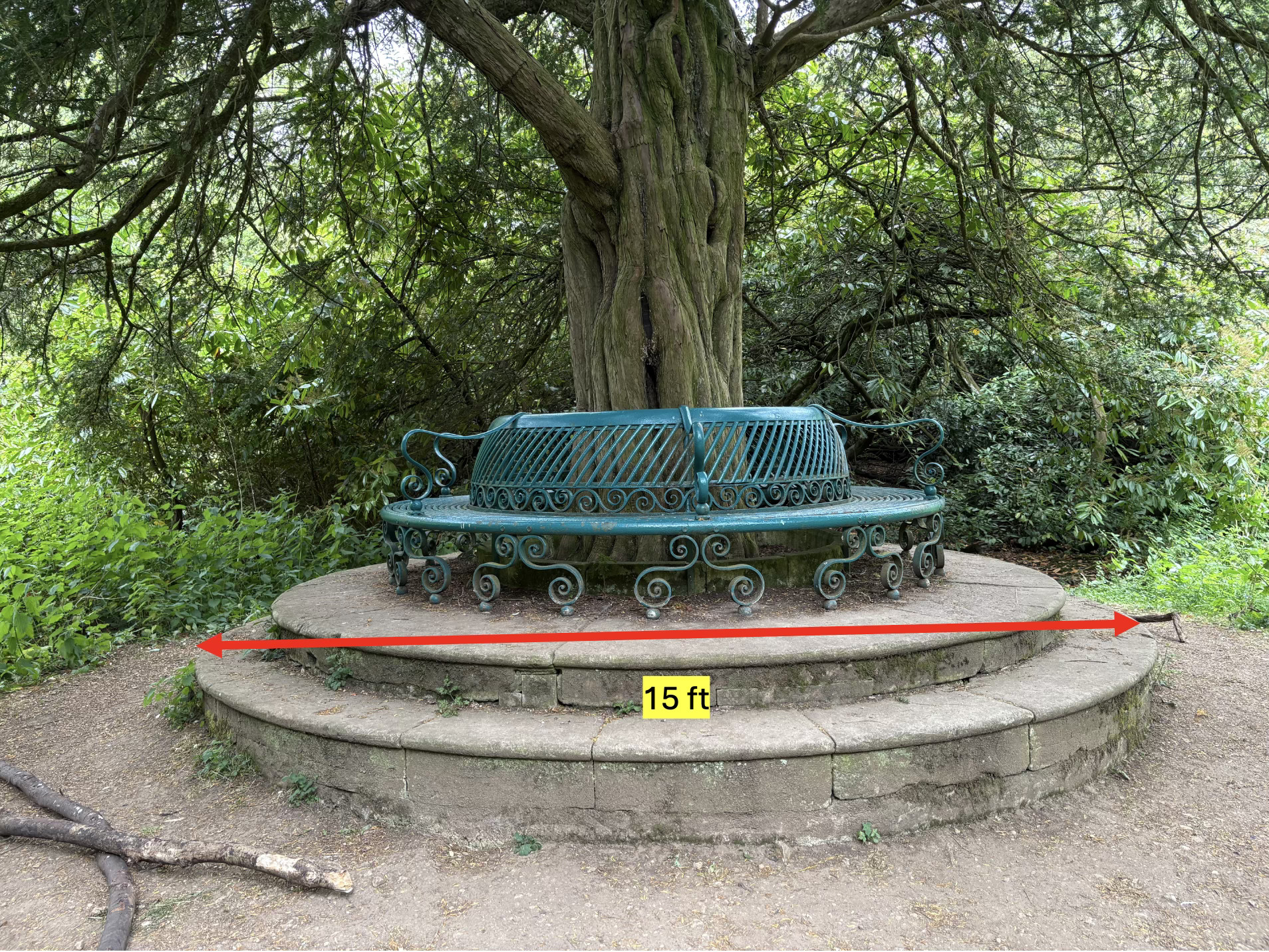
The next important thing is that the circular stone platform surrounding the tree is 15 feet in diameter. Hmm. Is this another crazy coincidence or are all these coincidences adding up?
Without all the trees now grown around it, I think that this once (in the 17th and 18th C) provided a viewpoint looking north and one would see both the structure behind the house (now the meat house and possibly something else, a pigeon loft, before that) and in the distance, on the horizon, what I'm suggesting was a belvedere, in a straight line.
Here's the line plotted on a map:
Geometric Perfection
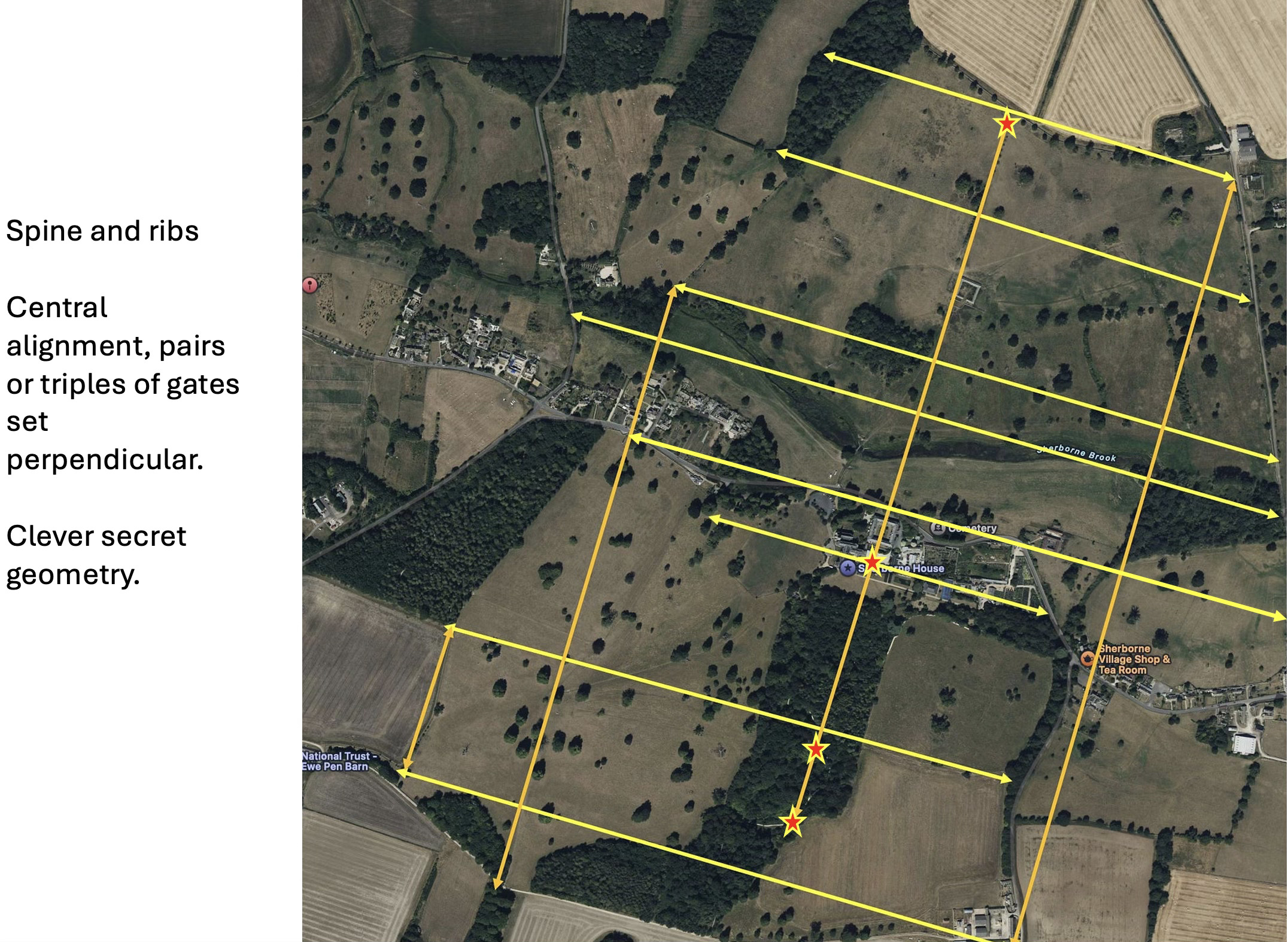
Now, what I'm going to do now is remind you of the relative positions of the gates, the stiles, doors and corners of Sherborne Park. When you pair these up they are all exactly perpendicular to what I'm calling the "15ft line" shown above. I think that's quite something and probably all these factors – the 880 yards, the 15-foot diameters, the alignments both down the line and across it – are beyond coincidence. I think we have here a geometrician laying out Sherborne park as it was in the 17th century. I think that's the underlying construct, accepting that there have been additions and subtractions to some of the features over the years.
I'm very open to alternative suggestions, with one exception. excuse me while I go off on a rant!
Not Ley Lines
I should make very clear that for me personally it's not a ley line. I'm a scientist and engineer by training, and the concept of ley lines doesn't stand up for me, especially weird waving of dowsing rods and all that nonsense. My position isn't knee-jerk. Some years ago I spent a fascinating period of time on a professional investigation by serious scientists of the claims of purveyors of dowsing for ley lines (and other things) and found in proper double-blind scientific tests dowsing was utterly unconvincing. I also ended up giving evidence at the Old Bailey in a trial of someone accused of fraud in relation to such techniques. That person was found guilty and locked up. Furthermore, I can show you on a map how ley lines are attractive but are bogus. If you get a map of the UK and plot all the branches of Marks and Spencer's, some will appear to be in a linear arrangement. You can do the same for branches of WH Smith, or post boxes. The human brain is notorious for seeing patterns where none exist. I was challenged once by someone who "had a friend" who could detect the presence of water with his magic wands. Wherever he indicated in a field, this guy dug and behold there was water. This was posited as “proof” of the efficacy of using dowsing sticks by a gentleman who earned a lot of money for conducting this. I then explained to my pal the principle of a "water table" and suggested he dig three more holes where there was no magic signal. Each one filled with water from the water table. Of course it did.
I don’t wish to be rude to those who are open to the concept of ley lines (whatever that is) but I’ll remain very sceptical.
I do believe that human beings make features on the landscape. Every feature on a landscape is there for a reason, sometimes obscure, sometimes trivial. Landscapers in the 17th and 18th centuries laid out landscapes of the sort we have here in Sherborne – it shouldn't be a surprise that we see this sort of thing if we look closely enough. Given the poor records, it shouldn't be a surprise that such alignments appear, but we can delight in them when we uncover them. I think they have been forgotten rather than hidden.
Coming Next
So that's Part 1. In Part 2 in a couple of days' time I'll show you an entirely different alignment that crosses the above at a crucial point. It's much older, quite clear when you look in the right place and quite thrilling!
