Standing Stones, Part 2
Detailing the standing stones of Sherborne. This part covers a range of stones of various ages not found on the Parish Boundary.
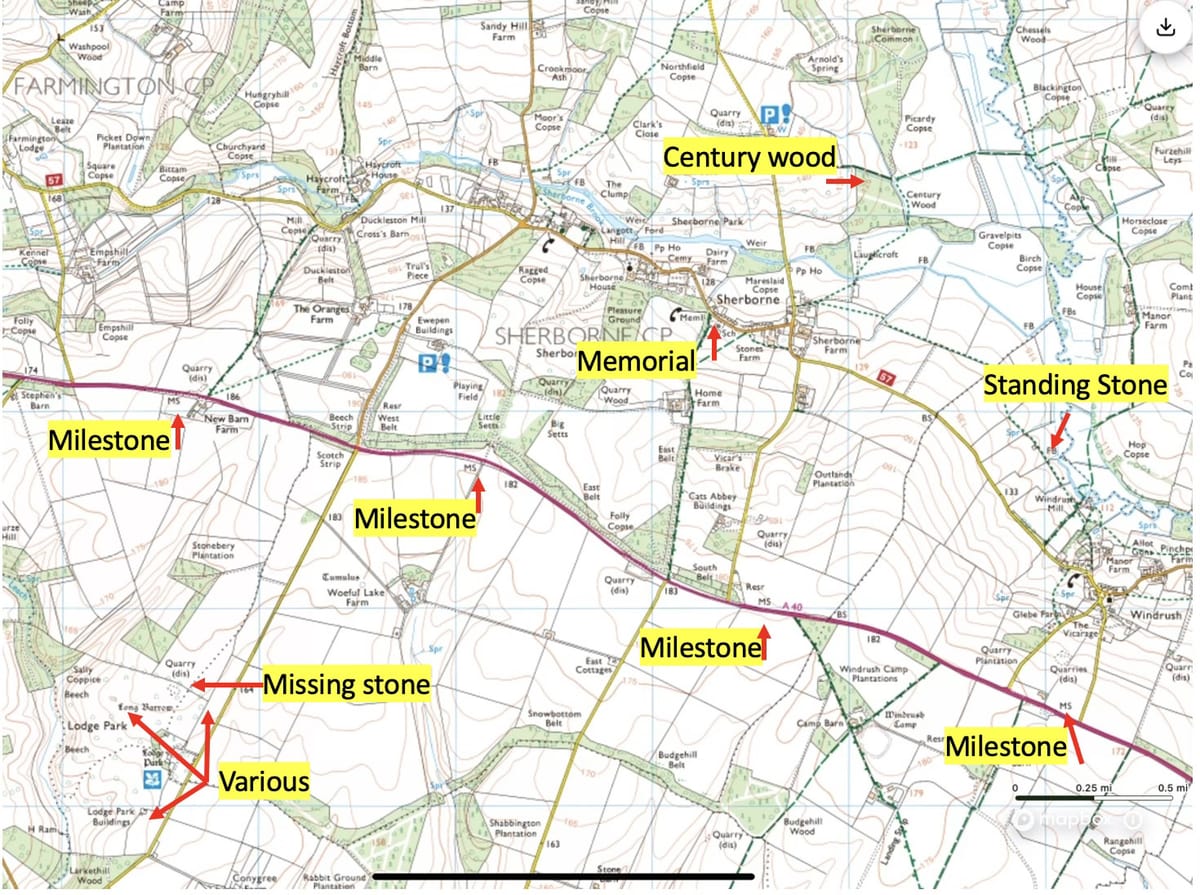
In this second part, I’m detailing the standing stones around the Sherborne area that are not located on the parish or hundred boundary. They are of various ages and importance. I don’t pretend this list is comprehensive and I’m sure there are more erected stones that I don’t know of - please let me know.
Here’s a map showing their locations.
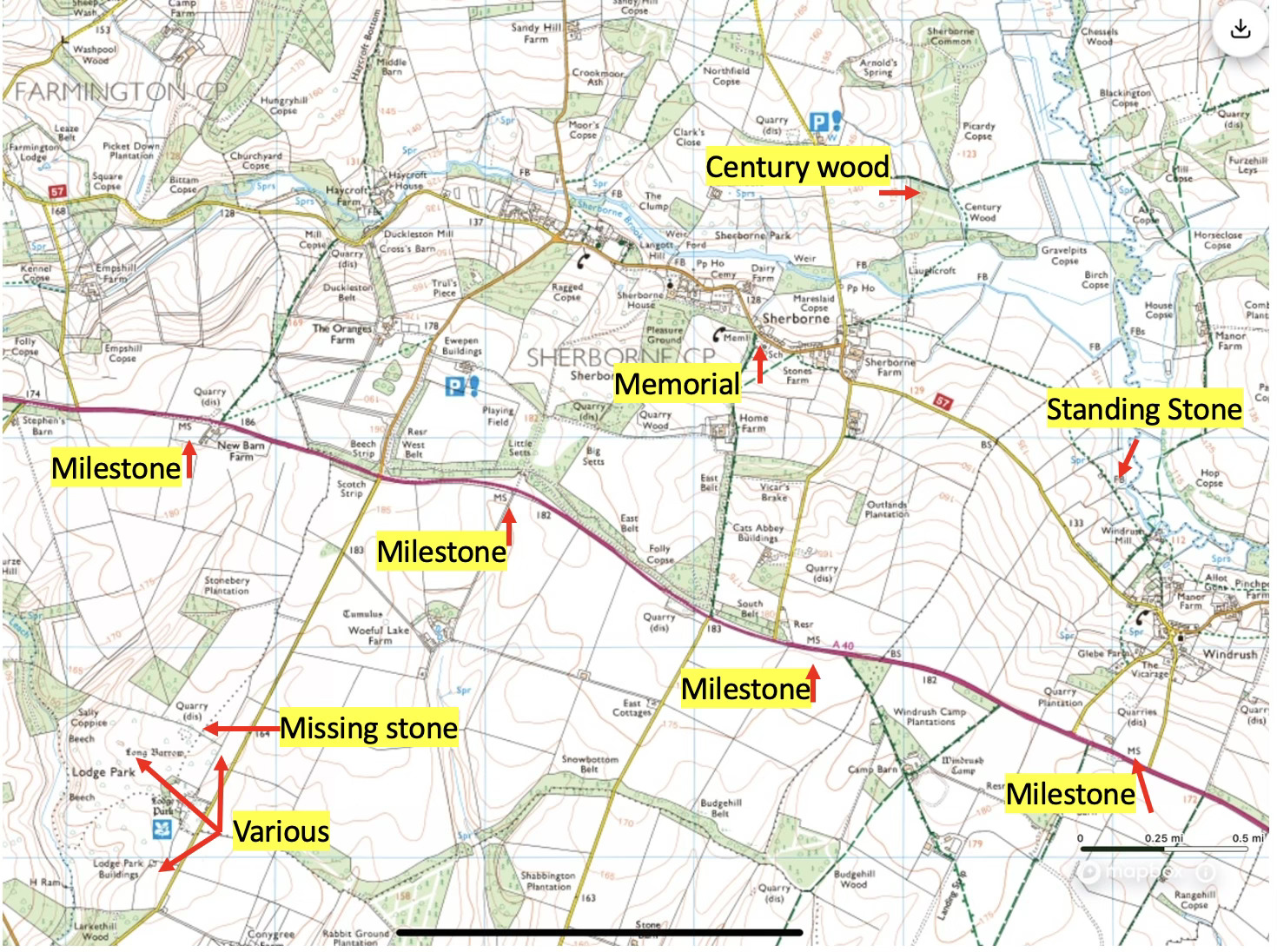
Here’s a few notes on each place:
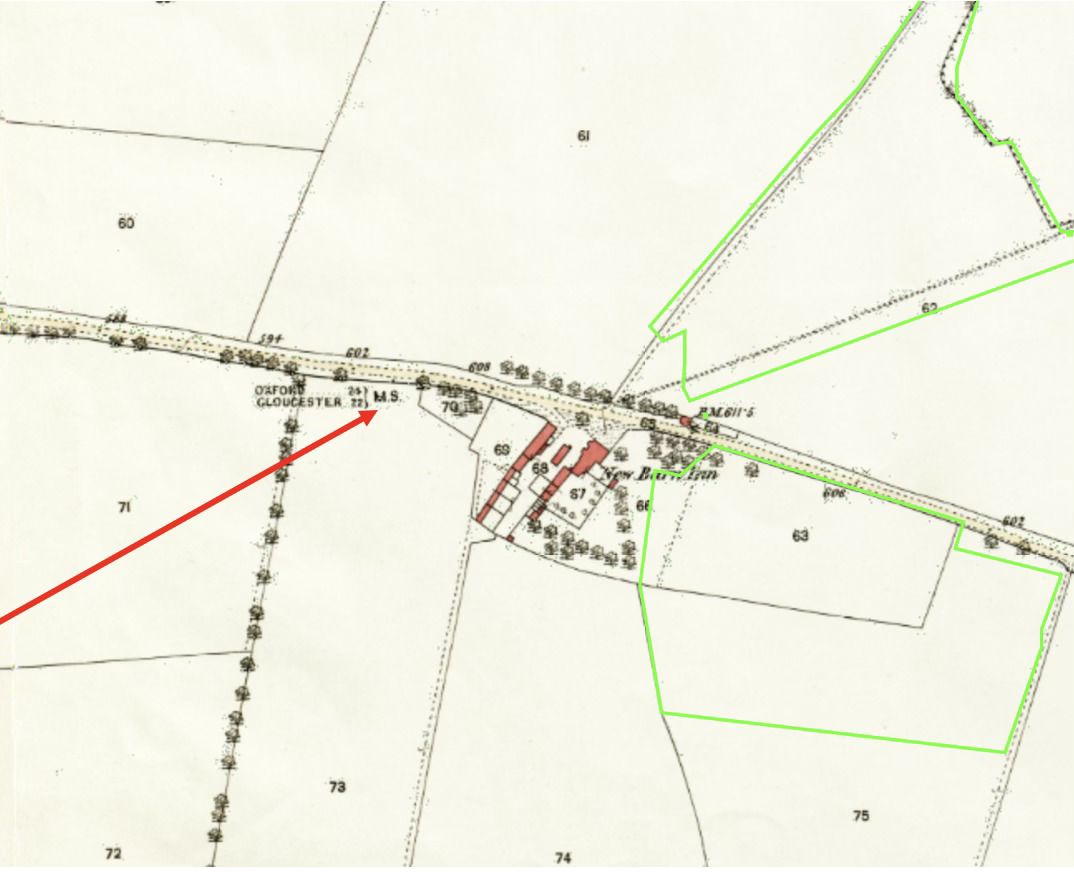
The Missing Stone. This stone was recorded on an early 20th C Map here:
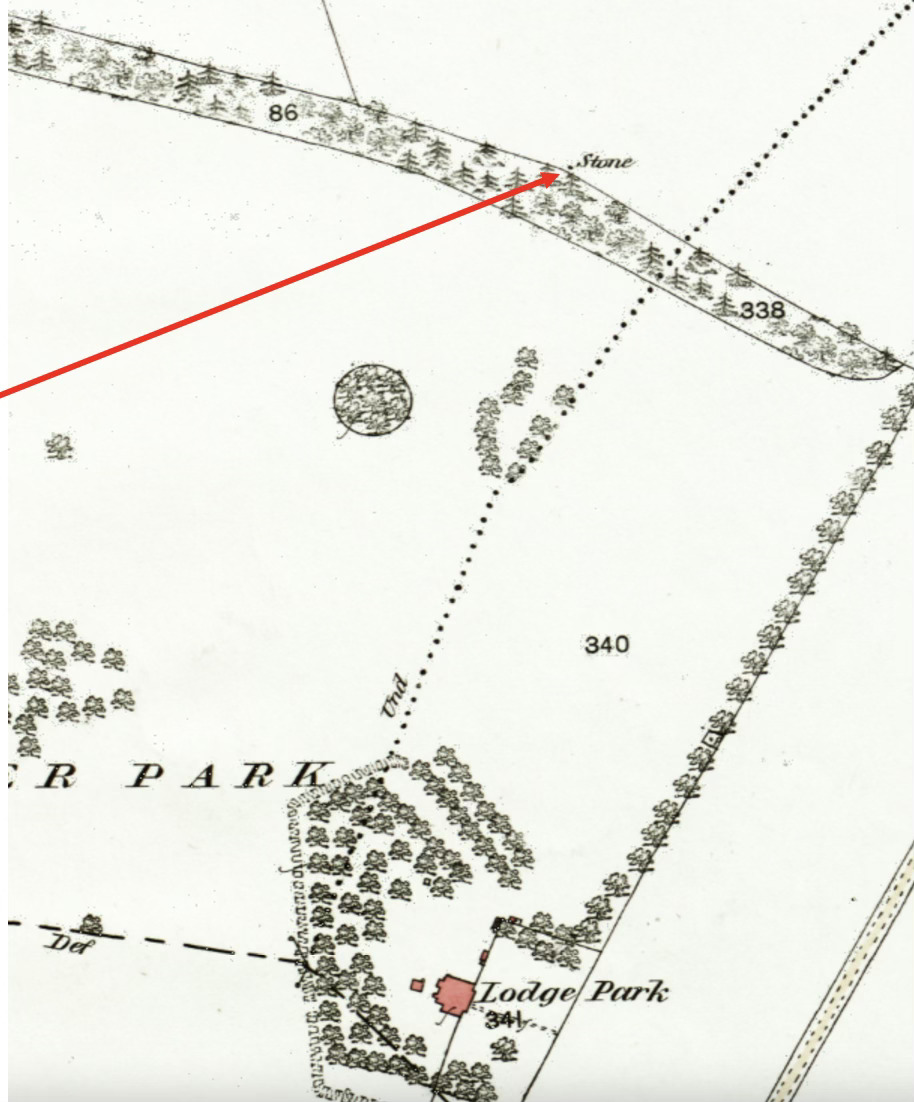
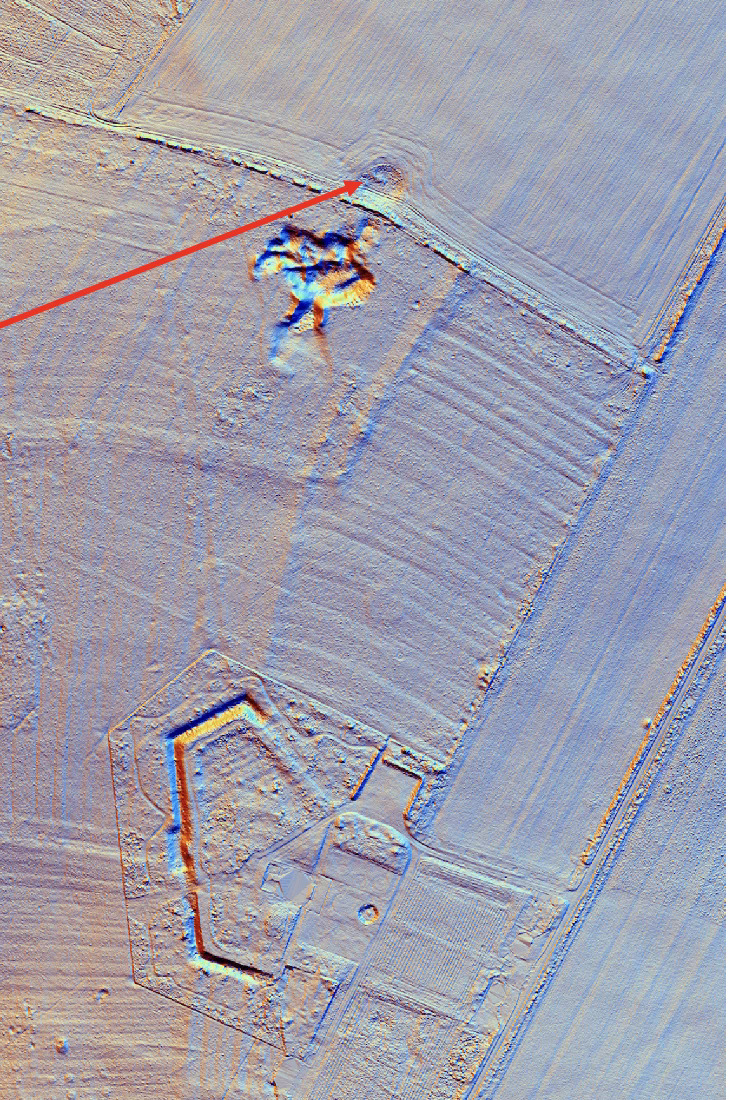
I have visited the site but there is no obvious sign off the stone. However analysis of the Lidar image shows an anomaly. Could this be the stone shown on the map , but fallen? Such a stone would have damaged a plough, perhaps explaining why trees have been allowed to grow in the immediate vicinity.
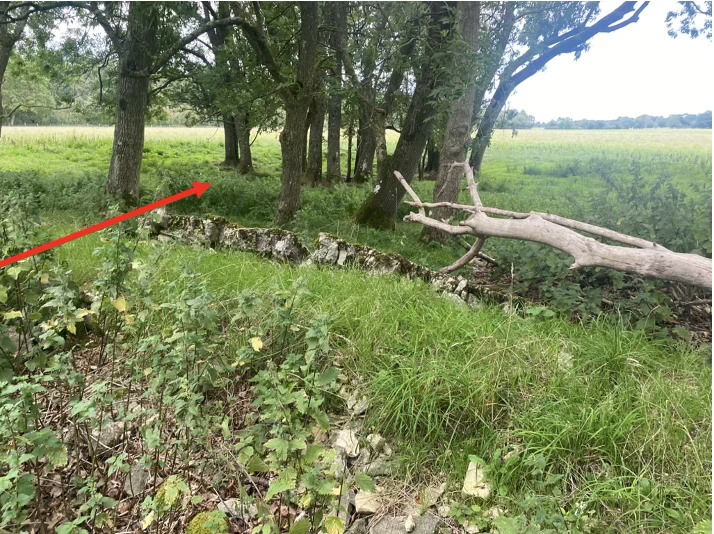
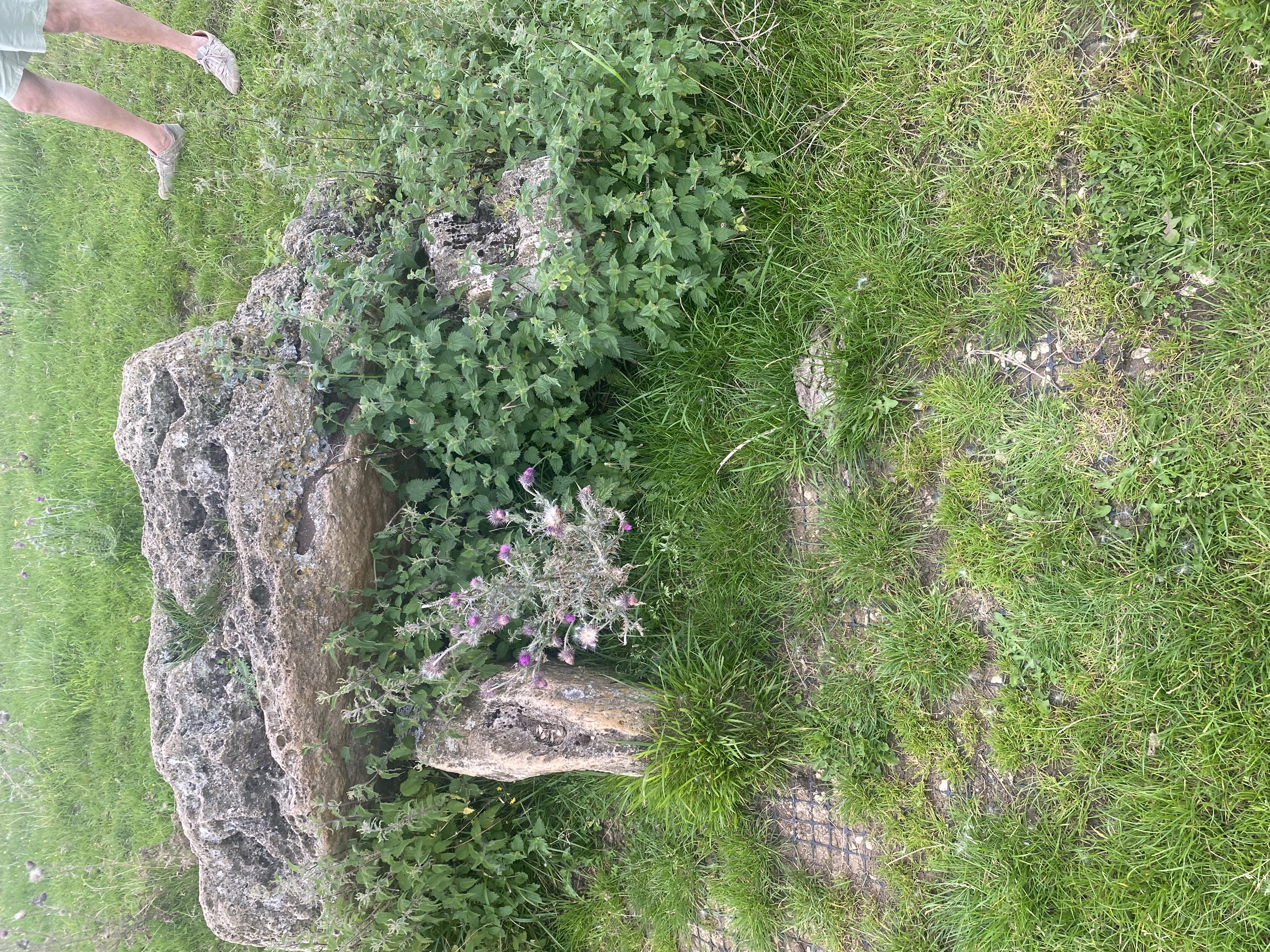
- Megaliths in Lodge Park. There are more here than many realise. The most obvious are the stones forming the “entrance” to the Neolithic Long Barrow.
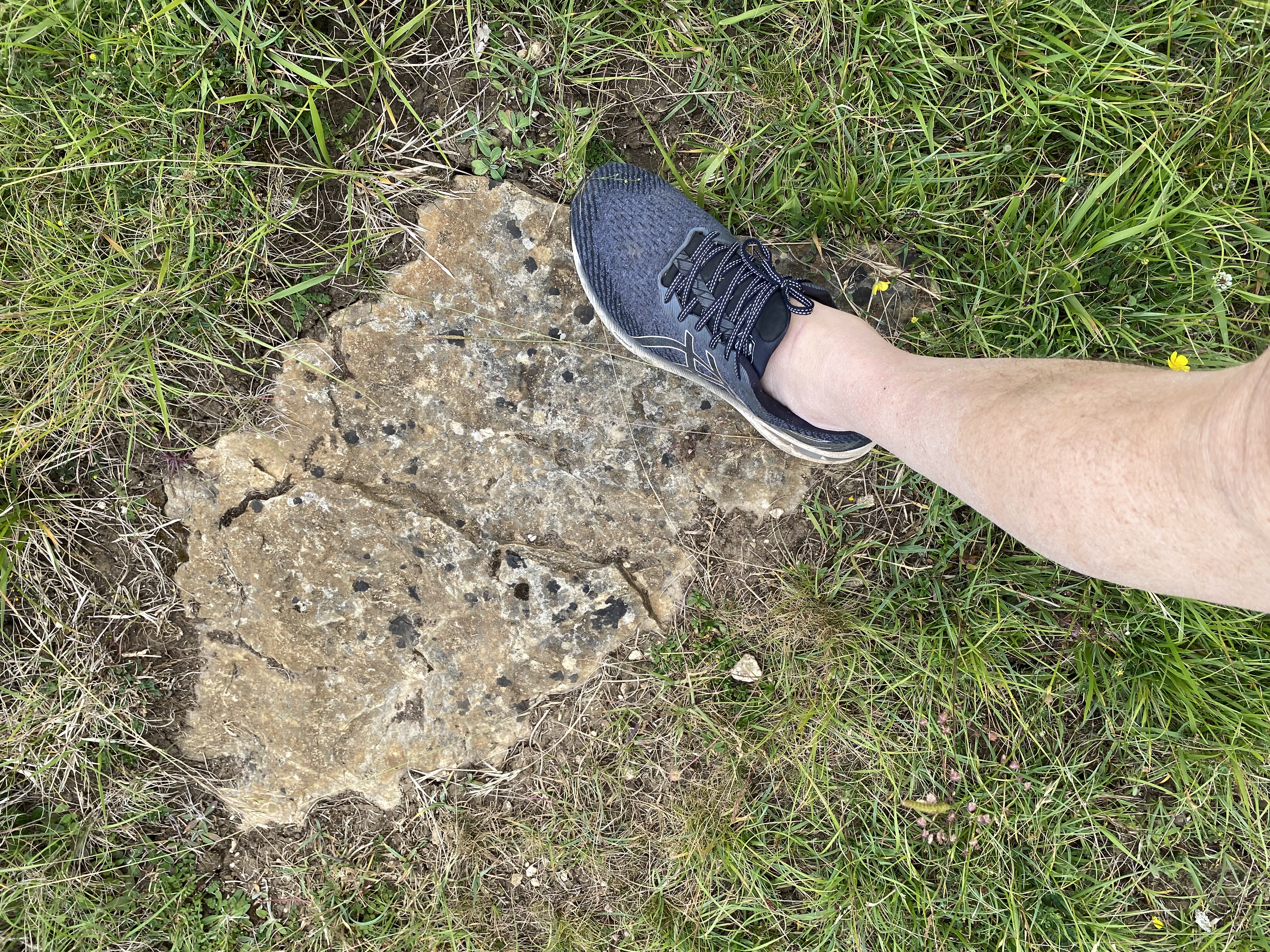
But these are not the only megaliths. In 1925 the antiquarian O.G.S. Crawford noted that he found the tops of other large stones in the vicinity, flush with the grass. It would be very interesting and relatively easy to find these and map them. Not only that, but I have found other large stones elsewhere in Lodge Park, flush with the grass. These could be natural of course, but their locations (which I won’t give away here) suggest otherwise. Here’s a pic (excuse the elegant leg). Gentle probing with a sharp object makes clear this is a massive stone, probably flat faced. This stone is in an area never subjected to ploughing.
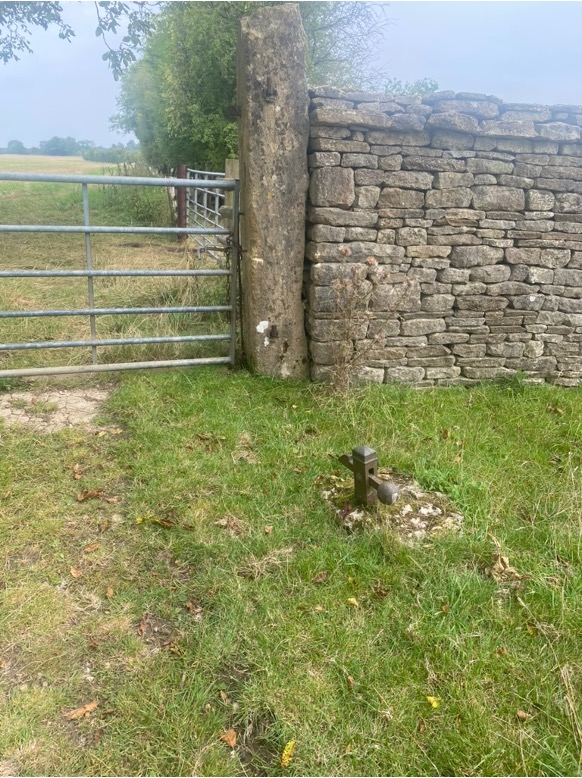
- Gate posts in Lodge Park. At a couple of points in the parkland, extremely tall gate posts have been erected that appear to have some age. Here are pics of two of them, the first at the NE corner of the Park, and the second adjacent to the derelict tumble-down listed barn to the south of Lodge Park. I wonder if their unusual height is related to the fact the gates needed to be tall enough to prevent deer leaping them.
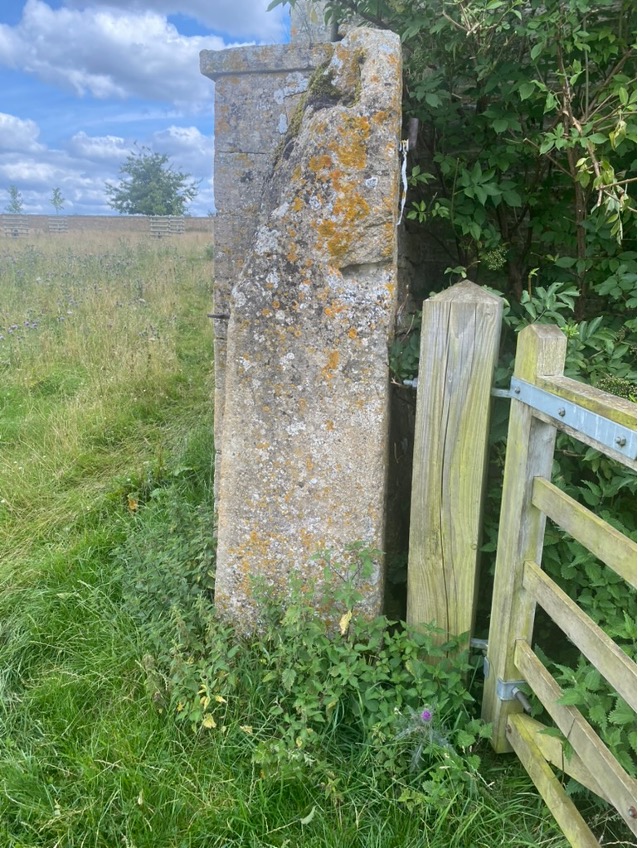
There are significant milestones every mile along the A40. Most remain, some are hidden. The easiest to see is the one just West of New Barn Inn, set back from the verge, with an interesting rounded top.
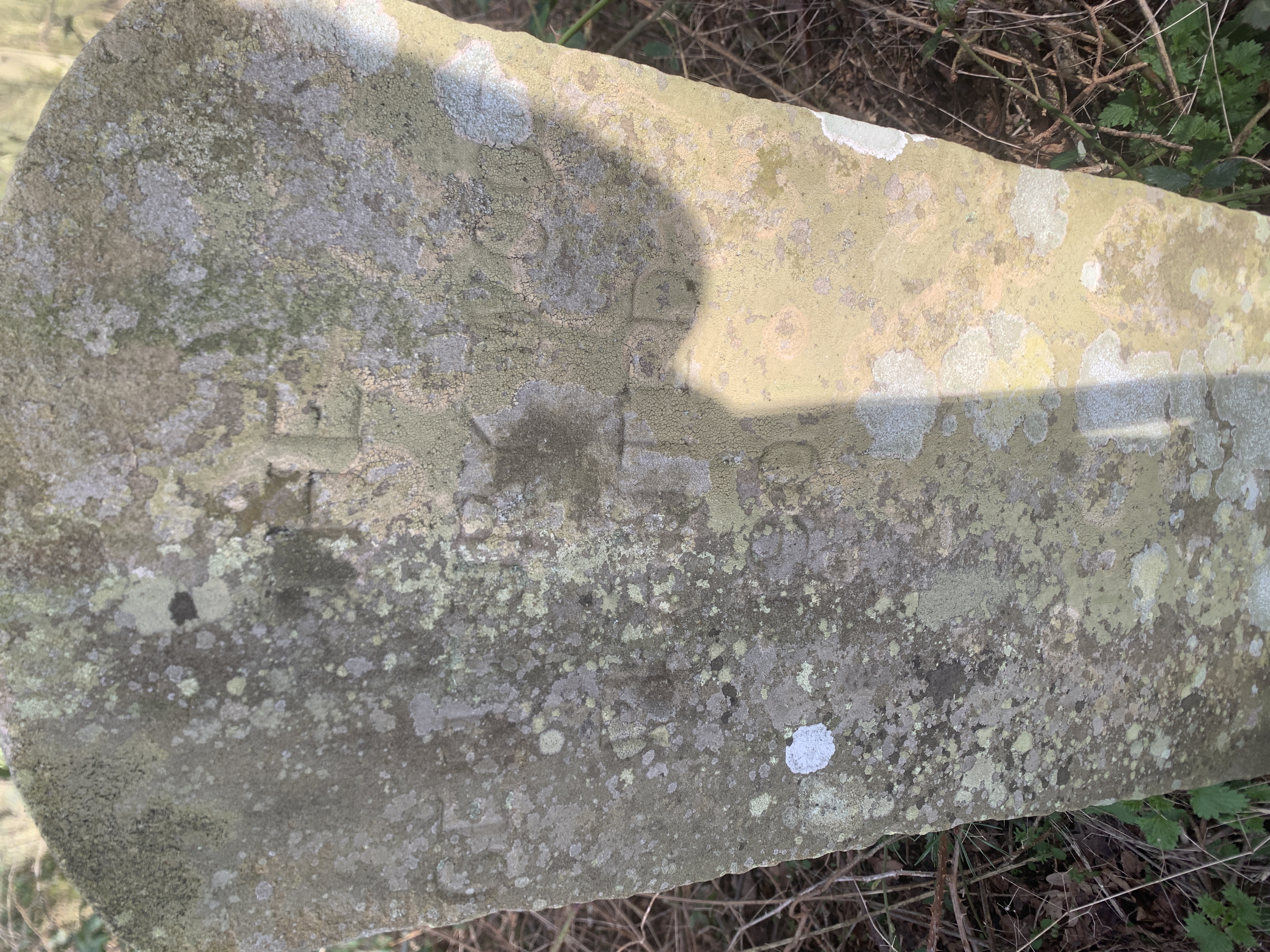
5. Century Wood Stone. At the turn of the 20th century a wood was planted to commemorate the planting this wood by the community. Oak saplings were interspersed with ash trees. This stone was erected. These days it its well away from any public footpath so access to it is not very easy. But it’s a stone erected by the village to mark their efforts and therefore is important. “The Century Wood. Planted 1901”
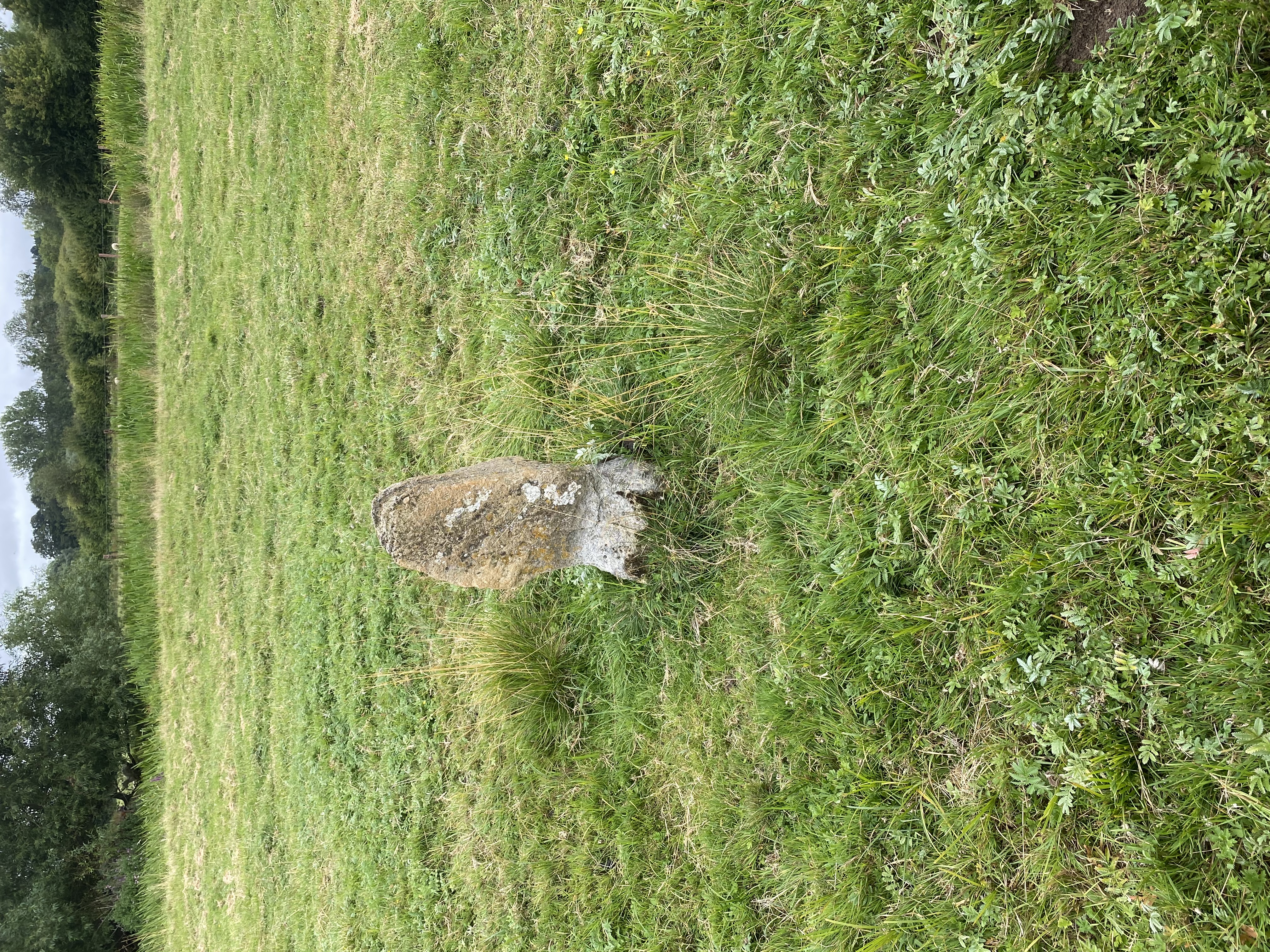
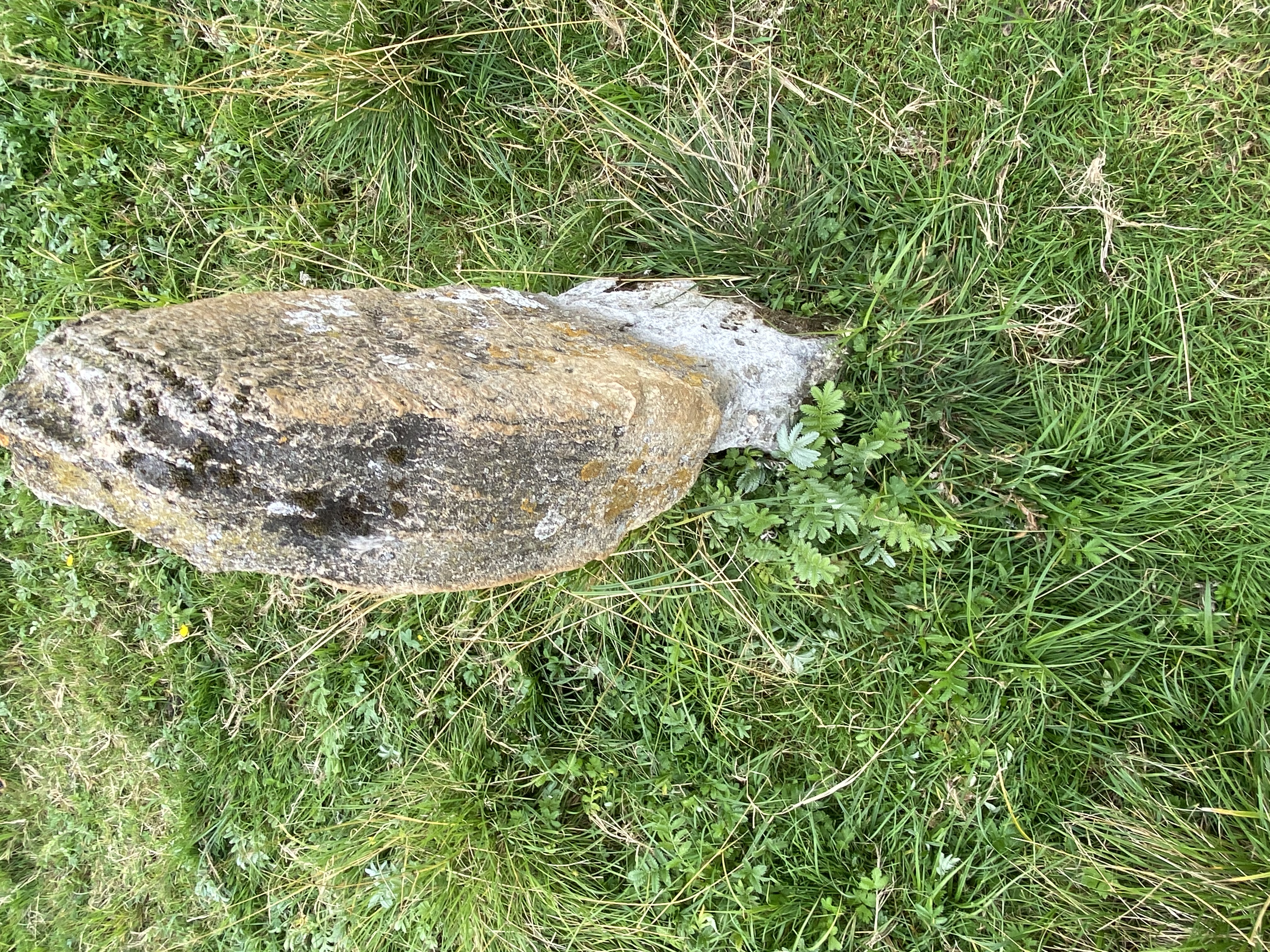
This next stone is probably the oldest in this report. It’s very peculiar. It sits beside the Windrush within the the Parish of Windrush. Clearly put there by human hand. It could be Bronze Age but its site in a meadow often flooded makes it a curiosity. Some people think the shape is phallic, others disagree. What do you think?
Here’s the official record from the Historic Environment Records, which is a little non-committal:
•A standing stone, located on the flood plain of the River Windrush within OS land parcel no.0700, and only c.20m west of the river. The stone is a large block of oolitic limestone, rectangular in section, measuring a maximum of c.0.93m high by 0.36m wide by 0.14m thick. On either side of the stone are crescent-shaped indents; these appear to have been deliberately shaped. The stone has never previously been documented.
•The date of origin of the stone is uncertain; some standing stones were erected during the early prehistoric period for ceremonial purposes, although comparatively few examples are known from Gloucestershire. During the 17th century there was a meadow in Windrush called 'Stone Mead': this name could be derived from the stone in question. In 1994 the standing stone was in sound condition, and set within pastureland.
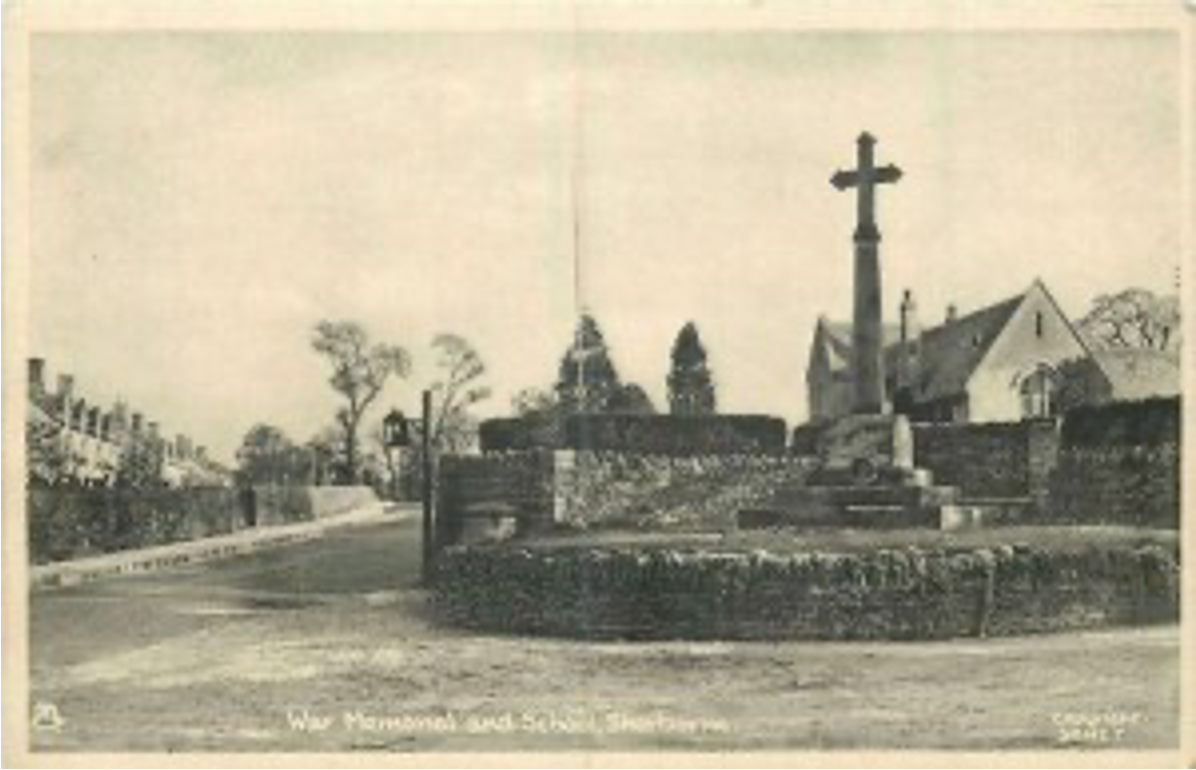
7. The final stone in this Part is the youngest. Again a stone set up by the community to make a very serious point, and it’s the village war memorial, erected in 1926. The Sherbrone Archives have some great material detailing the construction. Here’s a contemporary postcard showing the cenotaph soon after it was put up.
Let me know if you know of any others - it would be good to make this list comprehensive. I think it shows that this community of ours has been marking the local landscape with stone markers of various kinds for several millennia. All part of the remarkable heritage of Sherborne.
