An obscure insight - Parkland History, Deer Husbandry and Sain Foin.
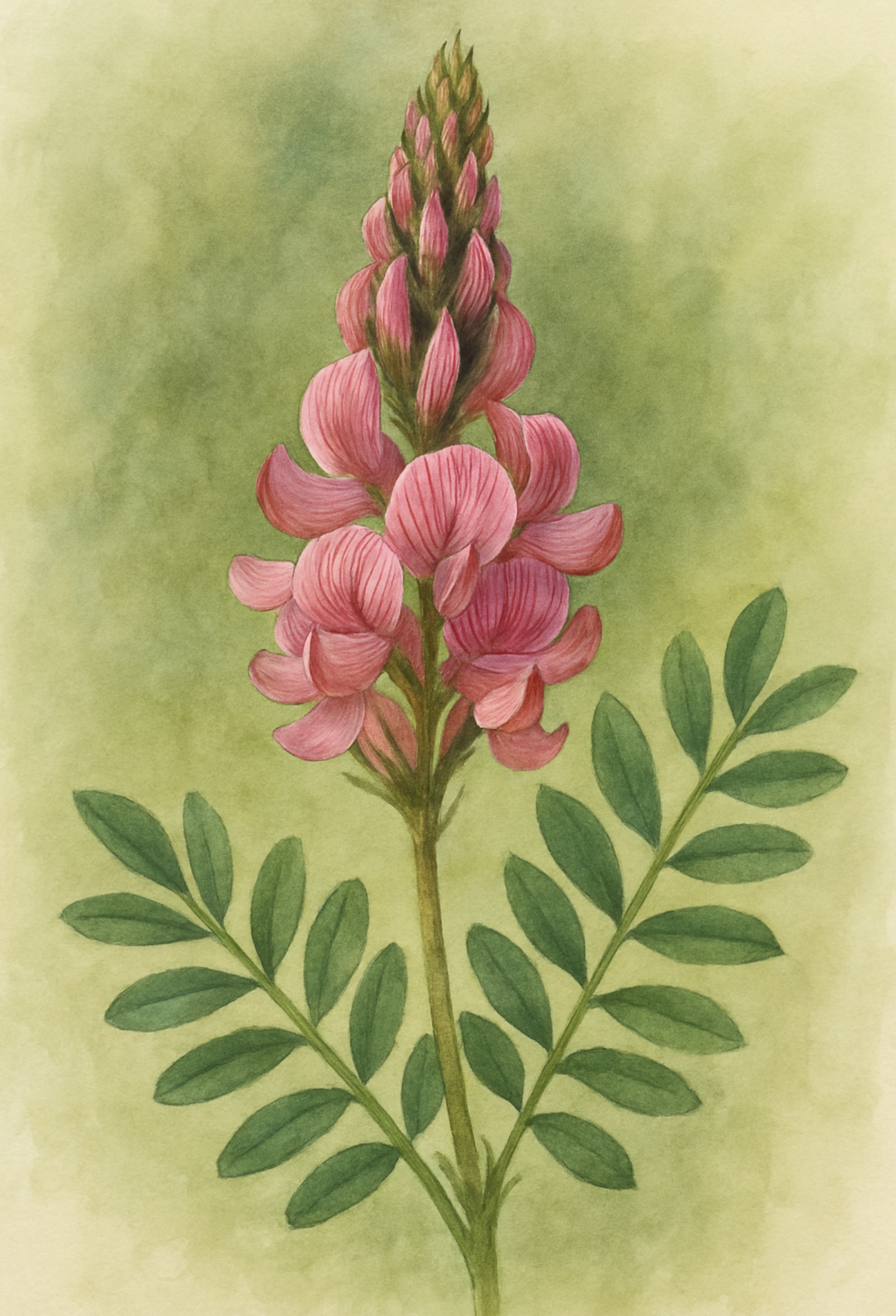
My current physical immobility has tied me to my desk - hence all these posts. Don't read them if you are bored, I won't be offended. My body isn't working but my brain is still ticking along. Continuing to research the history of Lodge Park, I've come across a curious insight that makes me change my understanding of the use of Lodge Park as parkland. I'm afraid this post is a little bit esoteric and focused on 18th-century farming techniques, so if that's not of interest, stop reading now...
As briefly as possible: Lodge Park was enclosed as parkland in the 1620s by Crump Dutton. In the 1720s and 1730s, the parkland was extended and further developed to a design by Charles Bridgeman, working for Sir John Dutton.
My understanding was that these two efforts were largely to create an attractive parkland and also to contain a herd of deer to be used for deer coursing, etc.
I've been examining carefully the manuscript notebook and archives used by Sir John Dutton that contains entries from about 1710 all the way through to the 1740s. I've spotted before some references to planting Sain Foin. You will recall I've discussed Sain Foin before as a very interesting forage crop/wildflower that was introduced into England in the 16th century and has many benefits as a healthy forage crop for all sorts of animals.
It's clear in 1711 and 1723 that John Dutton was buying Sain Foin already harvested to feed to his deer, and the quantities are surprising, quite large. Certainly enough to feed a couple of hundred deer, perhaps more.
But then I spotted something curious. During the 1730s, you will recall that Charles Bridgeman's plan was being implemented over a number of years at Lodge Park, with some formality being introduced, the avenues and all that stuff going on there. But simultaneously, it appears that John Dutton was ploughing parts of Lodge Park and growing crops there. This is where it gets a little obscure, but to me quite interesting. Sain Foin, a perennial, has a deep tap root and typically at the time it was planted in association and at the same time with another crop such as oats. Today, barley is used. The oats are a "nurse crop", grown for one season and harvested while the tap root of the perennial Sain Foin develops. So the land was ploughed, and then the seeds for Sain Foin and oats were planted in the ground together, the Sain Foin seeds going quite deep, hence the need for ploughing. The oats would be harvested the next year while the Sain Foin developed. And then the Sain Foin could be cropped, cut for several years, maybe as many as seven or eight years, as a perennial crop. Theoretically it could be grazed directly but the gazing would need to be very controlled and limited. It's perfect for the sort of land we have around here (limestone, rocky, Cotswold Brash, etc.), but the roots go down deep to gather nutrients and water. In either event, (harvested or grazed) it seems logical to me that the Sain Foin would have to be fenced, probably with some pretty tall fencing. And that would appear as a visible structure in Bridgeman's landscape, like it or not.
Here's just some of the references to Sain Foin from this period - there may be more, which may add further to our understanding, but interpreting the script is a tiresome job.
On 29 September 1723, John Dutton paid £24 pounds (a very large sum!) to “Farmer Waine” for “12 loads of Sn Foyne hay for my deer”. That’s interesting on several levels - it indicates that a large stock of deer were being maintained, and specifically being fed hay. It also indicates that at this time there was a premium on sainfoin hay.
On 19 May 1727, Dutton paid £5 for “howing the Furze and other work at the Park (Sherborne park) and “Sn Foyne piece adjoining”. This suggests that a field next to Old Park had been sown with sainfoin.
30 July 1728, Dutton paid a sum (not clear) “for mowing and haymaking at the new enclosure by the park Sn Foyn hay for the deer”
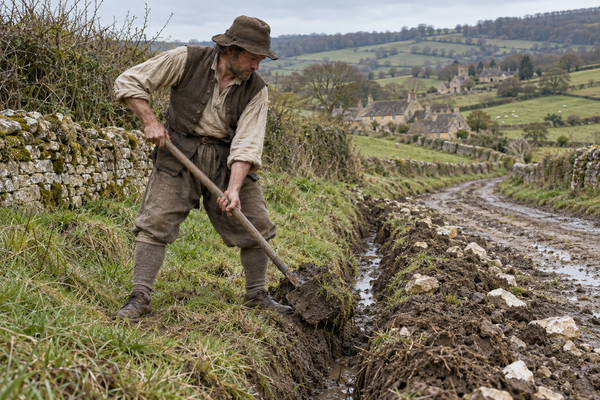
13 April 1734, Dutton paid an amount “for picking stones and squick grass upon the new sowed (F)oyn at the New park”. (New park = Lodge Park)
28 May 1735 Dutton paid a sum for “picking stone upon the Sn Foyn in the new part in the New Park”. This suggests that this was in the western part of the park, which Dutton had added to Lodge Park a few years earlier and was using to grow sainfoin.
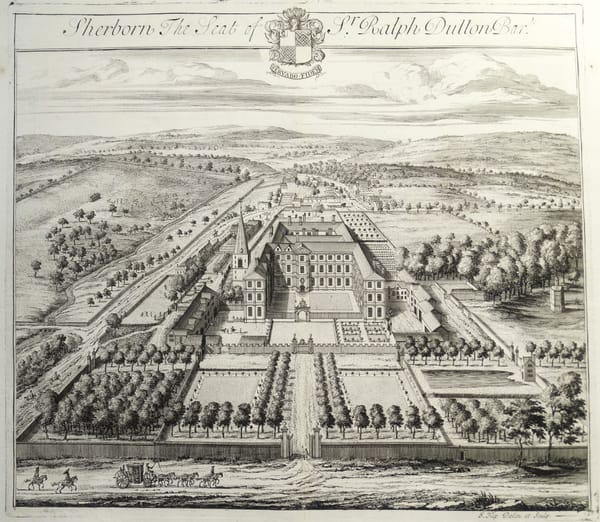
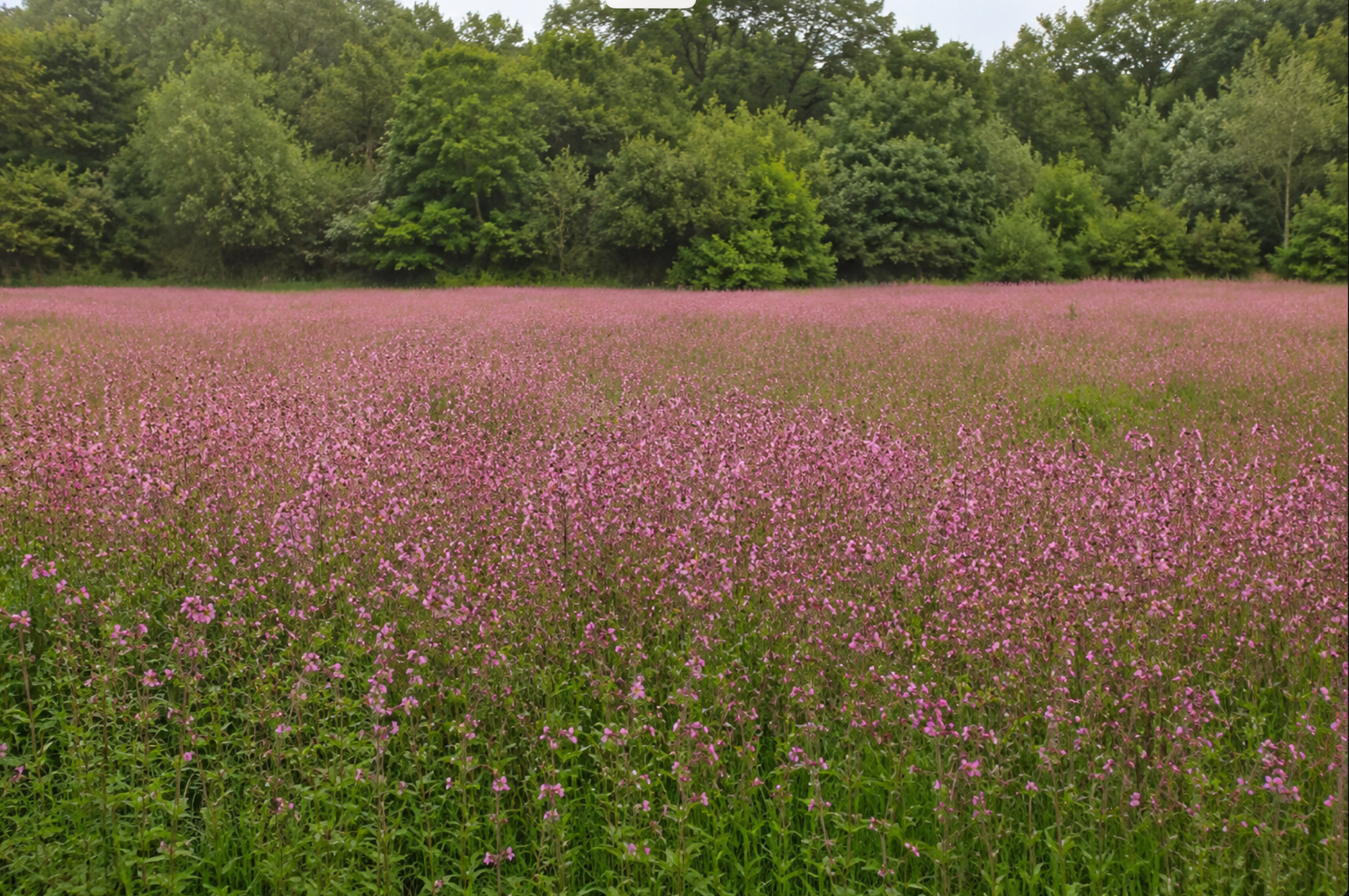
I wonder if those "compartments" on the western side of Lodge Park were effectively fenced off and used to grow Sain Foin for a few years. Here's what it may have looked like and quite attractive too:
So the issue is that I'd originally imagined that the landscape in Lodge Park was just left to grass, that the deer and perhaps other animals grazed. But we have real arable annual and perennial crops being grown there at the same time as Charles Bridgeman's landscape is being developed and built. And the deer clearly need additional feed for their diet. So this twin use of parkland to not only provide landscaped design views but also as a continuing arable production facility surprised me, in my ignorance, perhaps. One would have to assume that the crop is fenced off, presumably with wooden fencing, but the truth is I don't really know. Sain Foin was being grown elsewhere in Sherborne at the same time. This wasn't exclusive to Lodge Park.
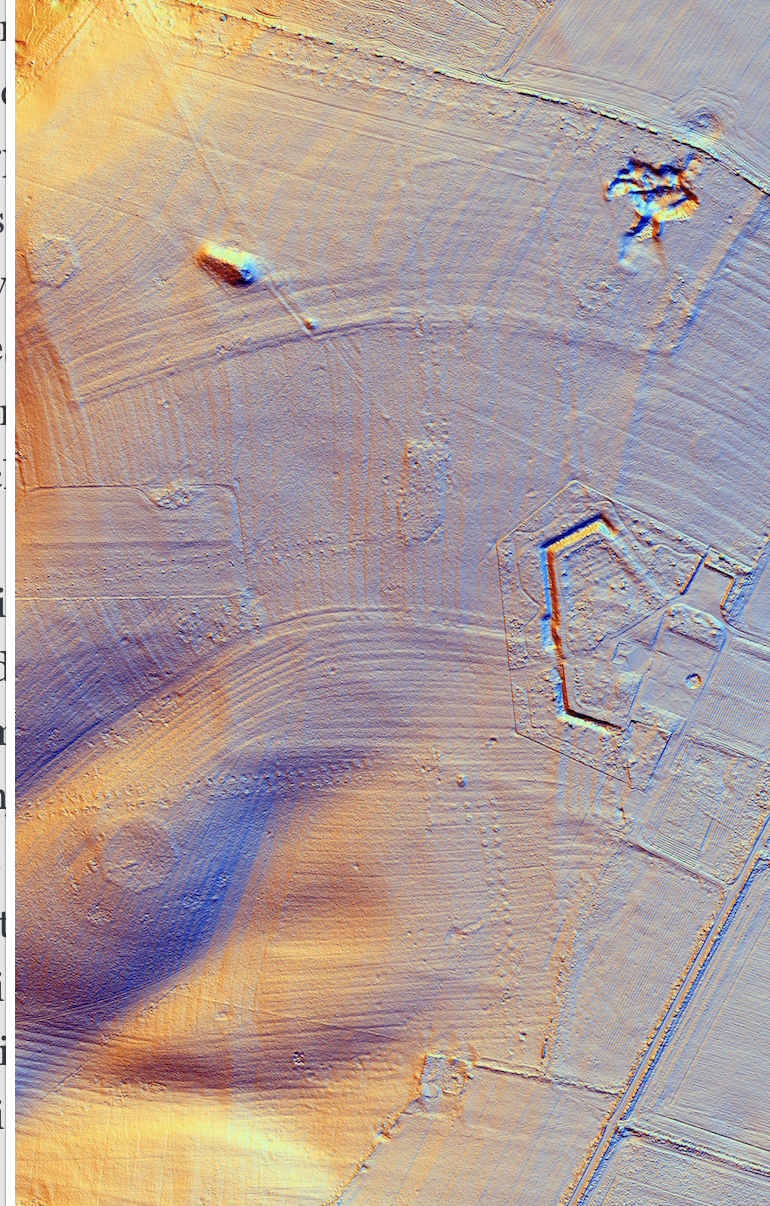
A final thought. As you may recall, I've been pondering the strange raised octagon and hexagon on the eastern side of Lodge Park. They don't appear on any of Bridgeman's planning or later, so my conjecture is they are 1620s features. I noticed that there appear to be some ploughing striations across the top of them. This perhaps reinforces my conjecture that the hexagon and the octagon date from the original enclosure of the Parkland in circa 1625, and now, a hundred years later, in the 1720s, Sir John Dutton simply ignored them, ploughed across the top of them, planting Sain Foin, leaving those striations. As a reminder, here's the LIDAR image of the eastern part of Lodge Park showing the octagon and the hexagon, which you can see on the right-hand side. Look carefully, and you may see the striations I'm referring to. But this is an unashamed guess from me.
I would, of course, welcome comments from farmers with a much greater knowledge of this sort of thing than my guesswork. There is a useful briefing sheet from the Soil Association at this link here, which suggests that not much has changed in the last 300 years.