Lengthsmen, Haywards and Constables. Sherborne village roles in the early 18th Century
As I continue to decipher the 1711 Sherborne accounts notebook, I have come across some interesting references to some fairly ancient formal community positions.
The roles of a village lengthsman and a hayward are traditional English community positions dating back to the medieval and feudal eras, though the lengthsman role still exists today in some rural areas. The constable too was typically appointed for a year
Here is a breakdown of what each position involves:
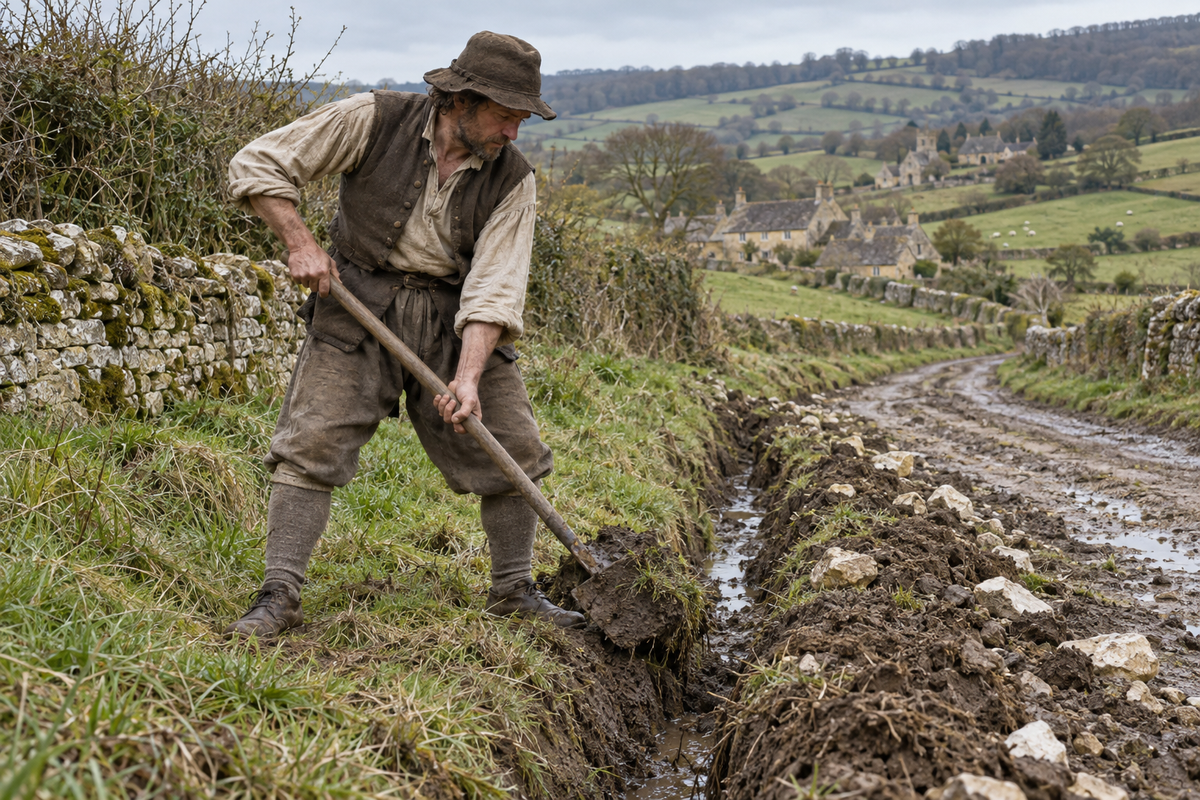
Village Lengthsman. A lengthsman was historically a local laborer appointed to maintain a specific "length" of road, track, or canal within a parish. Today, the role has been revived by some parish councils in England to handle localized highway maintenance.
- Main Duties: Clearing overgrown vegetation, unblocking ditches and drains, maintaining grass verges, and cleaning road signs.
- Historical Context: Originally, they were responsible for keeping the roads passable for horses and carts using basic hand tools.
Hayward: A hayward (historically sometimes called a "hedge-ward") was an officer of the manorial court responsible for protecting the village's common lands, crops, and boundaries.
- Main Duties: Inspecting and maintaining the village hedges and fences to prevent livestock from straying. They also impounded wandering cattle or sheep in the village "pound" (or pinfold) until the owner paid a fine.
- Historical Context: In the open-field system of agriculture, keeping stray animals out of growing crops was critical to the village's survival.
- Modern Relevance: The role is largely obsolete, though a few ancient manors or traditional commoners' associations still maintain the title ceremonially.
Constable: In historical English administration (from the medieval period until the mid-19th century), the parish constable (or "petty constable") wore many hats. Beyond enforcing law and order, tax collection was one of their core administrative duties. Usually a responsible and well thought-of figure was appointed constable. In 1711 in Sherborne, it was Thomas Garne, a farmer. The Garne family farmed in the local area for many centuries, latterly at Aldsworth.
All these appointments were paid for by local taxes, which seemed to be dependent on the acreage, or to be more accurate the "yardlands" of various landowners' holdings. A yardland was something around 25 to 30 acres. In 1711, the rate for the Constable was 1 shilling per yardland. Each landowner also had to pay a poor rate to provide support for the poor in the parish. The Hayward was 6d per yardland per year.
Now, well into the 21st century, I think we can all see still the potential application of a Sherborne Lengthsman and a Sherborne Hayward. Some things don't change!