Haunting-Water
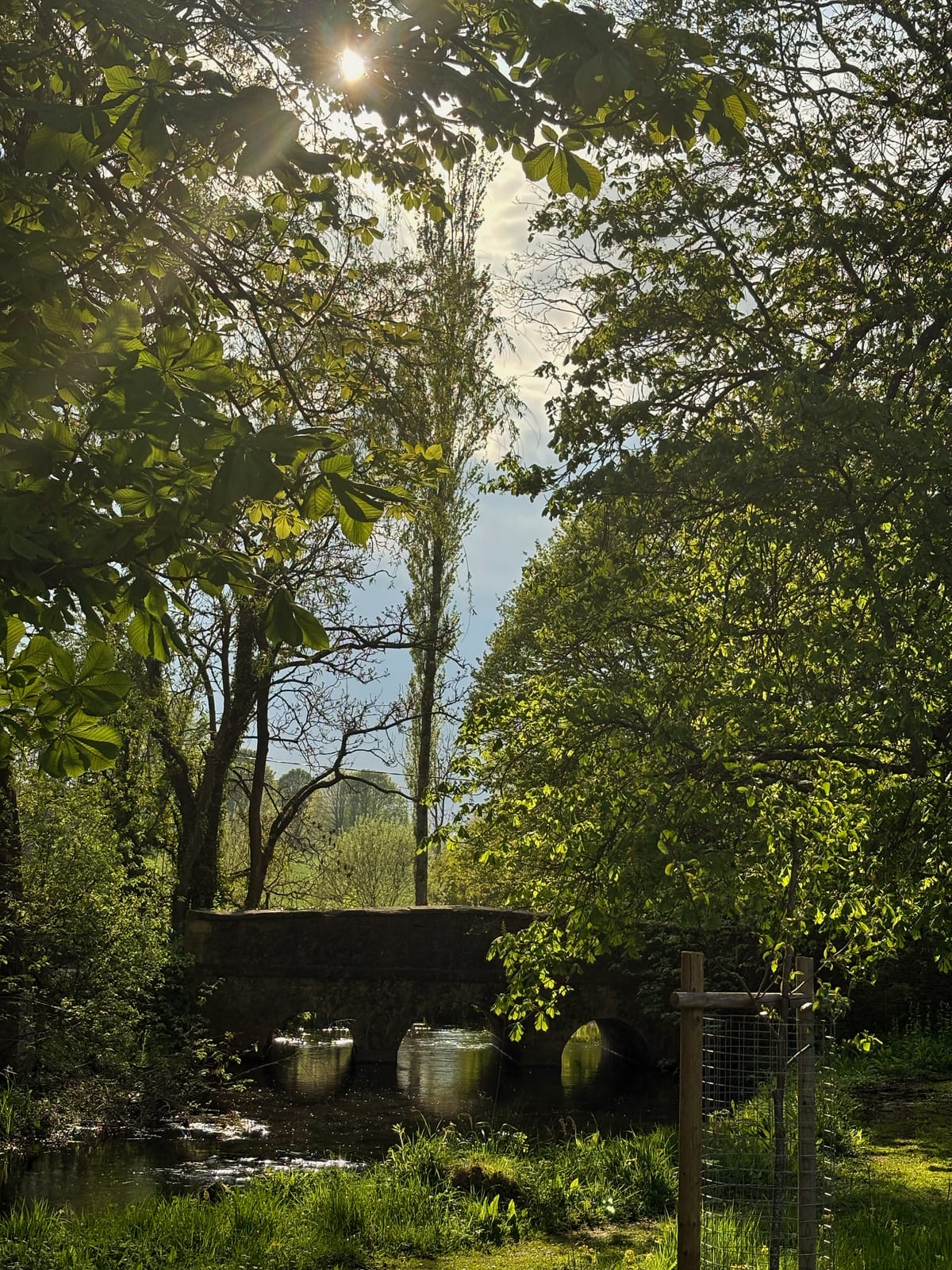
Sitting still on the Sherborne Brook can turn an ordinary man into a philosopher. Yesterday evening I was helping George, who many of you know, take some film on the Brook. I was there purely as a functionary, paddling a canoe as George in the prow got to his professional purpose.
The sun was beginning to drop, the light aligned West to East, along the path of the Brook. The water sparkled and the river fly added a silky, shimmering effect. I paddled, or stopped, as instructed. No rush, no hurry, just sitting quietly, absorbing our surroundings. George using his film, me not thinking at all about very much, just enjoying the peace of our quiet valley.
The water now runs clearer than recent memory recalls. For a few years the brook carried silt freely toward the Broadwaters. That has changed, and changed markedly. Patient work along the valley, the dredging at Haycroft and the steady maintenance of roadside grips and ditches, has coincided with water of remarkable clarity. "Sherborne" derives from "clear brook" and the historical name is once again apposite. Concern about silt transmission belongs to an earlier chapter of the brook's story. Peer over the parapet of the bridge and count the fish floating magically in their invisible medium. Catch one if you can.
And when my mind became blank looking at the suspended fish, the Brook then performed its magic.
I realised that we too were hovering like riverflies above the valley bottom. The perfect transparency of the water caused it to disappear, and we too were suspended in still flight above the river bed. Transparent water became transparent air, an invisible transformation of the medium. Astounding.
But there was something more. There is a paradox, because although invisible, the water has great power, almost without presence. In silence, utter silence, tons of water passed swiftly beneath us. We were an irrelevance to the brook, inconsequential to its deeper purpose. To a mere mortal, a river fly or a quiet paddler, that can be intimidating. As we entered the archway under the bridge, over water but under ground, just a hint of fear emerged, in my mind, surprised like a mayfly hatching, entering a new dimension. It wasn’t so much the enclosure, it wasn’t the cold water’s power, it was the water’s indifference to us. It isn’t fear of drowning. It’s the older, stranger fear of not mattering. Of being unwitnessed by something vast and permanent.
Yesterday I wrote about a local standing stone having a memory, a story to tell. Here was the exact opposite, the water doesn’t bother with such things. The stone remembers and stays, its purpose solidity. The water forgets and slides silently past. It takes no archive, keeps no record. We are already its past, and it does not look back.
Sat on the bank later I remembered my favourite author, Norman Maclean, who writes the most wonderful prose about a river, a river that ran through his life and the life of his family. Maclean understood rivers better than almost anyone, and last night I briefly understood why, amid the haunting quality of an evening beside the Brook. Maclean’s perspective, unlike mine, is that the Brook does remember, it just hides those memories as if written on the rocks beneath. So, in a sense, he synthesises the rocks and the water whereas I saw them separately. Below are his words, better than mine, that close his best work. The pace, the rhythm and the philosophy of these words are simply beautiful. They apply to us and our Sherborne Brook, of course.
Eventually, all things merge into one, and a river runs through it. The river was cut by the world's great flood and runs over rocks from the basement of time. On some of the rocks are timeless raindrops. Under the rocks are the words, and some of the words are theirs.
I am haunted by waters.