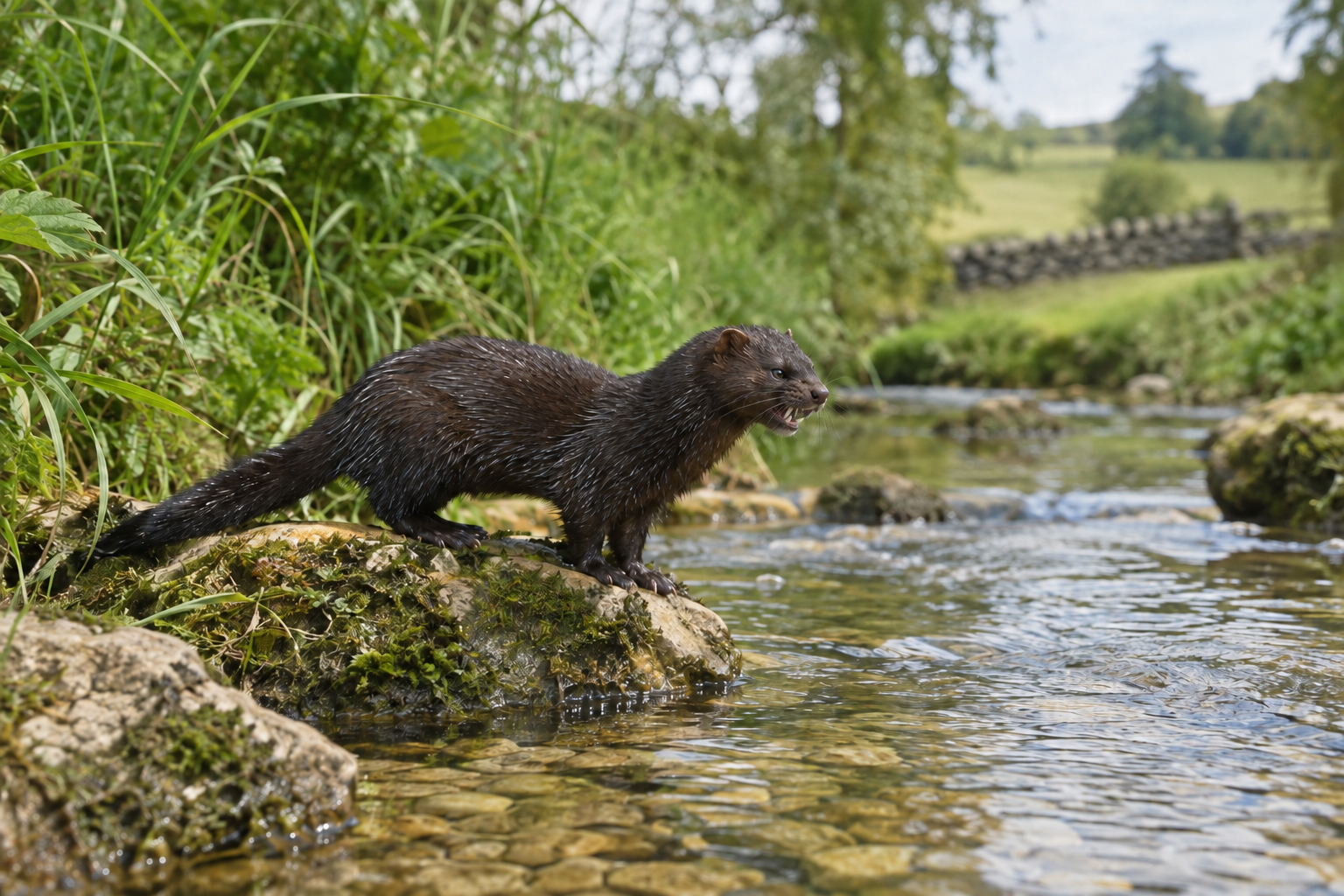
Mink trapped in Sherborne
Three quite different matters to discuss this morning.
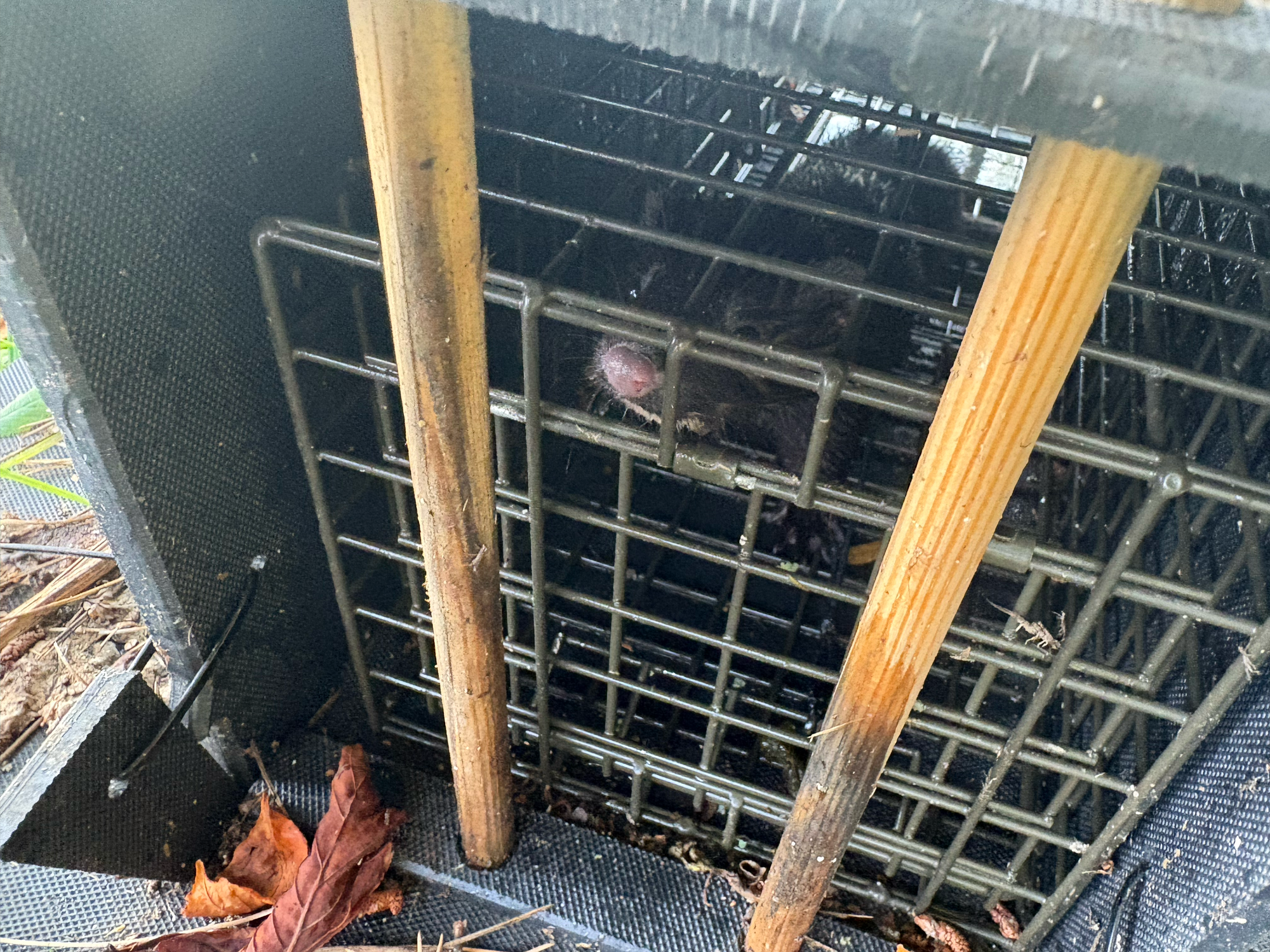
- Mink. You may remember from a previous post that I have collaborated with the Waterlife Recovery Trust on their mink programme. Although pest eradication can be an emotive topic, the mink issue deserves detailed attention. Mink are an alien species in the UK and far more than a nuisance. When these non native animals find an opportunity, they go wild and kill far more than they require to eat. Over their lifetime, they will needlessly destroy hundreds of creatures. I am certain that the current scarcity of water voles on the brook here in Sherborne is largely due to mink. They also prey on vast numbers of wildfowl, again as killing machines and not for their own stomach. Working with local farmers and the Waterlife Recovery Trust, we set several humane traps about three months ago. On Saturday, we caught our first mink in a trap in my garden—proof of a problem and a positive step toward resolving it. You can read more about the work of the WRT here: https://www.waterliferecoverytrust.org.uk
And here is the creature in its cage, to be removed from Sherborne.
- A strong “well done” goes to the Sherborne Archives, which drew a significant number to the Heritage Open Day, a national programme, at Lodge Park last weekend. The two principals shared their intimate and detailed knowledge of Lodge Park and hosted a walk and talk on the history of deer coursing there—a unique feature nationally. The Sherborne Archives have also earned plaudits for the Sherborne bat walk, which will be repeated in coming months. Sherborne hosts a remarkable range of bat species, and the walk has attracted much attention; look out for the next one.
- Historical research. You may recall that late last year I obtained a copy of the 1711/1712 estate accounts written in cursive handwriting by John Dutton, and I hoped it would offer significant insight into that period in Sherborne. I attempted to decipher the difficult script, first with my own eyes and then using the AI available at the time, with limited results on a page-by-page basis I have 275 pages photographed; they look like this:
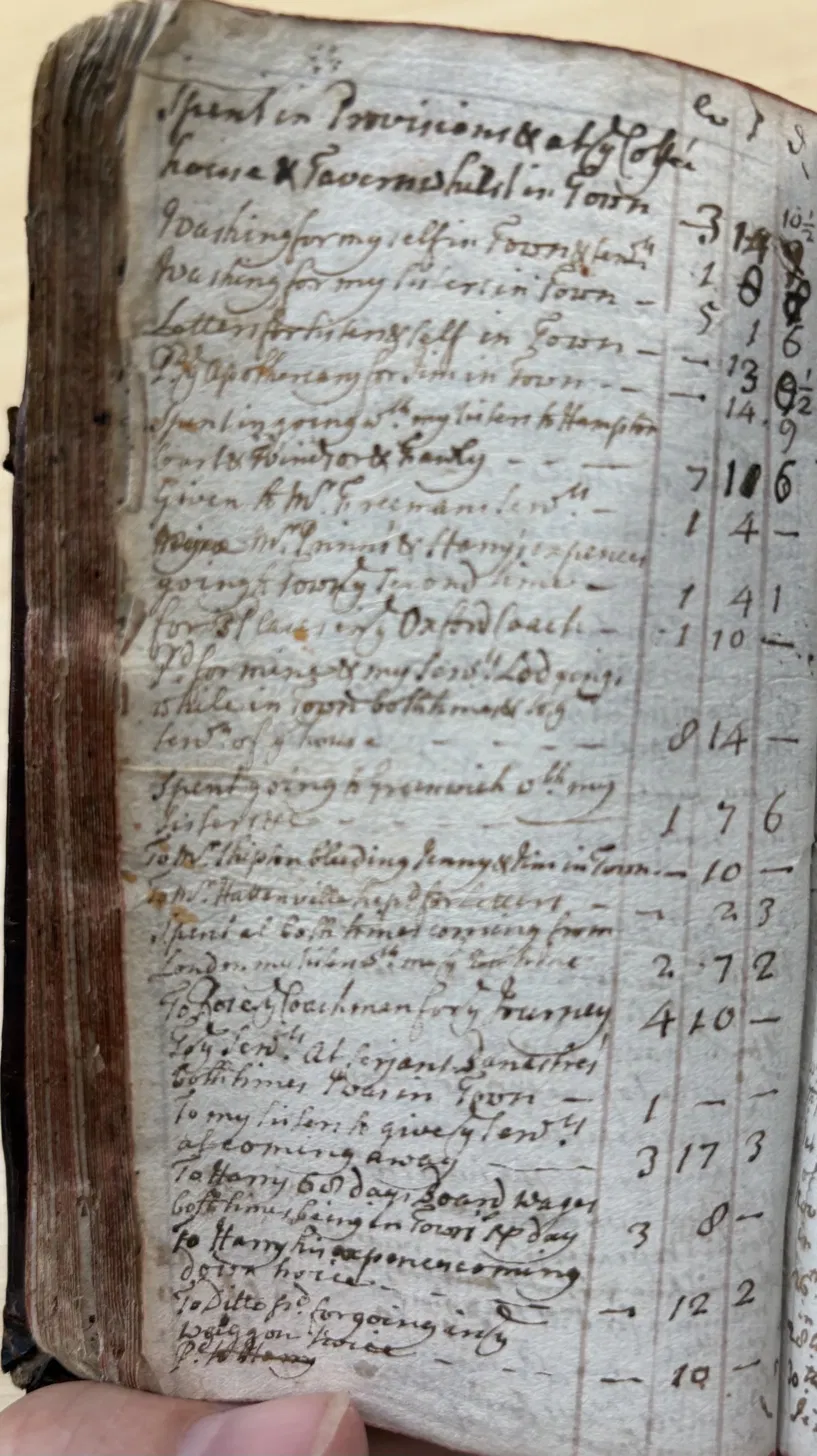
If I am honest, I was disappointed with the results. However, technology—and in particular AI—does not stand still, and over the last couple of days I have done two things:
- I applied the latest AI capability (Claude Opus 5.5) to the deciphering.
- I also used the same AI to build an app that “learns” in an iterative way.
The app I developed takes a page at a time, deciphers where it can and rates its suggestions where it cannot. It passes the results to me, and in a simple process I add my own opinion with a click of a button. The app creates a detailed glossary, which then reviews all previous deciphers using what it learned on that page. This clever little whirlwind of a process seems very effective and saves me a great deal of time. In essence, I have a script agent that deciphers and databases results. Virtually for free.
So, not only do we obtain a detailed and fairly good deciphering, but the app also builds a “dramatis personae” of all the people mentioned, and I have had it list all the places too. These can then be analysed. Expenditure is woven into the analysis as well. I can see which farms brought in what income, who was paid, what bills were raised for specific parts of the estate, and much more. I will share more in the future. The system will also automatically provide explanatory notes for each page. For example, one page mentioned expenditure on “Florence Oyles”, which the app automatically accompanied with commentary that this referred to favoured olive oil used by the British gentry in the early 18th century.
I think a version of the system might be very useful for analysing Sherborne’s church records and census returns to give a detailed picture of key parts of our community’s history.
Here’s the deciphered results of the image above. The whole page seems to cover a trip to London, and it's fascinating to see how much was spent on this trip that involved Dutton, his sister, and a number of servants.
Transcription (£ s d)
Spent in Provisions & at ye Coffee house & Taverne bills in Town: £3 14s [9d, altered to 10½d?]
• Washing for my self in Town & Serv^ts: £1 [0?]s [8?]d
• Washing for my Sister in Town: £5 1s 6d [?]
• Letters for Sister & self in Town: 13s 0½d
• P^d Apothecary for him in Town: 14s 9d
• Spent in going w^th my Sister to Hampton Court & Windsor & [Henley?]: £7 10s 6d
• Given to M^rs Freeman's Serv^ts: £1 4s
• [word unread] M^rs Jenny & Harry's expences going to Town ye second time: £1 4s 1d
• for 3 places in ye Oxford Coach: £1 10s
• P^d for mine & my Sister's Lodging while in Town both times & to ye Serv^ts of ye house: £8 14s
• Spent going to Greenwich w^th my Sister &c: £1 7s 6d
• To M^r Shipton bleeding Jenny & him in Town: 10s
• To M^r [Hattenville?] [word unread] for Letters: 2s 3d
• Spent at both times coming from London, my Sister's & mine: £2 7s 2d
• To ye Coachman for ye Journey: £4 10s
• [My Serv^ts?] at Serjeant [Lancaster's?] both times I was in Town: £1
• To my Sister to give ye Serv^ts at coming away: £3 17s 3d
• To Harry 68 [?] days Board Wages both times being in Town [at 1s?] per day: £3 8s
• To Harry his expences coming down [with the] horse: 12s 2d [?]
• To ditto P^d for going in ye Waggon twice: 10s
• P^d to Harry (struck through)
Arithmetic support. If Harry had 68 days at 1s a day, that's exactly £3 8s. It fits, but I've read "68" and "1s" partly from the total, so treat it as suggestive only.
Background
• Board wages: cash paid to servants for food when away from the household's own kitchen.
• to M^rs Freeman's Serv^ts: , the customary tips to a host's servants after a visit.
• Bleeding: bloodletting by a surgeon or barber-surgeon, then routine preventive treatment.
• Serjeant: probably a serjeant-at-law, a senior barrister. That's a guess from the title alone.
• Oxford Coach: the stagecoach between London and Oxford, the likely first leg home to Gloucestershire.
I'm genuinely excited by the power of this system, and not least because it saves me a huge amount of time and it gives us real new insights into how Sherborne was managed in the early 18th century. Much more analysis to follow after we have processed 275 pages just like this.