What the National Trust came here to do in Sherborne.
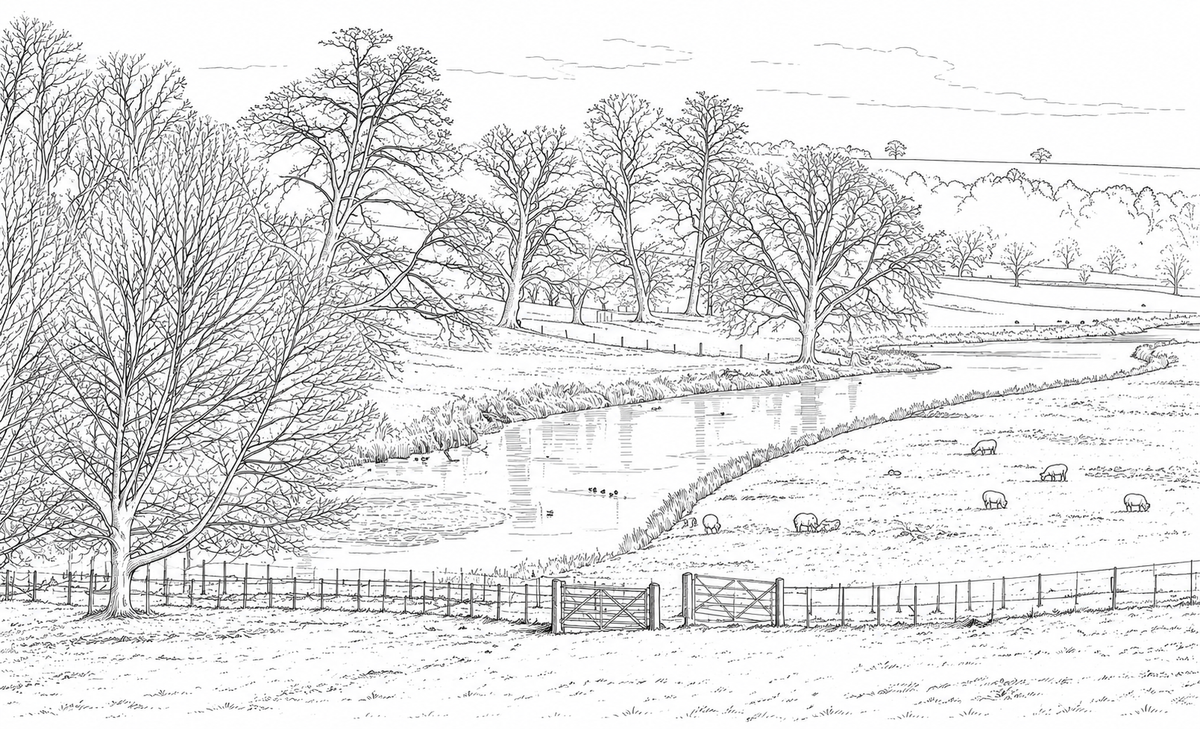
The last post addressed who owns the heritage here in Sherborne, and what changed when the National Trust took ownership in 1987. It brought a response I had not expected.
Two documents arrived within a day, both of them the National Trust's own. Neither, I should say at once, is an embarrassment to anybody. They are rather good.
Together they show what the Trust said it came here to do, and they cover twenty-five years.
What the Trust said in the early 1990s
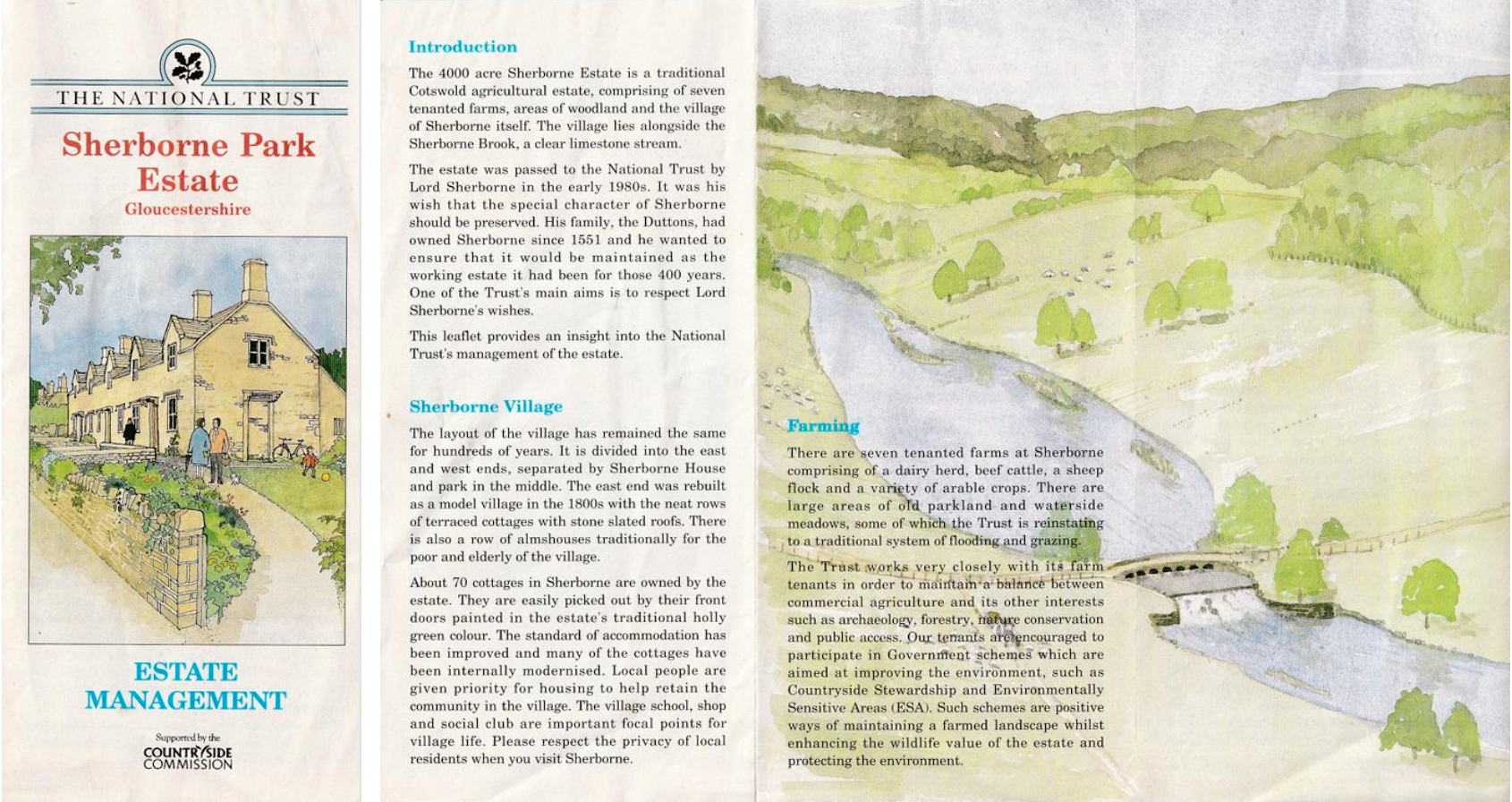
The first is a National Trust leaflet about the estate, headed "Estate Management" and produced with the support of the Countryside Commission. It carries no date but is clearly from the early 1990s, soon after taking on the estate.
It is a modest thing, four small pages and a watercolour, and it sets out Trust’s intent here. Many of the villagers who were around at that time seem to recall this sentiment, if not the detail of what's in the leaflet.
“One of the Trust's main aims is to respect Lord Sherborne's wishes”.
Those wishes were that the special character of Sherborne should be preserved, and that it should continue as the working estate his family had held for four hundred years.
On the Brook, the leaflet describes what its author thought worth describing:
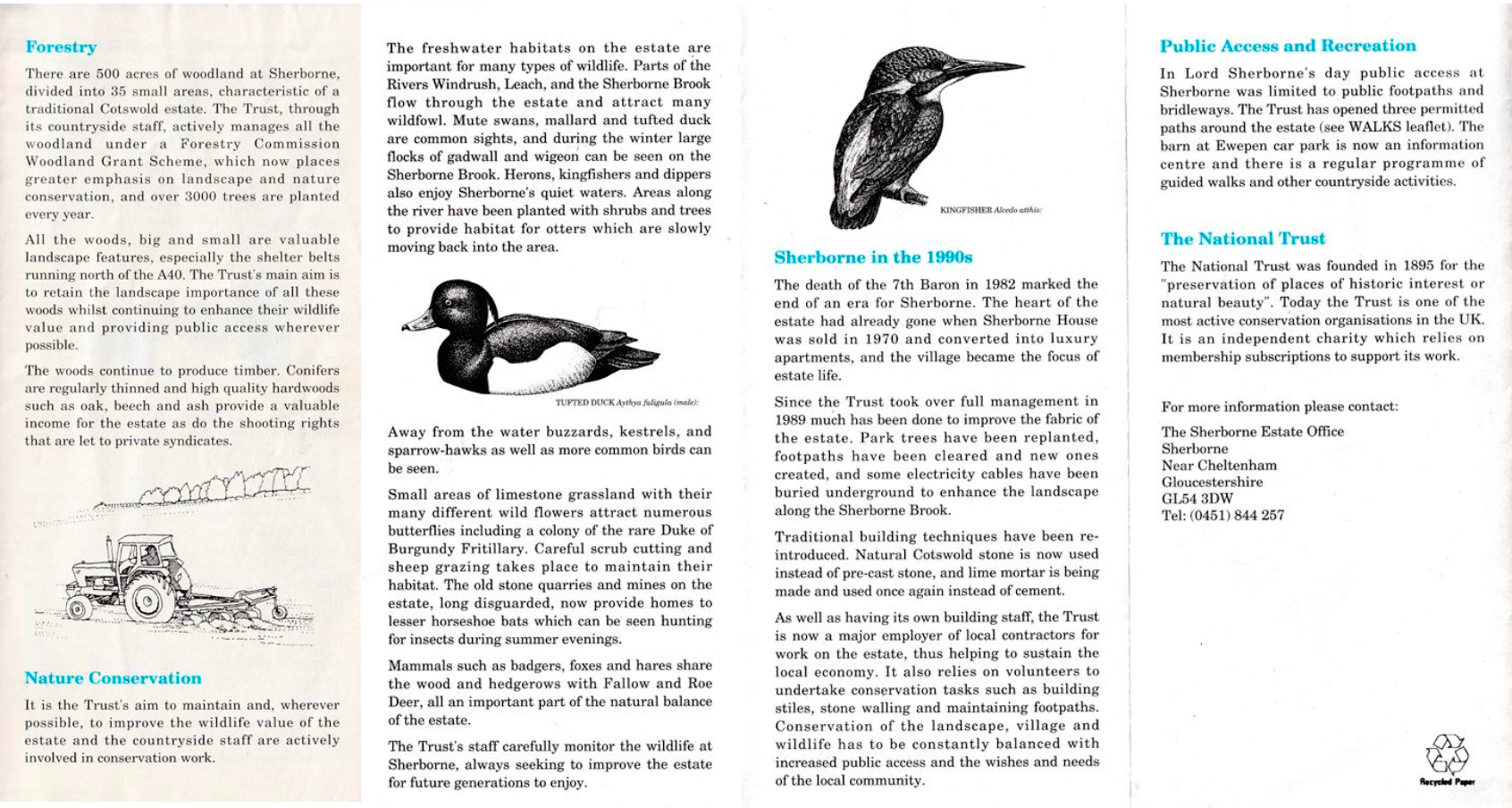
...during the winter large flocks of gadwall and wigeon can be seen on the Sherborne Brook. Herons, kingfishers and dippers also enjoy Sherborne's quiet waters.
And on how decisions here ought to be reached:
"Conservation of the landscape, village and wildlife has to be constantly balanced with increased public access and the wishes and needs of the local community."
That sentence is more than thirty years old, and it is the Trust's own. I could not have made the argument of my last post any better.
I cannot help but highlight another section which many of you will understand is important:
"Local people are given priority for housing to help retain the community in the village."
The document goes on to emphasise the importance of the community and the role of the NT in retaining that sense. The best of the leaflet is the watercolour across the centre pages: a panorama of the valley showing the full sweep of open water, the dam, the Broadwater and the Narrow-water below it. It is the Trust's own drawing of what this place looks like when it is right.
Like it or not, that 1990s leaflet set an expectation. In fact, it was designed to present an expectation.
What the Trust said in 2013
The second document is the Trust's Statement of Heritage Significance for the Sherborne Park Estate. Three pages, version two, revised on 25 April 2013, written by Alden Gregory. Given that it describes the heritage significance of the place we live in, I think it's of great public interest.
This is the document we asked to see and were not shown. One sentence from it had been quoted to us. Here it is in its place at last.
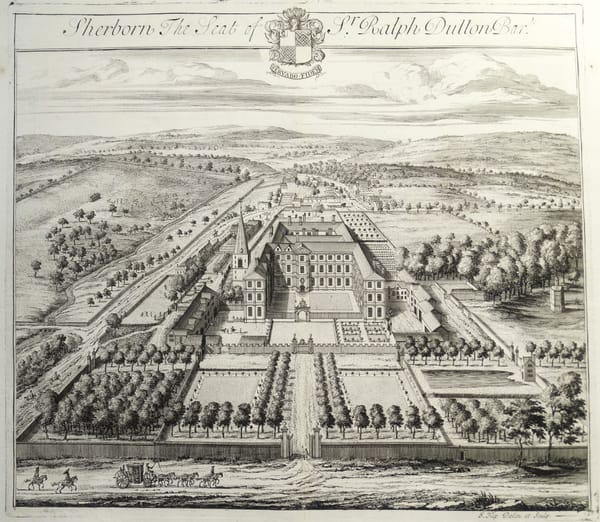
"Sherborne Park itself is of several periods dating from the mid-16th century through to the mid/late-19th century and is Registered Grade II. The designed landscapes that surround the village invest it with its special character. Views into and out of the village, especially those that take in the Sherborne Brook, an 18th century formal landscape of lakes and cascades, should be considered especially significant."
Clear enough. But this passage, from the final page, is the one that interests me most.
The continuity of management which has for so long sustained the Sherborne Park Estate, has also created an important natural landscape, including habitats linked to rivers, woodland, wood pasture and deadwood habitats, wet grassland, hedgerows and stone walls.
Read that twice. The Trust's own assessment is that the nature here was made by continuous management, not released by the absence of it. The wildlife is a product of the work. And the paragraph continues:
Large flocks of overwintering Widgeon use the Sherborne Brook, while migrating Ospreys are often recorded in the spring on their northerly migration from Africa.
The wigeon and the ospreys are credited to the Brook as it stands.
The Statement also puts the founding intention on the record. Lord Sherborne's stated purpose in giving the estate was, in the Trust's own quotation of him, "to safeguard the continuity of the Sherborne Estate". A statement, implicitly, is a declaration. This is declaring what the heritage of Sherborne is. It is right that the people affected by the declaration, should receive it.
The nature was part of the design
John Phibbs, the landscape historian, whose 2022 study of this estate some readers will know takes the point about nature considerably further, and I think it is the most useful thing anybody has said to me about Sherborne.
Historic designed landscapes were not merely tolerant of wildlife. They were built to produce it.
The word used was game rather than biodiversity, but the intent runs parallel. Fish and wildfowl were the purpose of the lakes. Songbirds filled the long stretches of woodland edge that parkland creates. Bands of trees ran out from the park into the farmland beyond, doing precisely what we now call wildlife corridors. The park walls, several of which here have been allowed to fall, enclosed ground from which foxes and badgers could be excluded and deer numbers controlled. That balanced landscape is close to the management Natural England now recommends under the heading of nature networks.
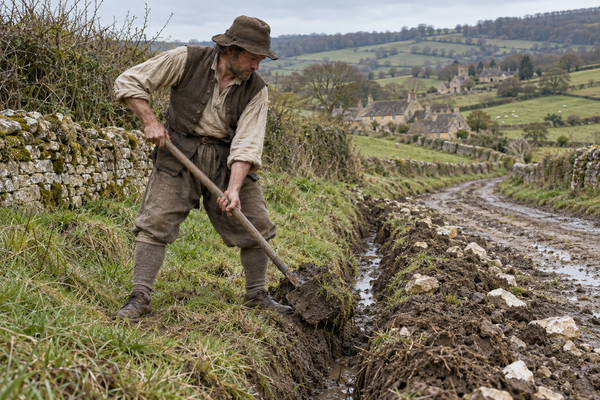
None of this should surprise us. Before artificial fertilisers, pesticides and herbicides, a farmer had little choice but to keep a balanced system working. Pest control was a matter of habitat rather than chemistry.
So the ecology of a place like this is not an accident that survived the design. It is part of the design, and it has been running for four hundred years or more. That is the same conclusion the 2013 Statement reaches in its final paragraph, arrived at from another direction entirely.
What I take from this
Twenty-five years, two documents, one thread. Continuity. The special character of the place. Lakes and cascades designed in the 18th C, not 19th. Quiet waters and the birds that use them. The wishes and needs of the local community.
Four observations follow, and none of them is a complaint.
These are serious documents. The 2013 Statement is careful, well informed and fair. It knows about the archaeology, the model village, the almshouses, the Whole Farm Plan, the grandstand. Somebody did the work. It is a statement most of this community would support wholeheartedly. Most of us have never seen it. I have a copy now, and anyone who would like to read it has only to ask.
Nobody here appears to have been asked to contribute to it. There is no sign in the Statement that anyone in this village was consulted, and none of us remembers being asked. It was never shared widely within the community within the area it describes after being written even. Yet almost everything in it is what this village would have said. That is worth pausing on, for two reasons. It shows the distance between the Trust's view and ours is far smaller than the last few years have made it look. And it shows that a careful assessor, working from the evidence, the history and the appearance of a place, can arrive very close to what the people who live there think. When that diverges, it's very noticeable.
The Trust has already written down what we have been asking it to remember, twice, twenty-five years apart. That the water is a designed 18th landscape and especially significant. That the wildlife here is a product of continuous management. That decisions must be balanced against the wishes and needs of the local community. We have not been asking the Trust to adopt our view. We have been asking it to hold to its own.
In the next post I shall look at the challenges to our expectations that occurred from 2013 onwards and highlight the potential of a way forward, positive for all parties.