Whose heritage is it?
This is the latest in a series of articles that started by exploring the economics of Sherborne in the late Middle Ages.
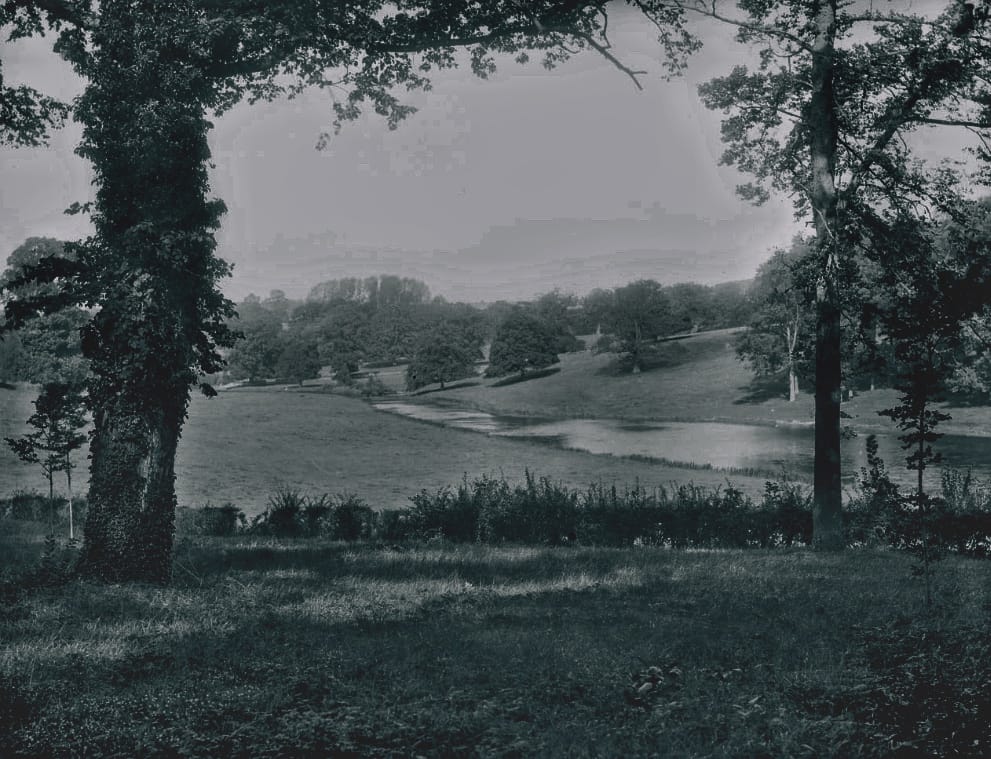
Stand on the village road and look north. Over the brook there is meadow, trees, deer. It looks like countryside that simply happened. It did not. Every version of this valley was chosen by somebody, and paid for by somebody.
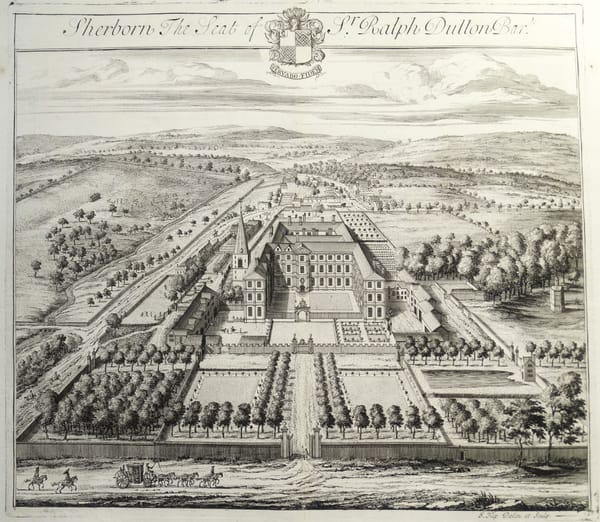
Winchcombe Abbey held Sherborne for seven hundred and thirty years. It built a working landscape of mills, leats and washing pools. The Duttons held it for four hundred more and turned it into a composition: a deer park, a grandstand, surveyed geometry, planned lakes. Every generation of them paid to keep it. They lived here, and looked at it out of their own windows.
The National Trust has held it for forty years.
Three earlier articles described how that landscape was made. This post asks who gets a say in what happens to it next.
We never had a say before
Let us concede the obvious. Nobody in Sherborne has ever had a say. In 806 a king gave the place away. In 1539 the Crown took it back and sold it on. In the 1980s a dying peer left it to a charity. The village was asked nothing, and it would not have occurred to anyone to ask.
Can you imagine King Coenwulf asking the villagers whether he might give their village to Winchcombe Abbey? Or Sir John Dutton running Bridgeman’s plans past a parish council?
Of course not. So what has changed? Two things, and only one of them is sentiment.
The terms of ownership changed
The Duttons held Sherborne as private property. A private owner owes nobody an explanation, and they offered none. That is simply what ownership meant, and we do not criticise them for it.
The National Trust does not hold Sherborne on those terms. Under its founding legislation the Trust may declare land inalienable, and Sherborne is so declared. It cannot be sold or mortgaged. Only Parliament can override it. The freehold is held in perpetuity for the benefit of the nation.
That last phrase is the Trust’s, not ours. It describes something quite different from property. A trust is answerable in a way that ownership never is. And the nation for whose benefit this one is held includes the people who live in it.
The second change is the arrival of "heritage" as an idea. The Register of Parks and Gardens dates only from 1983. The notion that a landscape carries value independent of its owner’s preferences is about forty years old. It arrived here at almost the moment the Trust did. Our sense of this place as heritage is not nostalgia appearing from nowhere. It tracks a change the whole country made.
Heritage is not a thing. It is what we make of it.
That there is water impounded by a dam is a fact. That it matters is a judgement, and judgements are made by somebody.
So heritage is not something a place has. It is something people do with what a place has.
We took that for our own opinion. It turns out to be fairly orthodox. Scholars have argued for decades that heritage is better understood as a process than a possession. They add a warning worth noting. Official bodies tend to privilege the expert and the monumental, and to treat the meanings held by ordinary people as decoration.
Historic England’s own framework says something similar, more quietly. It identifies four values which together make up the significance of a place: evidential, historical, aesthetic and communal. Communal value it defines as the meanings a place holds for the people who relate to it, or for whom it figures in their collective memory.
Three of those four can be assessed by a qualified stranger with a clipboard. The fourth cannot. It is not a property of the fabric. It sits in the people, and there is only one way to find out what it is.
You ask them.
It may be said that the community’s view has already been sought, and already taken into account. If you think so, I should like to hear it. If you think otherwise, I should like to hear that too. I'll explore this in my next piece in this series.